
Short Answer
What Is Pancetta? Italian Cured Pork Belly Explained
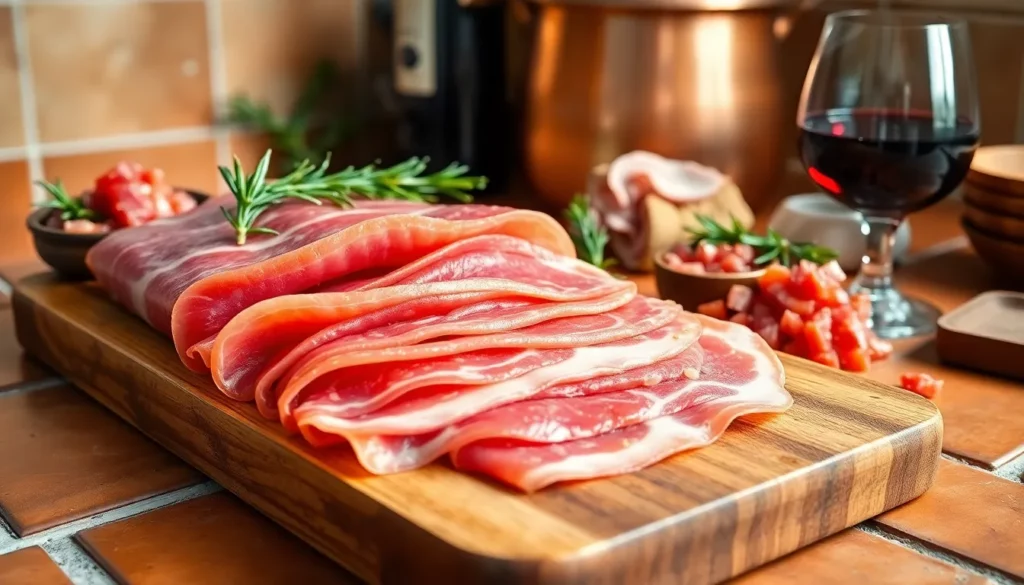
Pancetta is a salt-cured pork belly product originating from Italy, made from the same cut as bacon but processed without smoking. The belly is seasoned with a blend of salt, black pepper, and often other spices such as garlic, nutmeg, juniper, or fennel, then rolled and tied (pancetta arrotolata) or left flat (pancetta stesa) before being cured for several weeks. It is a fundamental ingredient in many classic Italian recipes, prized for its savory, slightly sweet, and deeply porky flavor. Pancetta is typically used as a flavor base in sauces, pasta dishes, and stuffings, or sliced thin and eaten raw as part of an antipasto platter. Its production is concentrated in northern and central Italy, particularly in Emilia-Romagna, Lombardy, and Veneto, though it is made throughout the country with regional variations.
Origin & History
The practice of curing pork belly in Italy dates back to ancient Roman times, when salting meat was essential for preservation before refrigeration. The word pancetta derives from the Italian pancia (belly), reflecting the cut of meat used. Historical records from the Middle Ages show that pork curing was a well-established craft in the Po Valley, where the climate was ideal for air-drying. By the Renaissance, pancetta had become a staple in both peasant and aristocratic kitchens, valued for its ability to add richness to lean dishes. Unlike bacon, which is smoked to preserve and flavor, pancetta relies solely on salt and spices, a tradition that continues today. The first written recipe resembling modern pancetta appears in Bartolomeo Scappi’s 1570 cookbook Opera, where he describes seasoning pork belly with salt, pepper, and herbs before hanging it to dry. Over centuries, regional styles emerged, with some areas favoring a tighter roll and others a flat slab, and spice blends varying from simple pepper to complex mixtures including cloves and cinnamon. Today, pancetta is protected as a traditional product in several Italian regions, though it lacks a PDO (Protected Designation of Origin) status, allowing for widespread artisanal and industrial production.
What’s In It
Pancetta is made from pork belly, the fatty underside of the pig, which includes layers of fat and lean meat. The curing process involves rubbing the belly with a mixture of salt (usually sea salt), black pepper, and optional aromatics such as garlic, bay leaves, juniper berries, nutmeg, or fennel seeds. Some producers add a small amount of sugar to balance the saltiness and aid in fermentation. The meat is then left to cure for 10–14 days, during which it loses moisture and develops flavor. After curing, pancetta may be rolled into a tight cylinder (pancetta arrotolata) and tied with string, or left flat (pancetta stesa). It is then hung to dry for several weeks to months, depending on the desired texture. The final product has a firm, sliceable consistency with a rosy-red lean meat and white fat. Unlike bacon, pancetta is never smoked; any smoky flavor would be considered a defect. It is also distinct from guanciale, which is made from pork cheek and has a higher fat content and more intense flavor. Pancetta is often confused with prosciutto, but prosciutto comes from the hind leg and is dry-cured whole, while pancetta is from the belly and is typically rolled or flat.
Regional Variations
Pancetta varies significantly across Italy, reflecting local tastes and curing traditions. Below is a comparison of three major regional styles:
| Region | Style | Spices | Typical Use |
|---|---|---|---|
| Emilia-Romagna | Pancetta arrotolata (rolled) | Black pepper, garlic, nutmeg, sometimes cloves | Diced for pasta sauces (e.g., ragù), sliced for antipasti |
| Lombardy | Pancetta stesa (flat) | Black pepper, juniper, bay leaf | Thin slices for carpaccio, or cubed for risotto |
| Veneto | Pancetta affumicata (smoked, though rare) | Black pepper, fennel, chili flakes | Used in pasta e fagioli, or grilled as a second course |
In central Italy, particularly Lazio, pancetta is often used in carbonara and amatriciana, though guanciale is the traditional choice. In the south, pancetta may be spicier, with added chili or paprika. Some producers in Calabria make a version called pancetta piccante with hot pepper. The island of Sardinia produces pancetta sarda, which is often flavored with myrtle berries and has a distinct herbal note.
How It’s Traditionally Eaten
Pancetta is a versatile ingredient that appears in multiple courses of an Italian meal. As an antipasto, it is sliced paper-thin and served with cheese, olives, and bread. In primi piatti (first courses), it is diced and rendered to provide a savory base for pasta sauces such as carbonara (though purists prefer guanciale), amatriciana, and alla gricia. It also enriches risottos, soups like minestrone, and bean dishes. In secondi (main courses), pancetta can be wrapped around vegetables or meat (e.g., saltimbocca) or grilled as a standalone item. It is also used in stuffings for poultry and vegetables. Pancetta is an everyday ingredient in Italian households, not reserved for holidays, though special occasions may feature a higher-quality artisanal version. It is typically cooked before eating, but high-quality pancetta can be consumed raw if properly cured. When cooking, the fat should be rendered slowly to avoid burning, and the meat should become crispy but not dry.
Common Mistakes / What It’s Not
A frequent misconception, especially in American-Italian contexts, is that pancetta is interchangeable with bacon. While both come from pork belly, bacon is smoked and often has a sweeter, smokier flavor, while pancetta is unsmoked and saltier. Substituting bacon for pancetta will alter the dish’s character. Another mistake is using pancetta in place of guanciale in carbonara; guanciale has a higher fat content and a more delicate flavor, and traditional Roman recipes call for guanciale, not pancetta. Pancetta is also not prosciutto, which is from the leg and eaten raw. Some cooks mistakenly treat pancetta as a seasoning only, but it can be a star ingredient. Additionally, pancetta should not be confused with lardo (cured pork fatback) or capocollo (cured pork shoulder). When purchasing, avoid pre-sliced pancetta that appears overly wet or has an off smell; quality pancetta should be firm and aromatic. Finally, do not overcook pancetta to the point of brittleness; it should be rendered until golden and slightly crisp, not burnt.
Where to Try It / What to Order
To experience authentic pancetta, visit the regions of Emilia-Romagna, Lombardy, or Veneto, where artisanal producers still cure it traditionally. In Bologna, look for pancetta arrotolata at salumerias like Tamburini or Simoni. In Milan, try pancetta stesa from the historic shop Peck. For a taste of pancetta in a classic dish, order spaghetti alla carbonara (though be aware that Roman purists use guanciale) or bucatini all’amatriciana at a trattoria in Rome. In Venice, sample pancetta affumicata in pasta e fagioli. For travelers, attending a food festival such as the Sagra della Pancetta in the town of Castelnovo ne’ Monti (Emilia-Romagna) offers a chance to taste multiple varieties. When ordering, ask for pancetta tagliata sottile (thinly sliced) for antipasti, or pancetta a cubetti (diced) for cooking. Always check the label for the region of origin and avoid products with added smoke flavoring.
Related Dishes
FAQ
What is pancetta and how is it different from bacon?
Pancetta is an Italian cured pork belly that is salt-cured and seasoned with spices but never smoked. Bacon, on the other hand, is typically smoked and often has a sweeter flavor. Pancetta is used in Italian cooking for its pure pork taste, while bacon adds a smoky note.
Can I substitute pancetta with bacon in recipes?
Yes, but the flavor will be different. If a recipe calls for pancetta, using bacon will introduce smokiness that may not be authentic. For a closer match, use unsmoked bacon or blanch bacon to reduce smoke flavor. However, for traditional Italian dishes like carbonara, guanciale is preferred over pancetta.
How should I store pancetta?
Pancetta should be wrapped tightly in plastic wrap or butcher paper and stored in the refrigerator. It can also be frozen for up to 3 months. Once opened, consume within 2-3 weeks for best quality. If mold appears (white or green), it is usually harmless and can be wiped off, but discard if it smells off.
Is pancetta safe to eat raw?
Yes, high-quality pancetta that has been properly cured and dried can be eaten raw, similar to prosciutto. It is often served thinly sliced as an antipasto. However, always check the label; some commercial pancetta may be intended for cooking only.
What are the main regional varieties of pancetta?
The main varieties are pancetta arrotolata (rolled) from Emilia-Romagna, pancetta stesa (flat) from Lombardy, and pancetta affumicata (smoked, though rare) from Veneto. Other regions add local spices like chili in Calabria or myrtle in Sardinia.
Leave a Reply