
Short Answer
What It Is
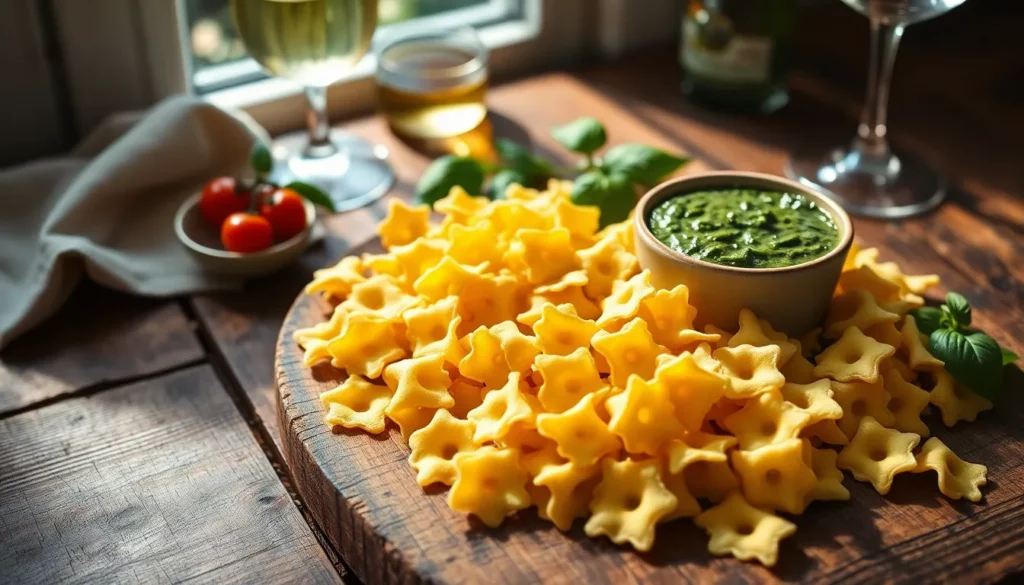
Farfalle (pronounced far-FAH-leh) are a type of pasta shaped like butterflies or bow ties. The name comes from the Italian word farfalla, meaning butterfly. This pasta is traditionally made from durum wheat semolina and water, though egg versions exist in some artisanal productions. Farfalle originated in the northern Italian regions of Emilia-Romagna and Lombardy, where they are often served with light vegetable sauces, cream-based sauces, or in salads. While there is no specific DOP (Denominazione di Origine Protetta) for farfalle as a shape, the pasta itself can be part of DOP products like Pasta di Gragnano or Pasta di Campofilone if produced in those areas with traditional methods. The production method involves rolling the dough into thin sheets, cutting it into small rectangles, and pinching the center to create the characteristic butterfly shape. Artisanal farfalle are often bronze-drawn and slow-dried to preserve texture and flavor.
Types & Grades
Farfalle come in several varieties based on size, ingredients, and production methods. The table below summarizes the main types:
| Type | Size | Ingredients | Production | Best Uses |
|---|---|---|---|---|
| Farfalle Classiche | Standard (approx. 3 cm) | Durum wheat semolina, water | Industrial or artisanal | General cooking, salads |
| Farfalle all’Uovo | Standard | Durum wheat, eggs | Artisanal, often fresh | Rich sauces, baked dishes |
| Farfalle Integrali | Standard | Whole wheat durum | Industrial or artisanal | Health-conscious meals |
| Farfalle Tricolori | Standard | Durum wheat, spinach, tomato | Industrial | Colorful salads, children’s dishes |
| Farfalle Giganti | Large (5-6 cm) | Durum wheat semolina | Artisanal | Baked pasta, stuffing |
Grades are often determined by the production method: bronze-drawn (trafilatura al bronzo) farfalle have a rough, porous surface that better holds sauces, while Teflon-drawn pasta is smoother and less expensive. Slow-drying at low temperatures preserves the pasta’s structure and flavor, whereas high-temperature drying is common in mass production.

How It’s Used in Cooking
Farfalle are versatile and pair well with a variety of sauces. Traditional Italian applications include:
- Farfalle al Salmone: A creamy sauce with smoked salmon, dill, and sometimes capers.
- Farfalle Primavera: Light vegetable sauce with zucchini, bell peppers, cherry tomatoes, and basil.
- Farfalle con Pesto: Classic Genovese pesto with basil, pine nuts, Parmesan, and olive oil.
- Farfalle in Brodo: Served in a clear broth, often with vegetables or chicken.
- Farfalle al Forno: Baked with béchamel, cheese, and sometimes ham or mushrooms.
Because of their shape, farfalle are excellent for pasta salads – the pinched center holds dressing and small ingredients. In Italy, they are rarely served with heavy meat sauces; instead, lighter, vegetable-based or cream sauces are preferred to complement the delicate shape.
How to Choose/Identify Authentic FARFALLE
When selecting farfalle, look for these authenticity cues:
- Color: Authentic semolina farfalle should be a warm, golden yellow. Pale or bright yellow may indicate artificial coloring.
- Surface texture: Bronze-drawn pasta will feel rough and slightly porous; smooth, shiny pasta is likely Teflon-drawn and less sauce-friendly.
- Ingredients: The only ingredients should be durum wheat semolina and water (or eggs for egg pasta). Avoid added preservatives or artificial flavors.
- Drying method: Look for “slow-dried” or “low-temperature dried” on the package. This preserves the pasta’s structure and flavor.
- Origin: Italian farfalle from regions like Emilia-Romagna, Lombardy, or Campania (Gragnano) are more likely to follow traditional methods. Check for DOP or IGP indications if applicable.
- Packaging: Artisanal producers often use paper or cardboard boxes with minimal branding, emphasizing the pasta’s quality.
For commercial buyers, consider the pasta’s cooking time: authentic farfalle typically cooks in 10-12 minutes, while mass-produced versions may cook faster but lack texture.
Substitutes
If farfalle are unavailable, these Italian pasta shapes can be used as substitutes, depending on the dish:
- Fusilli: Spiral-shaped pasta that holds sauces well, ideal for salads and cream sauces.
- Conchiglie: Shell-shaped pasta, good for catching small ingredients in sauces or salads.
- Gemelli: Twisted strands that offer a similar bite and sauce-holding capacity.
- Mafaldine: Long, wavy ribbons that work well with light sauces and in baked dishes.
Each substitute mimics farfalle’s ability to trap sauce and small ingredients, but the visual appeal of the butterfly shape is unique. For traditional Italian recipes, fusilli or conchiglie are the closest in function.
In summary, farfalle is a beloved pasta shape that embodies Italian culinary artistry. Its butterfly form, combined with proper production methods, makes it a versatile choice for both simple and elaborate dishes. When selecting farfalle, prioritize bronze-drawn, slow-dried, and authentic Italian products to ensure the best texture and flavor. Whether in a creamy salmon sauce or a fresh primavera, farfalle brings a touch of elegance to any meal.
FAQ
What does farfalle mean in Italian?
Farfalle means 'butterflies' in Italian, referring to the pasta's distinctive bow-tie or butterfly shape.
Is farfalle pasta gluten-free?
Traditional farfalle is made from durum wheat semolina and contains gluten. Gluten-free versions made from rice, corn, or legume flours are available but are not authentic Italian.
Can farfalle be used in baked pasta dishes?
Yes, farfalle works well in baked dishes like farfalle al forno, especially the larger giganti size. However, it is less common than shapes like penne or rigatoni for baking.

Leave a Reply