
Short Answer
What Is Farcito? Italian Stuffed Dishes Explained
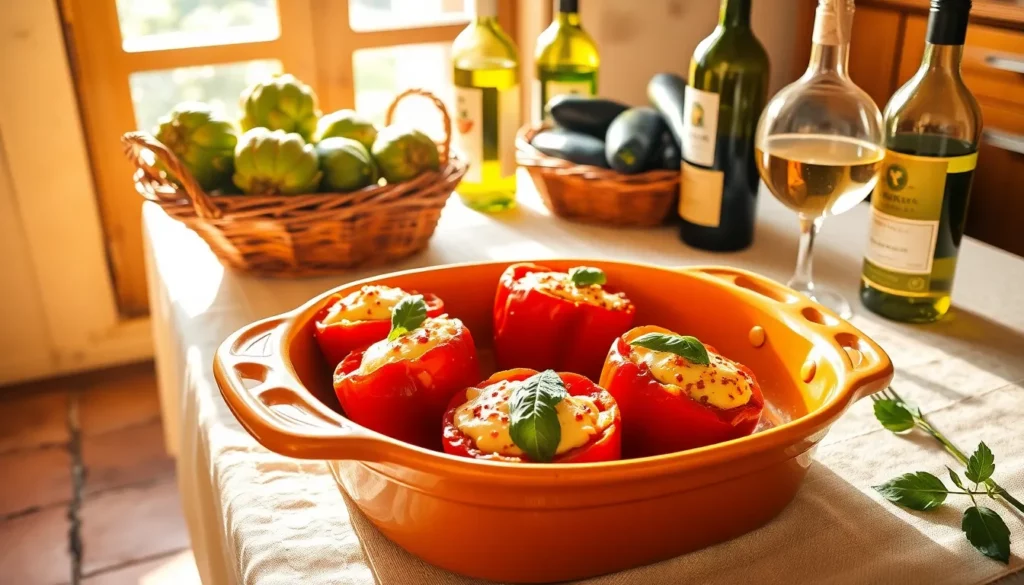
Farcito (pronounced far-CHEE-toh) is the Italian past participle of the verb farcire, meaning “to stuff” or “to fill.” In Italian cuisine, farcito describes any dish—whether vegetable, meat, fish, or pasta—that is hollowed out and filled with a savory mixture. Common examples include peperoni farciti (stuffed peppers), melanzane farcite (stuffed eggplant), carciofi farciti (stuffed artichokes), and conchiglioni farciti (stuffed pasta shells). The filling, known as ripieno, typically combines breadcrumbs, cheese, herbs, and sometimes minced meat or seafood. Farcito dishes are found throughout Italy, with each region adapting the technique to local ingredients and traditions. They are served as antipasti, contorni, or even secondi, and are especially popular during holidays and family gatherings.
Origin & History
The practice of stuffing foods dates back to ancient Roman times, when cooks filled vegetables, poultry, and even dormice with mixtures of herbs, nuts, and grains. The Latin verb farcire gave rise to the Italian farcito. During the Renaissance, Italian cookbooks such as Bartolomeo Scappi’s Opera (1570) featured elaborate stuffed dishes for aristocratic banquets. However, the widespread home cooking of farcito dishes emerged in the 19th century, when inexpensive vegetables like peppers, eggplants, and zucchini became staples of the cucina povera (peasant kitchen). In southern Italy, especially Sicily and Campania, stuffing vegetables with breadcrumbs, cheese, and herbs was a way to stretch limited ingredients. In the north, richer fillings with meat and béchamel became common. Today, farcito represents both a rustic tradition and a canvas for modern creativity.
What’s In It
Core ingredients for farcito dishes vary by region, but most share a common base: a hollowed vegetable or pasta shell, a filling of breadcrumbs (often stale), grated cheese (Parmigiano-Reggiano, Pecorino, or ricotta), fresh herbs (parsley, basil, oregano), garlic, olive oil, and sometimes capers or anchovies for umami. Meat fillings may include ground beef, pork, or sausage; seafood versions use tuna, anchovies, or shrimp. The dish is typically baked or simmered in tomato sauce. Key preparation nuances include pre-boiling or salting vegetables to remove excess moisture, and ensuring the filling is well-seasoned but not too wet. Farcito differs from similar dishes like ripieno (which refers to the filling itself) or involtini (rolled, not stuffed). It is also distinct from farcitura, the act of stuffing.
Regional Variations
Farcito dishes change dramatically across Italy. Below is a comparison of three major regional styles:
| Region | Typical Dish | Filling | Cooking Method |
|---|---|---|---|
| Sicily | Carciofi farciti (stuffed artichokes) | Breadcrumbs, Pecorino, garlic, parsley, capers, anchovies | Baked or braised in olive oil and water |
| Campania (Naples) | Peperoni farciti (stuffed peppers) | Breadcrumbs, Parmigiano, basil, garlic, sometimes ground beef or tuna | Baked in tomato sauce |
| Piedmont | Peperoni farciti alla piemontese | Breadcrumbs, Parmigiano, garlic, parsley, anchovies, sometimes béchamel | Baked with butter and broth |
Other notable variations include melanzane farcite in Calabria (with ricotta and tomato), zucchine farcite in Lazio (with mint and pecorino), and frittata farcita in Tuscany (a stuffed omelet).
How It’s Traditionally Eaten
Farcito dishes are versatile in the Italian meal structure. Small stuffed vegetables like carciofi farciti or funghi farciti (stuffed mushrooms) are often served as antipasti (appetizers). Larger portions, such as peperoni farciti or melanzane farcite, can be a contorno (side dish) or a light secondo (main course) when accompanied by a salad. Stuffed pasta like conchiglioni farciti is a primo (first course). Typical pairings include a crisp white wine like Vermentino or a light red like Dolcetto. Farcito dishes are common for Sunday lunches, festive occasions, and summer meals when vegetables are abundant. They are rarely eaten as street food, though some stuffed breads (focaccia farcita) are sold in bakeries.
Common Mistakes / What It’s Not
Many American-Italian interpretations confuse farcito with stuffed shells or manicotti, which are pasta tubes filled with ricotta and baked in sauce. While these are technically farcito, the term is broader. Another mistake is assuming farcito always includes meat; many traditional versions are vegetarian. Also, farcito is not the same as ripieno (the filling) or farcitura (the process). Avoid overfilling, which causes sogginess, and never use fresh breadcrumbs without toasting them first—stale breadcrumbs absorb moisture better. Finally, farcito is not a single dish but a category; ordering “farcito” at a restaurant will likely get you a puzzled look unless you specify the main ingredient.
Where to Try It / What to Order
To experience authentic farcito, visit Italy during the summer and autumn harvests. In Sicily, head to Palermo’s Mercato di Ballarò for carciofi farciti sold by street vendors. In Naples, try peperoni farciti at a traditional trattoria like Trattoria da Nennella. In Rome, look for zucchine farcite at Armando al Pantheon. For a home-style version, attend a sagra (food festival) in Puglia or Calabria. When ordering, specify the vegetable or pasta: “Vorrei i peperoni farciti, per favore.” Avoid pre-packaged versions; the best farcito is freshly baked.
Related Dishes
FAQ
What does farcito mean in Italian?
Farcito is the past participle of the verb 'farcire', meaning 'stuffed' or 'filled'. It describes any dish that has been hollowed out and filled with a savory mixture.
Is farcito a specific dish?
No, farcito is a category of dishes. Common examples include stuffed peppers (peperoni farciti), stuffed eggplant (melanzane farcite), and stuffed artichokes (carciofi farciti). Always specify the main ingredient.
What are the most popular farcito dishes?
Popular farcito dishes include peperoni farciti (stuffed peppers), melanzane farcite (stuffed eggplant), carciofi farciti (stuffed artichokes), zucchine farcite (stuffed zucchini), and conchiglioni farciti (stuffed pasta shells).
Can farcito dishes be vegetarian?
Yes, many traditional farcito recipes are vegetarian, using breadcrumbs, cheese, and herbs as the filling. Meat and seafood versions also exist.
How do I order farcito in Italy?
Specify the main ingredient: for example, 'Vorrei i peperoni farciti' (I would like the stuffed peppers). Simply saying 'farcito' may cause confusion.

Leave a Reply