
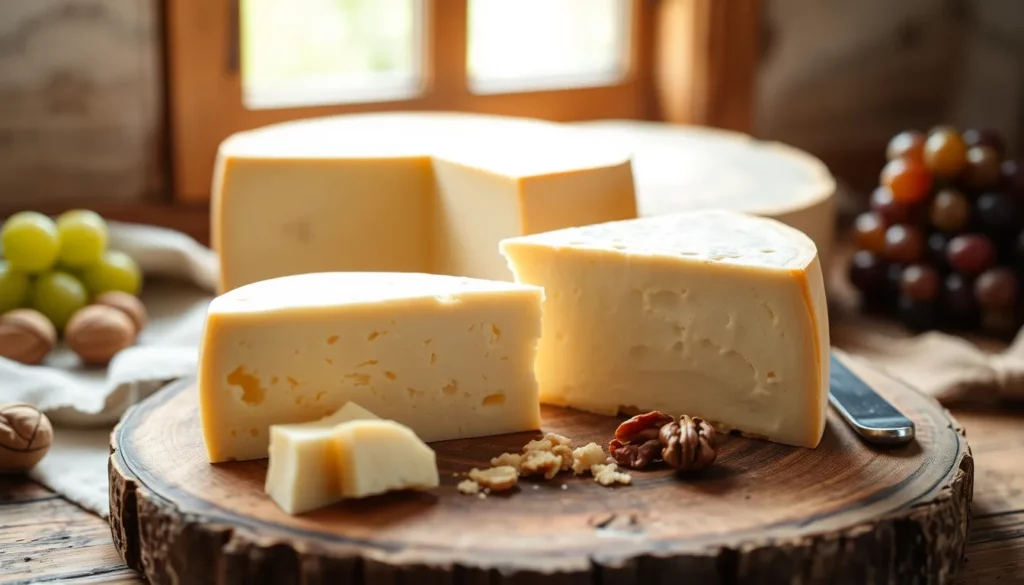
Short Answer
What It Is
Asiago is a cooked, pressed cow’s milk cheese that originates from the Asiago Plateau in the Veneto region of northern Italy, with production also permitted in parts of Trentino. It has been awarded Denominazione di Origine Protetta (DOP) status by the European Union since 1996, and its Italian DOP recognition dates back to 1978. The cheese is made from whole or partially skimmed milk from cows raised in the designated alpine pastures, following strict traditional methods.
Historically, Asiago was first produced in the 10th century by shepherds who needed a cheese that could be aged for long winters. The production process involves curdling milk with calf rennet, cutting the curd, cooking it at around 45°C, and then pressing the curds into molds. The resulting wheels are salted and aged for varying periods, which determines the final texture and flavor. The DOP regulations require that the milk comes from cows fed on local forage, and the cheese must be produced within the defined geographical area.
Types & Grades
Asiago is classified into two main categories based on aging: Asiago Pressato (fresh) and Asiago d’Allevo (aged). The latter is further subdivided by aging length. The table below summarizes the key grades:

| Grade | Aging | Texture | Flavor | Common Uses |
|---|---|---|---|---|
| Asiago Pressato (Fresh) | 20–40 days | Soft, elastic, slightly crumbly | Mild, milky, slightly tangy | Table cheese, sandwiches, salads |
| Asiago d’Allevo – Mezzano | 3–6 months | Semi-hard, compact | Nutty, buttery, mild | Melting, cooking, grating |
| Asiago d’Allevo – Vecchio | 6–12 months | Hard, granular | Sharp, savory, with hints of fruit | Grating over pasta, risotto |
| Asiago d’Allevo – Stravecchio | Over 12 months (often 18–24) | Very hard, brittle | Intense, piquant, complex | Grating, cheese boards |
All aged varieties must be made from partially skimmed milk, while Pressato uses whole milk. The DOP seal guarantees that the cheese has been produced according to these specifications.
How It’s Used in Cooking
Asiago’s versatility makes it a staple in Italian cuisine. Fresh Asiago Pressato is often sliced for antipasti, melted on polenta, or used in frittate. Aged Asiago d’Allevo is grated over pasta dishes such as gnocchi, risotto, and minestrone, where its nutty flavor enhances the dish. It also appears in traditional recipes like Asiago cheese fondue (a variation of fonduta) and baked dishes like pasta al forno.
“Asiago is the cheese of the mountains – it carries the essence of alpine pastures in every bite.” – Traditional saying from the Veneto region.
In modern cooking, Asiago is used in salads (shaved over greens), as a topping for grilled vegetables, and in cheese boards paired with honey, nuts, and dried fruits. The aged varieties are excellent for grating over soups or incorporating into bread dough for savory loaves.
How to Choose/Identify Authentic ASIAGO
To ensure you are buying genuine Asiago DOP, look for the following cues:
- DOP Seal: The packaging or rind should bear the official DOP logo (a red and yellow circle with “DOP” and the product name).
- Rind Markings: Authentic Asiago d’Allevo wheels have a natural rind with the brand name and production code embossed. Pressato may have a smooth, edible rind.
- Origin Label: Check for “Prodotto in Italia” and the specific region (Veneto or Trentino).
- Aging Indication: The label should specify the aging category (e.g., “Asiago d’Allevo Vecchio”).
- Color and Texture: Fresh Asiago is pale yellow; aged becomes deeper yellow with a granular texture. Avoid cheeses that are overly white or rubbery.
- Price: Authentic DOP Asiago is typically more expensive than generic imitations. If the price seems too low, it may not be genuine.
Purchase from reputable cheesemongers or Italian specialty stores. When in doubt, ask for the producer’s name and check the DOP registry.
Substitutes
If authentic Asiago is unavailable, several Italian cheeses can serve as substitutes, depending on the intended use:
- For grating (aged Asiago): Grana Padano or Parmigiano-Reggiano offer similar granular texture and savory depth. Pecorino Romano (sheep’s milk) provides a sharper, saltier alternative.
- For melting (fresh or semi-aged): Montasio (another Alpine DOP cheese) has a similar melting profile and mild flavor. Fontina (Valle d’Aosta) is creamier and excellent for fondue.
- For table cheese (fresh): Bel Paese or Mozzarella (for mildness) can work, though they lack Asiago’s slight tang. Provolone (dolce) offers a similar semi-soft texture.
Note that these substitutes are not identical but will maintain the Italian character of the dish. Always choose DOP versions when possible for authenticity.
Conclusion
Asiago is a versatile and historic Italian cheese that ranges from mild and creamy to sharp and crumbly. Its DOP status ensures quality and tradition, while its various grades make it suitable for cooking, grating, or enjoying on its own. By understanding the types, production methods, and authenticity markers, you can confidently select and use Asiago in your kitchen. Whether you are preparing a classic risotto or a modern cheese board, Asiago brings a taste of the Italian Alps to your table.
FAQ
What is the difference between Asiago Pressato and Asiago d'Allevo?
Asiago Pressato is a fresh cheese aged 20–40 days, with a soft, elastic texture and mild flavor. Asiago d'Allevo is aged longer (3 months to over a year), resulting in a harder, granular texture and a more intense, nutty flavor. The milk used also differs: Pressato uses whole milk, while d'Allevo uses partially skimmed milk.
Is Asiago cheese lactose-free?
Aged Asiago (d'Allevo, especially Vecchio and Stravecchio) contains very low levels of lactose because the aging process breaks down most of the lactose. Fresh Asiago Pressato may contain trace amounts, but many people with lactose intolerance can tolerate it. However, individuals with severe lactose intolerance should consult their doctor.
Can I use Asiago instead of Parmesan in recipes?
Yes, aged Asiago (Vecchio or Stravecchio) can be grated and used similarly to Parmigiano-Reggiano, though it has a slightly different flavor profile – less salty and more nutty. For best results, use Asiago d'Allevo Vecchio in pasta dishes, risottos, and soups. Fresh Asiago is not a suitable substitute for Parmesan.




Leave a Reply