
Short Answer
What It Is
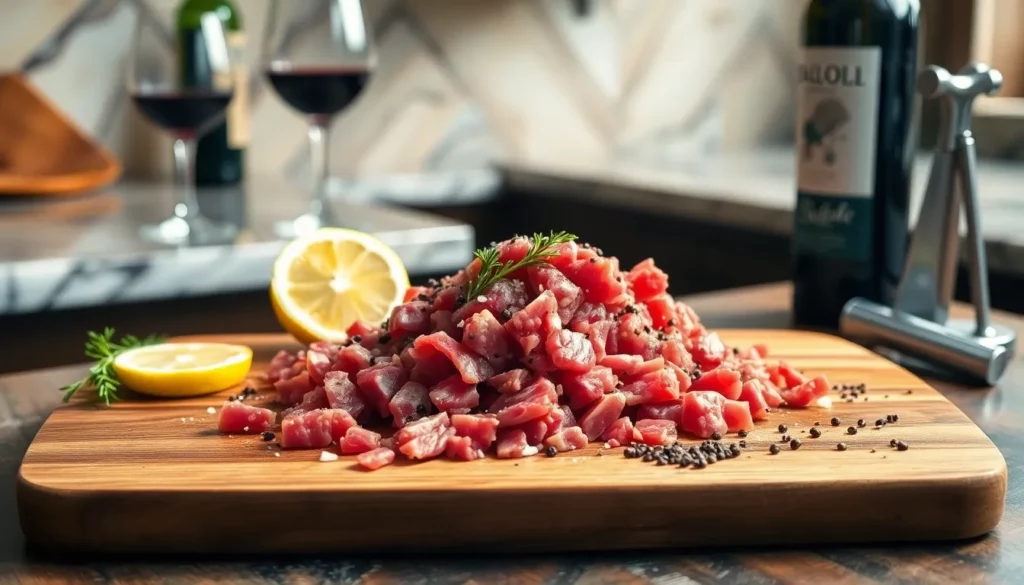
Battuta (pronounced ba-TOO-tah) is a traditional Italian preparation of raw beef, finely chopped by hand with a knife, originating from the Piedmont region in northwestern Italy. The term derives from the Italian verb battere (to beat or chop), reflecting the manual technique used to produce its distinctive texture. Unlike steak tartare, which is often coarsely ground or minced, battuta is meticulously cut into small, uniform pieces, preserving the meat’s integrity and yielding a silky, almost buttery mouthfeel.
The practice dates back to the 19th century, when Piedmontese butchers and home cooks began serving raw beef as a way to showcase the exceptional quality of local cattle, particularly the Fassona Piemontese breed. Today, battuta is recognized as a Prodotto Tradizionale (Traditional Product) by the Italian Ministry of Agricultural Policies, though it does not hold DOP or PGI status. Its heartland remains the Langhe and Monferrato areas, where it is often paired with the region’s prized white truffles.
“La battuta è un piatto di povertà che diventa ricchezza: basta un buon coltello, un taglio nobile e un filo d’olio.” — Traditional Piedmontese saying
The production method is deceptively simple: a lean cut of beef (typically top round, sirloin, or tenderloin) is trimmed of all fat and sinew, then sliced thinly and chopped repeatedly with a heavy chef’s knife until it reaches a fine, almost paste-like consistency. The chopping motion is rhythmic and deliberate, ensuring even texture without tearing the fibers. The result is a mound of raw meat that holds together lightly, ready to be seasoned.

Types & Grades
Battuta varies by the type of meat used, the aging of the beef, and the specific cut. The following table outlines the most common classifications:
| Type | Meat Source | Aging | Cut | Flavor Profile |
|---|---|---|---|---|
| Battuta di Fassona | Fassona Piemontese beef (IGP) | 14–30 days dry-aged | Top round (girello) or sirloin | Delicate, slightly sweet, with a clean finish |
| Battuta di Cavallo | Horse meat | Fresh (0–7 days) | Rump or loin | Leaner, more mineral, with a subtle gamey note |
| Battuta di Manzo | Common beef (e.g., Chianina, Marchigiana) | 7–21 days | Tenderloin or ribeye cap | Richer, more pronounced beef flavor |
| Battuta al Coltello | Any high-quality beef | Variable | Hand-chopped (not ground) | Textural, with a rustic bite |
Within these types, aging grades further define the product:
- Fresca (Fresh): Prepared within 24–48 hours of slaughter; bright red, very tender, mild flavor.
- Stagionata (Aged): Dry-aged for 15–30 days; deeper color, concentrated umami, firmer texture.
- Extra Stagionata (Extra-Aged): Over 30 days; rare for battuta, but used by some artisan producers; intense, almost nutty notes.
Authentic battuta is always hand-chopped; machine-ground versions are considered inferior and are not classified as true battuta.
How It’s Used in Cooking
Battuta is most famously served as Carne Cruda all’Albese (raw meat Alba-style), a dish that epitomizes Piedmontese simplicity. The meat is mounded on a plate, seasoned with a drizzle of extra virgin olive oil, a squeeze of lemon, salt, and pepper, and often topped with shaved white truffle (Tuber magnatum) in season. It is eaten with a fork, sometimes accompanied by thin slices of Parmigiano-Reggiano or a light salad of arugula.
Beyond the classic, battuta appears in several traditional and modern preparations:
- Battuta con Tartufo: The quintessential luxury version, with generous shavings of white or black truffle.
- Battuta al Coltello con Capperi e Acciughe: A Ligurian-influenced variant with capers and anchovies.
- Bruschetta con Battuta: Served on grilled bread rubbed with garlic, as an antipasto.
- Insalata di Battuta: Tossed with arugula, cherry tomatoes, and balsamic glaze.
- Battuta in Salsa Tonnata: A modern twist where the meat is dressed with a tuna-caper sauce, similar to vitello tonnato.
In professional kitchens, battuta is also used as a filling for ravioli or as a topping for pizza bianca, though these applications are less traditional. The key is to never cook the meat; battuta is exclusively a raw preparation.
How to Choose/Identify Authentic Battuta
For those seeking genuine battuta, whether from a butcher or a restaurant, the following cues ensure authenticity:
- Texture: The meat should be visibly hand-chopped, with irregular, small pieces that cling together. Avoid any product that looks uniformly ground or pasty.
- Color: Bright, cherry-red indicates freshness. Brownish or gray tones suggest oxidation or poor handling.
- Origin: Look for beef from the Fassona Piemontese breed, which carries IGP (Indicazione Geografica Protetta) certification. This guarantees the cattle were raised in Piedmont and fed according to traditional methods.
- Labeling: Authentic battuta is sold fresh, never frozen. Check for the words “battuta al coltello” or “carne cruda” on the label. Avoid products with added preservatives, colorants, or texturizers.
- Butcher: Purchase from a trusted Italian butcher or salumeria that specializes in raw meat preparations. In Italy, look for the “Prodotto Tradizionale” sticker from the MIPAAF.
- Price: High-quality battuta is not cheap. Expect to pay a premium for Fassona Piemontese or dry-aged cuts.
When dining out, ask if the battuta is made in-house and from which cut. Reputable restaurants will proudly describe their sourcing and preparation method.
Substitutes
If authentic battuta is unavailable, several Italian alternatives can approximate its character:
- Carpaccio: Thinly sliced raw beef, often served with arugula and Parmigiano. While not chopped, it offers a similar raw beef experience. Use when a more delicate, melt-in-the-mouth texture is desired.
- Tartare: Coarsely ground or chopped raw beef, typically seasoned with capers, onions, and Worcestershire sauce. Italian tartare is often simpler, with olive oil and lemon. Substitute when a chunkier texture is acceptable.
- Bresaola: Air-dried, salted beef that is sliced paper-thin. It is not raw, but its intense flavor and tenderness make it a good stand-in for battuta in salads or antipasti, especially when raw meat is not preferred.
- Tagliata: A seared, sliced steak served rare. While cooked on the outside, the interior remains raw. Use when a warm, caramelized contrast is wanted.
For non-Italian options, steak tartare (French style) is the closest, though it often includes more aggressive seasonings. The key difference is that battuta relies on the purity of the meat, so any substitute should be minimally seasoned.
Conclusion
Battuta is more than a dish; it is a testament to the Italian philosophy of letting exceptional ingredients speak for themselves. From its origins in the hills of Piedmont to its modern interpretations, this hand-chopped raw beef celebrates texture, provenance, and simplicity. Whether enjoyed with white truffle or a mere squeeze of lemon, authentic battuta offers a sensory experience that connects the diner to centuries of culinary tradition. For the best results, seek out Fassona Piemontese beef, buy from a trusted artisan, and savor it immediately.
FAQ
What is the difference between battuta and tartare?
Battuta is hand-chopped with a knife into very fine pieces, resulting in a silky, almost spreadable texture. Tartare is typically coarsely ground or chopped and often includes more robust seasonings like capers, onions, and Worcestershire sauce. Battuta emphasizes the pure flavor of high-quality beef with minimal seasoning.
Is battuta safe to eat raw?
Yes, when prepared with fresh, high-quality beef from a trusted source and handled hygienically. The meat should be consumed within 24 hours of preparation. Pregnant women, young children, the elderly, and immunocompromised individuals should avoid raw meat due to the risk of foodborne illness.
What is the best cut of beef for battuta?
The best cuts are lean, tender, and well-trimmed: top round (girello), sirloin, or tenderloin. For Fassona Piemontese, the girello is traditional. The cut should have minimal fat and sinew to ensure a clean, uniform chop.
Can battuta be made with horse meat?
Yes, battuta di cavallo is a traditional variation, especially in northern Italy. Horse meat is leaner and has a slightly sweeter, more mineral flavor. It is prepared the same way as beef battuta and is often served with olive oil and lemon.
How should battuta be stored?
Battuta should be stored in the refrigerator at 0–4°C (32–39°F) and consumed within 24 hours of preparation. It is best eaten immediately after chopping. Do not freeze, as freezing damages the texture and compromises safety.
Leave a Reply