
Short Answer
What Is Cotto? Italian Ham Explained
Cotto, short for prosciutto cotto, is Italy’s cooked ham, a staple of the country’s salumi tradition. Unlike its raw, aged counterpart prosciutto crudo, cotto is made from a whole pork leg that is brined, sometimes lightly smoked, and then slowly cooked at low temperatures. The result is a tender, moist, and delicately flavored ham that is a cornerstone of Italian antipasti, sandwiches, and holiday meals. Originating in the northern regions, particularly Emilia-Romagna and Lombardy, cotto is now produced throughout Italy, each area adding its own twist. Key ingredients are high-quality pork, sea salt, and natural flavorings such as pepper, garlic, or herbs. The cooking process, often at around 70°C (158°F) for many hours, ensures the meat remains juicy and develops a characteristic pink color and subtle savory taste.
Origin & History
The tradition of cooking pork to preserve it dates back to ancient Roman times, but the specific technique for prosciutto cotto as we know it today emerged in the late 19th century in the Po Valley, especially around the cities of Parma and Modena. The invention of modern steam ovens and precise temperature control allowed producers to cook whole hams without drying them out, creating a product that could be sliced thin and eaten cold. Historical records from the early 1900s document the first commercial production of cotto in Lombardy, where it became a favorite among workers for its convenience and long shelf life. Unlike many Italian foods, cotto has few myths attached; its story is one of industrial innovation meeting artisanal skill. A unique anecdote: during the 1930s, the Italian government promoted cotto as a patriotic alternative to imported ham, leading to a boom in small-scale production that continues today.
What’s In It
Authentic cotto is made from the hind leg of a pig, typically from heavy breeds like Large White or Landrace. The leg is trimmed, deboned (unlike some traditional crudo), and injected with a brine solution containing salt, sugar, and sometimes sodium nitrite (for color and preservation). Natural flavorings vary by producer but often include black pepper, juniper berries, garlic, rosemary, or bay leaf. Some artisanal versions add wine or honey. The ham is then massaged to distribute the brine, left to rest for 24–48 hours, and cooked in a steam oven at controlled temperatures (65–75°C) for 10–14 hours depending on weight. After cooking, it is cooled rapidly and aged briefly (a few days to a week) to develop flavor. Key differences from similar dishes: unlike prosciutto crudo, cotto is cooked and has a softer, moister texture; unlike salame cotto, it is a whole-muscle product, not ground meat. It is also distinct from spalla cotta (cooked pork shoulder) which comes from a different cut.

Regional Variations
Cotto is produced across Italy, but regional differences in pig breeds, brining recipes, and cooking methods create distinct styles. Below is a comparison of three major regions:
| Region | Characteristics | Flavor Profile | Typical Use |
|---|---|---|---|
| Emilia-Romagna | Made from heavy pigs (e.g., Mora Romagnola); often includes a touch of white wine in the brine; cooked at lower temperatures for longer. | Delicate, slightly sweet, with a tender, melt-in-the-mouth texture. | Sliced thin as antipasto with tortellini or served in a tigella (flatbread). |
| Lombardy | Uses lighter pigs; brine often includes garlic and black pepper; sometimes lightly smoked over beechwood. | More savory and peppery, with a firmer bite. | Classic in panino con cotto (sandwich) with mustard or horseradish. |
| Campania | Smaller hams; brine may include chili flakes or fennel seeds; cooking time shorter. | Spicier, with a pronounced herbaceous note. | Often cubed and added to pasta dishes like pasta e fagioli or served with mozzarella. |
Other notable variations include cotto di Parma (a protected designation), cotto di San Daniele (though more famous for crudo), and cotto affumicato (smoked) from Alto Adige.
How It’s Traditionally Eaten
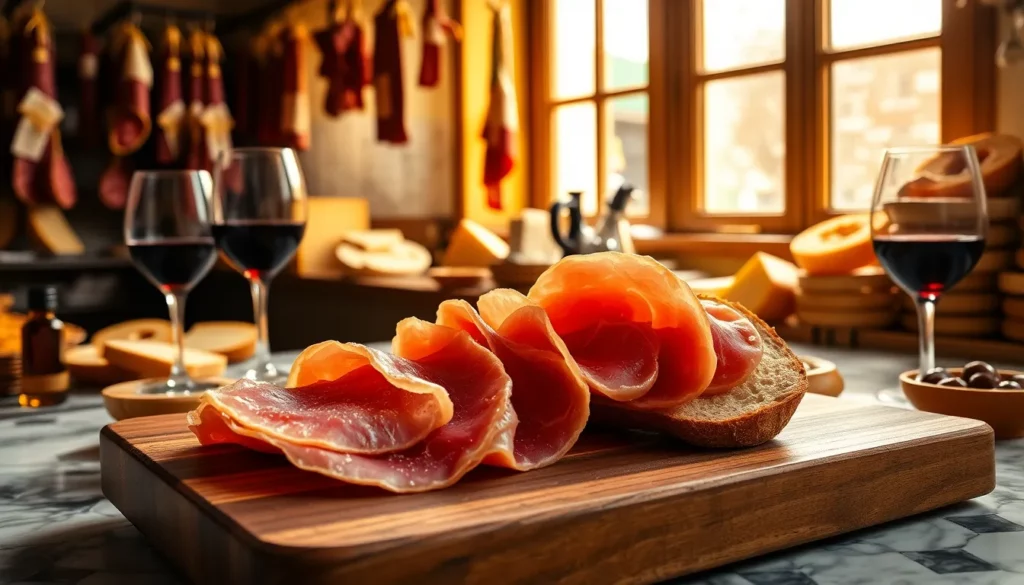
Cotto is a versatile ingredient in Italian cuisine. It is most commonly served as a secondo (main course) or as part of an antipasto platter, sliced thin and accompanied by bread, olives, and pickled vegetables. It also appears in primi (first courses) such as risotto al prosciutto cotto or pasta con prosciutto cotto e piselli. In everyday meals, cotto is a favorite for sandwiches (panino con cotto), often paired with cheese like fontina or provolone and a drizzle of olive oil. During holidays, especially Christmas and Easter, a whole baked cotto glazed with honey or balsamic vinegar is a centerpiece. Unlike crudo, which is reserved for special occasions, cotto is an everyday ham, enjoyed by children and adults alike. It is also used in stuffed vegetables, frittatas, and as a filling for cannelloni.
Common Mistakes / What It’s Not
Many American-Italian misconceptions surround cotto. First, it is not the same as “ham” in the American sense (which is often heavily processed, smoked, and sweetened). Authentic cotto is minimally processed, with a clean pork flavor. Second, it is not a substitute for prosciutto crudo in recipes; the two have different textures and salt levels. Third, cotto is not always pink; some artisanal versions may have a pale beige color if no nitrites are used. Fourth, it is not a cheese—though the term “cotto” also appears in cheese names (e.g., cotto cheese), this article refers to the ham. Finally, do not confuse prosciutto cotto with salame cotto (cooked salami), which is ground and emulsified. To avoid mistakes, always look for the label “prosciutto cotto” and check the ingredient list for simple, natural components.
Where to Try It / What to Order
For the best experience, visit a salumeria (deli) in Italy and ask for prosciutto cotto tagliato a mano (hand-sliced). In Emilia-Romagna, try the cotto di Parma from a producer like Levoni or Villani. In Lombardy, seek out cotto di Milano from Negroni. In Campania, look for cotto di Napoli from local butchers. For a full meal, order a tagliere di salumi (mixed cured meat platter) that includes cotto, or a panino con prosciutto cotto e formaggio at a bar. Festivals such as the Sagra del Prosciutto Cotto in Parma (held in September) offer tastings and demonstrations. When ordering abroad, specify “prosciutto cotto” to avoid confusion with other hams.
Related Dishes
FAQ
What is the difference between prosciutto cotto and prosciutto crudo?
Prosciutto cotto is cooked (steam-baked) and has a tender, moist texture with a mild flavor. Prosciutto crudo is raw, dry-cured, and aged, resulting in a firmer, saltier, and more intense taste.
Is prosciutto cotto healthy?
In moderation, yes. It is a good source of protein and B vitamins, but it contains sodium and nitrites. Artisanal versions with no added nitrites are available. It is leaner than many other cured meats.
Can I substitute prosciutto cotto with regular ham?
Not ideally. Regular supermarket ham often contains added water, sugars, and fillers, and lacks the delicate flavor and texture of authentic cotto. For Italian recipes, seek out genuine prosciutto cotto from a deli.
How should I store prosciutto cotto?
Wrap tightly in plastic wrap or wax paper and refrigerate. Once sliced, consume within 5–7 days. Whole cotto can last up to 4 weeks. It can also be frozen for up to 2 months, though texture may suffer.
What wine pairs well with prosciutto cotto?
Light red wines like Bardolino or Lambrusco, or a crisp white like Pinot Grigio. For a classic pairing, serve with a dry Prosecco or Franciacorta.





Leave a Reply