
Short Answer
Couscous, a staple of North African cuisine, has found a cherished home in Italy, particularly in the regions of Sicily and Sardinia. This tiny semolina pasta, traditionally steamed and served with stews, embodies a cross-cultural culinary heritage that dates back centuries. In Italy, couscous is not merely an imported ingredient but a locally produced artisanal product, often made from durum wheat semolina and sometimes bearing Protected Geographical Indication (PGI) status. This article delves into the Italian perspective on couscous, exploring its production, varieties, culinary uses, and how to select authentic products.
What It Is
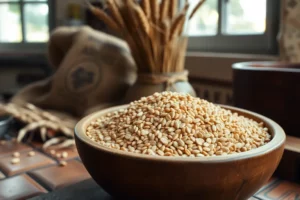
Couscous is a granular pasta made from semolina flour, typically from durum wheat, though barley and other grains are also used. The production method involves moistening the semolina with salted water and rolling it into tiny pellets, which are then dried. In Italy, the traditional method is still practiced in some areas, especially in Sicily and Sardinia, where couscous is known as cuscus or fregula (though fregola is a different, larger pasta). The Italian couscous is often coarser and more irregular than its North African counterpart, reflecting artisanal hand-rolling.
The region of origin for Italian couscous is primarily the island of Sicily, particularly the town of San Vito Lo Capo, which hosts an annual Couscous Fest. Sardinia also has a strong tradition, with fregula being a similar but distinct product. While there is no DOP (Denominazione di Origine Protetta) for couscous itself, the “Couscous di San Vito Lo Capo” is recognized as a traditional agri-food product (PAT) by the Italian Ministry of Agricultural Policies. Additionally, “Couscous di Sardegna” has been proposed for PGI status, reflecting its unique production methods and cultural significance.

Types & Grades
Italian couscous varies by grain size, toasting, and regional tradition. The following table outlines the main types:
| Type | Grain Size | Toasting | Region | Typical Use |
|---|---|---|---|---|
| Cuscus fino | Fine (0.5–1 mm) | No | Sicily (coastal) | Fish stews, light soups |
| Cuscus medio | Medium (1–2 mm) | Optional | Sicily (inland) | Meat stews, vegetable ragù |
| Cuscus grosso | Coarse (2–3 mm) | Often toasted | Sardinia | Hearty stews, baked dishes |
| Fregula sarda | Irregular, 2–4 mm | Always toasted | Sardinia | Seafood, soups, salads |
Grades are not officially classified, but artisanal producers often label their couscous by the size of the sieve used. Toasted varieties (like fregula) offer a nuttier flavor and firmer texture, while untoasted couscous is more neutral and absorbs flavors readily.
How It’s Used in Cooking
In Italian cuisine, couscous is a versatile ingredient that appears in both traditional and contemporary dishes. The most iconic preparation is cuscus alla trapanese, a fish stew from Trapani, Sicily, where the couscous is steamed and then served with a rich broth of mixed fish, tomatoes, garlic, and herbs. Another classic is cuscus di verdure, a vegetable version often made with eggplant, zucchini, and peppers.
In Sardinia, fregula is used in fregula con arselle (with clams) or baked in the oven with meat and vegetables. Chefs also incorporate couscous into salads, stuffed vegetables, and even desserts (e.g., sweet couscous with milk and cinnamon). The key technique is steaming: traditional couscous is steamed twice in a special pot called a couscoussier, but Italian home cooks often use a simpler method of soaking in hot broth or water.
“Il cuscus è un piatto di pace, che unisce culture diverse in un unico sapore.” – Sicilian proverb
Modern Italian chefs have elevated couscous to fine dining, pairing it with saffron, bottarga, or truffles, demonstrating its adaptability.
How to Choose/Identify Authentic COUSCOUS
When selecting authentic Italian couscous, look for these cues:
- Origin label: Seek products from Sicily or Sardinia, especially those with PAT (Traditional Agri-food Product) recognition or PGI indication.
- Ingredient list: Authentic Italian couscous should contain only durum wheat semolina and water – no additives, preservatives, or artificial colors.
- Texture: Artisanal couscous is irregular in shape and size, not perfectly uniform like industrial versions.
- Color: Natural golden yellow from durum wheat; avoid overly bright or pale shades.
- Aroma: Toasted varieties (like fregula) should smell nutty and slightly roasted.
- Packaging: Look for producers that specify the region (e.g., “Prodotto in Sicilia”) and traditional methods.
For commercial buyers, check for certifications such as IGP (Indicazione Geografica Protetta) for Sardinian couscous if it becomes official, or the Marchio Collettivo for San Vito Lo Capo couscous.
Substitutes
If authentic Italian couscous is unavailable, several Italian substitutes can be used, each with distinct characteristics:
- Fregola sarda: The closest substitute, especially for toasted couscous. It is larger and chewier, ideal for stews and soups.
- Orzo (risoni): A rice-shaped pasta that mimics the small grain size of fine couscous. Works well in salads and light broths.
- Semolina flour (coarse): When cooked and fluffed, coarse semolina can approximate the texture of couscous, though it lacks the distinct grain shape.
- Maltagliati or other small pasta: For hearty dishes, broken pasta pieces can substitute, but they absorb less liquid.
These substitutes are chosen based on the dish’s requirements: fregola for texture, orzo for size, and semolina for a similar graininess. Avoid using instant couscous as a substitute for artisanal Italian couscous, as the texture and flavor differ significantly.
Conclusion
Couscous in Italy is more than a foreign import; it is a testament to centuries of cultural exchange and local adaptation. From the sun-drenched coasts of Sicily to the rugged hills of Sardinia, Italian couscous offers a unique blend of tradition and versatility. Whether you choose fine cuscus for a delicate fish stew or toasted fregula for a robust baked dish, understanding its origins and production methods enriches the culinary experience. When shopping, prioritize artisanal, region-specific products to enjoy the authentic taste of Italian couscous.
FAQ
Is couscous a pasta or a grain?
Couscous is technically a pasta, as it is made from semolina flour and water, but it is often treated as a grain in cooking due to its small, granular form. In Italy, it is classified as a pasta product.
What is the difference between Italian couscous and North African couscous?
Italian couscous, especially from Sicily and Sardinia, is often coarser, more irregular, and sometimes toasted (like fregula). North African couscous is typically finer and more uniform. Italian versions also emphasize local durum wheat and traditional hand-rolling methods.
Can I use instant couscous for Italian recipes?
Instant couscous is not recommended for authentic Italian dishes like cuscus alla trapanese, as it lacks the texture and ability to absorb broth properly. Artisanal Italian couscous requires steaming or slow hydration to achieve the desired consistency.

Leave a Reply