
Short Answer
What It Is
Risotto rice is not a single variety but a category of short- to medium-grain rice cultivated primarily in the Po Valley region of northern Italy, spanning Piedmont, Lombardy, and Veneto. Its defining characteristic is a high starch content, specifically two types of starch: amylose and amylopectin. The latter, a branched molecule, is responsible for the creamy, velvety texture that distinguishes a properly made risotto from other rice dishes. The production method involves careful irrigation, traditional harvesting, and often aging for one to two years to enhance the grain’s firmness and starch structure.
The most prestigious varieties have obtained DOP (Denominazione di Origine Protetta) or PGI (Indicazione Geografica Protetta) status from the European Union. For example, Riso di Baraggia Biellese e Vercellese DOP is grown in a specific area of Piedmont and must meet strict quality standards. Similarly, Riso Nano Vialone Veronese PGI comes from the Verona province and is prized for its ability to absorb flavors while maintaining a firm bite. These certifications guarantee the rice’s origin, production methods, and authenticity.
Types & Grades
Italian risotto rice is classified into four commercial grades based on grain size, shape, and starch content. The following table summarizes the main categories:
| Grade | Examples | Characteristics | Best Use |
|---|---|---|---|
| Superfino | Arborio, Carnaroli | Large, plump grains; high amylopectin; excellent creaminess | Classic risotto, especially with delicate sauces |
| Semifino | Vialone Nano, Baldo | Medium grains; good starch release; holds shape well | Risotto with vegetables or seafood |
| Fino | Roma, Padano | Smaller grains; moderate starch; less creamy | Everyday risotto, soups, or rice salads |
| Comune | Originario, Maratelli | Short, round grains; low starch; firm texture | Minestrone, stuffed vegetables, or desserts |
Within the Superfino grade, Carnaroli is often called the “king of risotto rice” due to its superior ability to absorb liquid without becoming mushy. Arborio is more widely available and produces a creamier result but can overcook more easily. Vialone Nano (Semifino) is the traditional choice for risotto in Veneto, especially for dishes like Risotto al Radicchio.
How It’s Used in Cooking
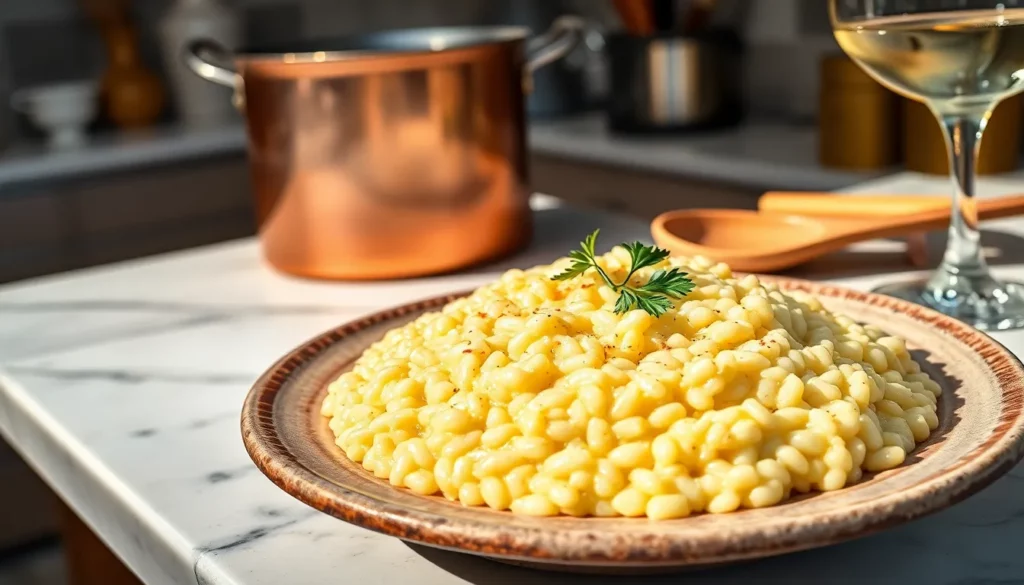
Risotto rice is the foundation of the iconic Italian dish risotto, a slow-cooked preparation where the grains are toasted in butter or oil, then gradually hydrated with hot broth while being stirred constantly. This agitation releases the starch, creating a creamy emulsion without the need for cream. Traditional applications include:
- Risotto alla Milanese – Saffron-infused risotto from Lombardy, often served with ossobuco.
- Risotto ai Funghi – With porcini mushrooms, a classic autumn dish.
- Risotto al Radicchio – Using Treviso radicchio for a bitter-sweet flavor.
- Risotto di Mare – Seafood risotto, popular along the Adriatic coast.
- Arancini – Fried rice balls made from leftover risotto, stuffed with mozzarella or ragù.
Beyond risotto, the rice is used in minestrone, insalata di riso (rice salad), and even desserts like budino di riso (rice pudding). The key to success is using the correct grade: Superfino for creamy risotto, Semifino for dishes where individual grains should remain distinct.
How to Choose/Identify Authentic RISOTTO
When purchasing risotto rice, look for these authenticity cues:
- DOP/PGI labels – Seek out Riso di Baraggia Biellese e Vercellese DOP or Riso Nano Vialone Veronese PGI for guaranteed origin and quality.
- Grain appearance – Authentic Superfino grains are large, pearly, and have a white “eye” (the germ). Avoid broken grains or excessive dust.
- Packaging information – Reputable producers list the variety, harvest year, and aging period. Aged rice (1–2 years) is preferred because it absorbs liquid more evenly.
- Starch test – Rub a few grains between your fingers; they should feel slightly chalky, indicating high starch content.
- Price – Genuine DOP/PGI rice costs more than generic supermarket brands. Be wary of very cheap “risotto rice” that may be a blend of lower grades.
“Il risotto non si insegna, si impara.” – Italian proverb (Risotto is not taught, it is learned.)
Substitutes
While true risotto rice is irreplaceable for authentic texture, several Italian alternatives can be used in a pinch:
- Baldo – A Semifino variety with good creaminess, suitable for risotto if Carnaroli is unavailable.
- Roma – A Fino grade that works for everyday risotto but yields a less creamy result.
- Pearl barley – Not rice, but used in orzotto, a northern Italian dish similar to risotto, with a chewy texture.
- Farro – An ancient wheat grain that can be cooked risotto-style for a nutty, hearty alternative.
For gluten-free needs, cornmeal (polenta) or quinoa can mimic the creamy consistency, though the flavor profile differs significantly. Always adjust liquid ratios and cooking times when substituting.
Conclusion
Risotto rice is a cornerstone of Italian gastronomy, with a rich history rooted in the Po Valley. Understanding the differences between grades—Superfino, Semifino, Fino, and Comune—empowers cooks to select the right grain for each dish. Authenticity is safeguarded by DOP and PGI certifications, which guarantee origin and quality. Whether you are preparing a classic Milanese risotto or experimenting with modern variations, choosing the correct rice is the first step toward culinary success. Remember: the best risotto starts with the best rice.
FAQ
What is the best rice for risotto?
Carnaroli is widely considered the best due to its high starch content and ability to stay al dente. Arborio is a good alternative, while Vialone Nano is preferred for delicate risottos in Veneto.
Can I use regular long-grain rice for risotto?
No, long-grain rice lacks the necessary starch (amylopectin) to create the creamy texture. You will end up with a pilaf-like dish, not a true risotto.
How can I tell if risotto rice is authentic?
Look for DOP or PGI labels, check the grain size (large and pearly for Superfino), and buy from reputable producers who indicate the variety and harvest year. Avoid broken grains and excessive dust.
Does risotto rice need to be aged?
Yes, aging for 1–2 years improves the grain's firmness and starch structure, allowing for better liquid absorption and a creamier result without mushiness.





Leave a Reply