

Short Answer
What It Is
Dandelion (Taraxacum officinale) is a perennial herbaceous plant native to Eurasia, now naturalized worldwide. In Italy, it is known as tarassaco or dente di leone (lion’s tooth), a reference to its jagged leaves. Unlike many cultivated greens, dandelion is often foraged from meadows and uncultivated fields, especially in the regions of Lazio, Campania, Puglia, and Sicily, where it grows abundantly in spring and autumn. While it does not hold a DOP (Denominazione di Origine Protetta) or PGI (Indicazione Geografica Protetta) status—due to its wild nature—it is a cornerstone of the Italian cucina povera tradition, celebrated for its intense bitterness and nutritional density.
The plant is harvested when young, before flowering, as the leaves become excessively bitter and tough after the flower stalk emerges. The entire plant is edible: leaves, flowers, and roots. In Italian culinary practice, the leaves are the most commonly used part, either raw in salads or cooked to mellow their sharpness. The roots are sometimes roasted and ground as a coffee substitute, while the flowers are used to make a traditional liqueur called Tarassaco or infused in honey.
Types & Grades
Dandelion is not classified by official grades like aged cheeses or cured meats, but it can be distinguished by its origin (wild vs. cultivated) and leaf morphology. The following table outlines the primary types encountered in Italian markets and kitchens:
| Type | Description | Flavor Profile | Best Use |
|---|---|---|---|
| Wild Dandelion | Foraged from fields, roadsides, and meadows. Leaves are deeply lobed, often narrower and more irregular. | Intensely bitter, earthy, with a slight peppery bite. | Raw in salads (when very young), or blanched and sautéed to reduce bitterness. |
| Cultivated Dandelion | Grown in gardens or farms, often selected for larger, less bitter leaves. Varieties include ‘Catalogna’ (a type of chicory sometimes confused with dandelion) and ‘Amélioré à Cœur Plein’. | Milder bitterness, tender texture, more uniform appearance. | Salads, gentle cooking, or as a garnish. |
| Blanched Dandelion | Leaves are grown under cover or earthed up to exclude light, resulting in pale, tender leaves with reduced bitterness. | Very mild, almost sweet, with a delicate crunch. | Raw in salads, as a delicate side dish, or in fine dining presentations. |
| Dandelion Greens (Mature) | Older leaves harvested after flowering; tougher and more fibrous. | Extremely bitter, fibrous. | Cooked in soups, stews, or as a filling for pasta (e.g., ravioli) after thorough cooking. |
In Italian markets, dandelion is often sold in bunches alongside other bitter greens like cicoria (chicory) and rucola (arugula). The price and quality depend on freshness, leaf condition, and whether the plant is wild or cultivated.
How It’s Used in Cooking
Dandelion’s bitterness is its defining characteristic, and Italian cooks have developed techniques to balance or embrace it. The leaves are used in both raw and cooked preparations, often paired with ingredients that provide fat, acid, or salt to counter the bitterness.
Traditional Dishes
- Insalata di Tarassaco – Young, tender dandelion leaves are dressed with extra-virgin olive oil, lemon juice, salt, and sometimes hard-boiled eggs or pancetta. The bitterness is offset by the richness of the egg and the saltiness of the cured meat.
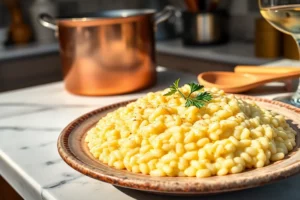
- Risotto con Tarassaco – A spring risotto where blanched dandelion leaves are puréed and stirred into the rice at the end of cooking, giving a vibrant green color and earthy flavor. Often finished with Parmigiano-Reggiano and butter.
- Frittata di Tarassaco – A simple frittata made with sautéed dandelion leaves, eggs, and pecorino cheese. A classic piatto unico (one-dish meal) from central Italy.
- Minestra di Tarassaco – A rustic soup from Puglia, where dandelion leaves are simmered with potatoes, garlic, and chili flakes, then served with crusty bread and a drizzle of olive oil.
- Pasta con Tarassaco – Orecchiette or other short pasta tossed with sautéed dandelion, anchovies, garlic, and breadcrumbs. A typical dish from the Salento peninsula.
Preservation and Other Uses
Dandelion leaves can be blanched and frozen for later use. The flowers are used to make Tarassaco liqueur, a digestif popular in the Alps and northern Italy. The roots, after roasting, are ground and brewed as a caffeine-free coffee substitute, known as caffè di tarassaco.
“Il tarassaco è l’erba che non si compra, si raccoglie. È il sapore della primavera nei campi.” – Traditional Italian saying (Dandelion is the herb you don’t buy, you gather. It is the taste of spring in the fields.)
How to Choose/Identify Authentic Dandelion
When buying dandelion, whether from a market or foraging, look for these authenticity cues:
- Leaf shape: True dandelion leaves are deeply lobed, with a rosette growth pattern. The lobes point backward toward the base. Avoid leaves that are smooth-edged or have a central stalk that is hollow (that may be chicory).
- Color: Wild dandelion is a deep, vibrant green. Blanched varieties are pale yellow-white. Avoid yellowing or wilted leaves.
- Freshness: The leaves should be crisp, not limp. The cut end should look moist, not dried out.
- Smell: Fresh dandelion has a mild, earthy scent. A strong, acrid smell indicates age or spoilage.
- Source: If buying from a farmer’s market, ask if the greens are wild-foraged or cultivated. Wild dandelion will have more intense flavor and may contain small amounts of soil; wash thoroughly.
- Season: Peak season is early spring (March–May) and again in autumn (September–November). Out-of-season dandelion is likely cultivated and may be less bitter.
For commercial buyers (restaurants, retailers), look for suppliers who can provide consistent quality and traceability. Some Italian producers now offer certified organic wild dandelion, which can be a selling point for authenticity.
Substitutes
If dandelion is unavailable, several Italian greens can be used as substitutes, each with a similar bitter profile:
- Chicory (Cichorium intybus) – The closest substitute. Both wild and cultivated chicory (e.g., cicoria catalogna) have a comparable bitterness and texture. Use in equal quantities.
- Endive (Cichorium endivia) – Curly endive or escarole are milder but work well in salads and cooked dishes. Blanch if you want to reduce bitterness further.
- Arugula (Eruca sativa) – More peppery than bitter, but can replace dandelion in raw salads. Not ideal for cooking as it loses texture quickly.
- Radicchio (Cichorium intybus var. foliosum) – Red radicchio (e.g., Treviso, Chioggia) adds color and a pleasant bitterness. Best used raw or grilled.
When substituting, consider the dish: for a cooked risotto or soup, chicory or escarole are best; for a raw salad, a mix of arugula and radicchio can mimic the complexity of dandelion.
Conclusion
Dandelion is far more than a common weed; it is a treasured ingredient in Italian cuisine, embodying the principles of cucina povera—using what nature provides with respect and creativity. Its intense bitterness, when balanced with rich fats, acids, and salt, yields dishes that are both humble and sophisticated. Whether foraged from a meadow or purchased at a market, authentic dandelion brings a taste of the Italian countryside to any table. By understanding its types, uses, and how to select it, cooks can fully harness the potential of this remarkable green.
FAQ
Is dandelion the same as chicory?
No, dandelion (Taraxacum officinale) and chicory (Cichorium intybus) are different plants, though they are often confused. Both have bitter leaves, but dandelion leaves are deeply lobed and grow in a rosette from the ground, while chicory leaves are more elongated and often have a central stalk. In Italian markets, 'cicoria' usually refers to chicory, while 'tarassaco' is dandelion.
Can I eat dandelion raw?
Yes, young, tender dandelion leaves can be eaten raw in salads. Their bitterness is best balanced with a vinaigrette, citrus, or rich ingredients like eggs, cheese, or cured meat. Older leaves are too bitter and fibrous for raw consumption and should be cooked.
Where can I buy authentic Italian dandelion?
In Italy, dandelion is sold at farmers' markets, greengrocers, and some supermarkets during spring and autumn. Outside Italy, look for Italian specialty stores or farmers' markets that carry wild greens. You can also forage for dandelion in pesticide-free areas, but be sure to correctly identify the plant.



Leave a Reply