
Short Answer
What It Is
Miele, the Italian word for honey, is a natural sweetener produced by honeybees from the nectar of flowers. In Italy, beekeeping (apicoltura) has ancient roots, dating back to the Etruscans and Romans, who valued honey not only as a food but also for medicinal and religious purposes. Today, Italian miele is celebrated for its exceptional quality, diversity, and strict regulatory protections. The production process involves beekeepers placing hives in specific floral areas, allowing bees to collect nectar, which is then transformed into honey through enzymatic activity and evaporation. After extraction, honey is typically filtered to remove impurities but is never heated above hive temperature to preserve its natural enzymes and aromatic compounds.
Italy boasts several Denominazione di Origine Protetta (DOP) and Indicazione Geografica Protetta (IGP) certifications for honey, ensuring that the product originates from a defined region and meets rigorous quality standards. Notable examples include Miele della Lunigiana DOP (Tuscany), Miele Varesino DOP (Lombardy), and Miele delle Dolomiti Bellunesi PGI (Veneto). These certifications guarantee that the honey is produced, processed, and packaged within the designated area, reflecting the unique terroir and floral biodiversity of each region.
“Il miele è il sole liquido della terra.” – Traditional Italian saying, meaning “Honey is the liquid sun of the earth.”
Types & Grades
Italian miele is classified primarily by its floral source, which determines its color, flavor, and texture. The two main categories are monofloral (predominantly from a single flower species) and polyfloral (from multiple flowers, also called millefiori). Within these, honey is further graded by color, ranging from water-white to dark amber, and by moisture content, which affects shelf life and crystallization. The following table outlines the most common Italian monofloral varieties:
| Variety | Floral Source | Flavor Profile | Color | Best Culinary Use |
|---|---|---|---|---|
| Acacia (Robinia) | Black locust tree | Delicate, floral, vanilla-like | Water-white to pale yellow | Sweetening beverages, drizzling over cheese |
| Chestnut (Castagno) | Chestnut tree | Intense, woody, slightly bitter | Dark amber | Savory dishes, aged cheeses, marinades |
| Lavender (Lavanda) | Lavender flowers | Floral, herbaceous, with a hint of spice | Light amber | Desserts, tea, pairing with goat cheese |
| Sunflower (Girasole) | Sunflower | Mild, fruity, with a waxy texture | Golden yellow | Baking, breakfast dishes |
| Eucalyptus (Eucalipto) | Eucalyptus tree | Mentholated, medicinal, bold | Amber | Throat soothers, savory glazes |
| Millefiori (Polyfloral) | Mixed wildflowers | Complex, variable, often fruity | Varies from light to dark | All-purpose, table honey |
Grades also consider the honey’s granulation (crystallization) state: liquid, creamy, or crystallized. Creamy honey is deliberately crystallized to a smooth, spreadable consistency, while crystallized honey is a natural process that does not affect quality. In Italy, honey is often labeled with the year of harvest and the specific botanical origin, allowing consumers to appreciate the vintage and terroir.
How It’s Used in Cooking
Italian cuisine employs miele in both sweet and savory applications, reflecting its versatility. Historically, honey was the primary sweetener before sugar became widely available, and it remains a key ingredient in many traditional recipes.
Sweet Applications
- Panforte: A dense, spiced fruitcake from Siena, made with honey, nuts, and candied fruit.
- Torrone: A nougat confection of honey, egg whites, and almonds, popular during Christmas.
- Ricotta al Miele: Fresh ricotta drizzled with honey and served as a simple dessert.
- Biscotti: Many regional cookies incorporate honey for moisture and flavor.
Savory Applications
- Glazes for Meats: Honey is used to glaze roasted pork, chicken, or duck, often combined with balsamic vinegar or herbs.
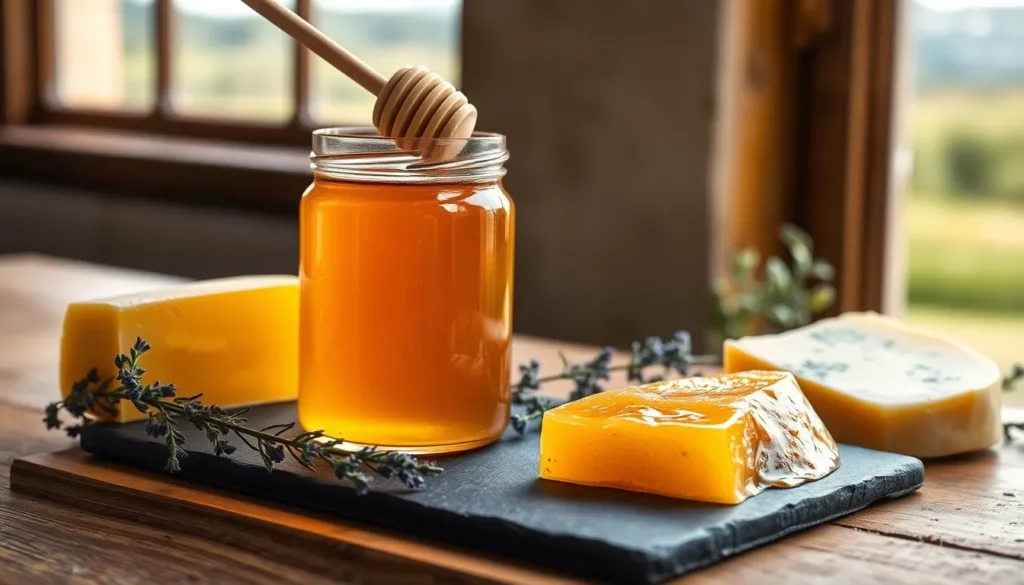
- Cheese Pairings: Drizzled over aged cheeses like Pecorino or Gorgonzola, honey balances saltiness and adds complexity.
- Salad Dressings: Whisked with olive oil, lemon juice, and mustard for a vinaigrette.
- Marinades: Mixed with garlic, rosemary, and wine for lamb or game.
Beverages
Honey is used in idromele (mead), an ancient fermented drink, and as a sweetener for herbal teas and caffè d’orzo. In Sicily, latte di mandorla (almond milk) is often sweetened with honey.
How to Choose/Identify Authentic MIELE
When purchasing Italian miele, look for the following indicators of authenticity and quality:
- DOP/PGI Labels: These certifications guarantee origin and production standards. Check for the official EU logo and the specific denomination (e.g., Miele della Lunigiana DOP).
- Transparent Labeling: Authentic honey lists the botanical origin (e.g., “Miele di Acacia 100%”) and the harvest year. Avoid blends with unspecified sources.
- Texture and Crystallization: Pure honey crystallizes over time; if it remains perfectly liquid indefinitely, it may have been heated or filtered excessively. Creamy honey should be smooth, not grainy.
- Price: High-quality monofloral or DOP honey commands a premium. Extremely cheap honey is often adulterated with sugar syrups.
- Smell and Taste: Authentic honey has a distinct floral aroma and a complex flavor that lingers. Adulterated honey tastes flatly sweet.
- Water Content: Italian law requires honey to have a moisture content below 20% (18% for DOP). This ensures stability and prevents fermentation.
For professional kitchens, sourcing directly from Italian beekeepers or reputable importers is recommended. Always store honey in a cool, dry place away from sunlight to preserve its properties.
Substitutes
While no substitute perfectly replicates the complexity of Italian miele, several Italian sweeteners can be used in specific contexts:
- Mostarda: A condiment of candied fruit in a mustard-flavored syrup, used with boiled meats and cheeses. It provides sweetness and pungency but is not a direct honey replacement.
- Vincotto: A cooked grape must syrup from Puglia, with a dark, sweet-sour profile. It works well in glazes and desserts but lacks honey’s floral notes.
- Saba: Also from cooked grape must, saba is thicker and more concentrated than vincotto. It can substitute honey in baking, though the flavor is fruitier.
- Sciroppo di Fichi: Fig syrup, a traditional sweetener from southern Italy, offers a rich, fruity sweetness suitable for drizzling over cheese or pancakes.
- Other Italian Honeys: If a specific variety is unavailable, another monofloral or polyfloral honey from a different region can be used, adjusting quantities to match flavor intensity.
In recipes where honey’s enzymatic properties are crucial (e.g., in baking for browning or moisture retention), substitutes may alter the outcome. For savory dishes, a combination of sugar and a touch of balsamic vinegar can mimic honey’s sweetness and acidity.
In conclusion, Italian miele is a treasure of culinary heritage, offering a spectrum of flavors and textures that reflect the country’s diverse landscapes. Whether enjoyed raw, paired with cheese, or incorporated into traditional recipes, authentic honey elevates any dish. By understanding its production, certifications, and uses, both home cooks and professionals can appreciate and select the finest miele Italy has to offer.
FAQ
What is the difference between DOP and PGI honey in Italy?
DOP (Denominazione di Origine Protetta) honey must be produced, processed, and packaged entirely within a specific region, using traditional methods. PGI (Indicazione Geografica Protetta) honey requires that at least one stage of production occurs in the region, offering slightly more flexibility. Both certifications ensure high quality and traceability.
How should I store Italian miele to maintain its quality?
Store honey in a tightly sealed glass or food-grade plastic container in a cool, dry place away from direct sunlight. Avoid refrigeration, as it accelerates crystallization. If honey crystallizes, gently warm the jar in a water bath at no more than 40°C (104°F) to return it to liquid state without damaging enzymes.
Can I use Italian miele in savory dishes, or is it only for desserts?
Absolutely. Italian miele is widely used in savory cooking, such as glazes for roasted meats, marinades, salad dressings, and as a pairing with aged cheeses like Pecorino or Gorgonzola. Its floral and fruity notes complement a range of ingredients, from balsamic vinegar to rosemary.
How can I tell if Italian honey is authentic and not adulterated?
Look for DOP or PGI labels, check the ingredient list for 100% honey with no added sugars, and note the botanical origin and harvest year. Authentic honey crystallizes naturally over time. Price is also a clue: very cheap honey is often adulterated. Purchase from reputable producers or specialty stores.
Leave a Reply