
Short Answer
What It Is
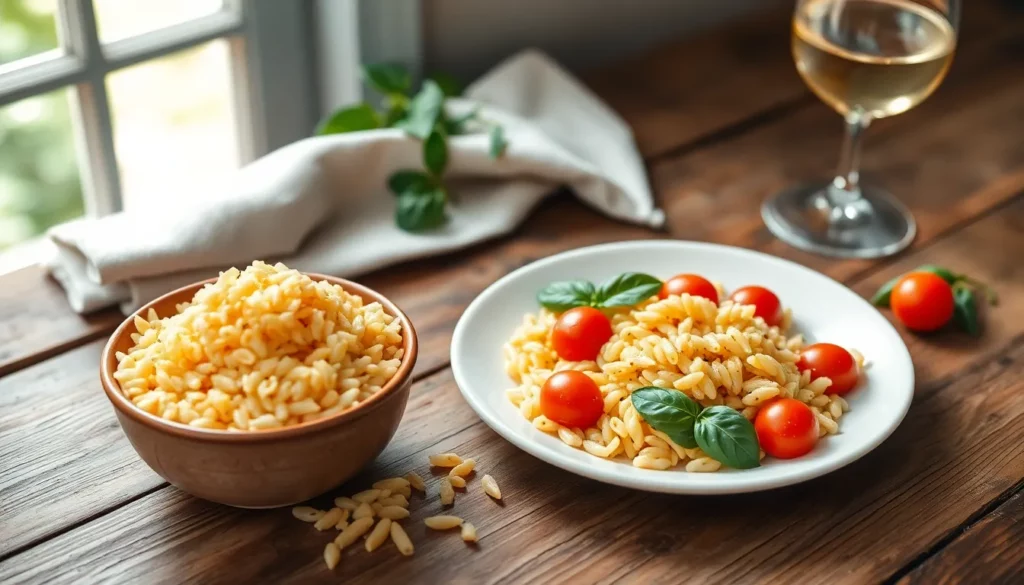
Orzo (Italian for ‘barley’) is a small, rice-shaped pasta made from durum wheat semolina. Despite its appearance, it is not a grain but a pasta, traditionally produced in Italy by extruding semolina dough through bronze dies and cutting it into tiny, elongated pieces that resemble barley grains. The name derives from the Latin hordeum, meaning barley, due to its visual similarity.
The production of orzo follows the same principles as other dried pasta: durum wheat semolina is mixed with water, kneaded, extruded, and dried at low temperatures (below 50°C) to preserve flavor and texture. Artisanal producers often use bronze dies, which create a rough, porous surface that helps sauces cling better. While orzo does not hold a specific DOP (Denominazione di Origine Protetta) or PGI (Indicazione Geografica Protetta) status as a shape, many high-quality orzo brands source their semolina from DOP-certified regions such as Semola di Grano Duro Rimacinata di Sicilia or use wheat from Puglia, where durum wheat cultivation is traditional.
Historically, orzo appears in Italian cookbooks as early as the 19th century, often used in broths and minestrone. Its small size made it ideal for stretching meals during lean times, and it remains a staple in southern Italian and Sardinian cuisines, where it is sometimes called risoni (big rice).
Types & Grades
Orzo is available in several varieties, distinguished by ingredient composition, production method, and intended use. The table below summarizes the main types:
| Type | Ingredients | Production Method | Best Use |
|---|---|---|---|
| Traditional Semolina Orzo | 100% durum wheat semolina, water | Bronze die extrusion, low-temperature drying | Soups, salads, pilafs |
| Whole Wheat Orzo | Whole durum wheat flour, water | Same as traditional; higher fiber | Hearty soups, grain bowls |
| Gluten-Free Orzo | Rice flour, corn flour, or legume flours | Extrusion with alternative binders | Gluten-free diets, light soups |
| Artisanal Bronze-Die Orzo | Premium semolina, often single-origin | Slow extrusion, drying at 35–40°C for 48+ hours | Risotto-style dishes, salads |
| Instant/Quick-Cook Orzo | Semolina, pre-cooked and dehydrated | Steaming then drying | Fast soups, one-pot meals |
Grades are not officially classified, but connoisseurs distinguish by color (pale yellow indicates high-quality semolina), surface texture (rough from bronze dies is preferred), and cooking behavior (al dente retention).
How It’s Used in Cooking
Orzo’s versatility makes it a favorite in both traditional and modern Italian cooking. Its small size allows it to cook quickly (typically 8–10 minutes) and absorb flavors readily.
Traditional Applications
- Minestrone – Orzo is a classic addition to vegetable soups, providing body without overwhelming the broth.
- Orzo in Brodo – A simple, comforting soup where orzo is simmered in chicken or beef broth, often finished with Parmesan and parsley.
- Orzo Salad – Cold or warm salads with tomatoes, basil, mozzarella, and a vinaigrette; popular in summer.
- Orzo Risotto – Cooked like risotto, with gradual addition of broth and stirring, yielding a creamy texture without the need for Arborio rice.
- Baked Orzo – Mixed with vegetables, cheese, and béchamel, then baked until golden (similar to pasticcio).
“In my grandmother’s kitchen in Puglia, orzo was never just a filler. It was the canvas for the season’s vegetables – a handful of orzo turned a simple broth into a meal.” – Maria Grazia, home cook from Bari
Modern chefs also use orzo in pilafs, stuffed peppers, and even as a base for seafood stews. Its ability to absorb sauces makes it ideal for one-pot dishes.
How to Choose/Identify Authentic ORZO
To ensure you are buying authentic Italian orzo, follow these guidelines:
- Check the ingredients list – Authentic orzo contains only durum wheat semolina and water. Avoid products with added preservatives, artificial colors, or “enriched” flours.
- Look for “100% Italian wheat” – Many premium brands specify the origin of the wheat (e.g., “Grano duro 100% italiano”). This is a sign of quality and traceability.
- Examine the color – High-quality orzo has a uniform, pale yellow hue. White or grayish tones may indicate poor-quality semolina or over-processing.
- Feel the texture – Authentic bronze-die orzo feels slightly rough to the touch. Smooth, shiny pasta is often made with Teflon dies, which produce a slick surface that repels sauce.
- Check for certifications – While orzo itself is not DOP, look for brands that carry IGP (Indicazione Geografica Protetta) for their wheat or are members of the Pastai Italiani association. Also, the “100% Italian” label is regulated by Italian law.
- Read the cooking time – Authentic dried orzo typically requires 8–10 minutes. Quick-cook versions (3–5 minutes) often sacrifice texture.
For commercial buyers, sourcing from reputable Italian mills (e.g., Molino Grassi, Molino Rossetto) ensures consistency. Always request a sample to test cooking performance and flavor.
Substitutes
When orzo is unavailable, several Italian pasta shapes can serve as substitutes, each with slightly different characteristics:
- Ditalini – Small, tube-shaped pasta; works well in soups and salads, though it is slightly larger and chewier.
- Stelline – Tiny star-shaped pasta; ideal for broths but less suitable for salads due to its delicate shape.
- Risoni – Another name for orzo itself; sometimes used interchangeably, but some brands label larger grains as risoni.
- Fregola Sarda – A Sardinian toasted pasta with a nutty flavor; excellent in soups and as a risotto base, but requires longer cooking.
- Pearl Couscous (Israeli Couscous) – Not Italian but similar in size; can be used in salads and pilafs, though it has a different texture.
For gluten-free diets, substitute with rice-shaped gluten-free pasta made from corn and rice flour, or use quinoa for a protein-rich alternative.
Conclusion
Orzo is a humble yet indispensable pasta that bridges the gap between soup, salad, and main course. Its history is rooted in Italian resourcefulness, and its modern applications are limited only by the cook’s imagination. By choosing authentic, bronze-die orzo made from Italian durum wheat, you ensure the best flavor and texture. Whether simmered in a fragrant broth or tossed with fresh vegetables, orzo brings a taste of Italy to every table.
FAQ
Is orzo a grain or a pasta?
Orzo is a pasta shape made from durum wheat semolina, not a grain. Its name means 'barley' in Italian because it resembles barley grains.
Can I use orzo in place of rice for risotto?
Yes, orzo can be cooked risotto-style by gradually adding broth and stirring. It yields a creamy texture similar to rice risotto, though the cooking time is shorter (about 10 minutes).
How do I store dried orzo?
Store dried orzo in an airtight container in a cool, dry place away from direct sunlight. It will keep for up to two years. Once cooked, refrigerate in a sealed container for up to 5 days.
What is the difference between orzo and risoni?
Risoni is another name for orzo, though some brands use 'risoni' for slightly larger grains. In practice, they are interchangeable.


Leave a Reply