
Short Answer
What It Is
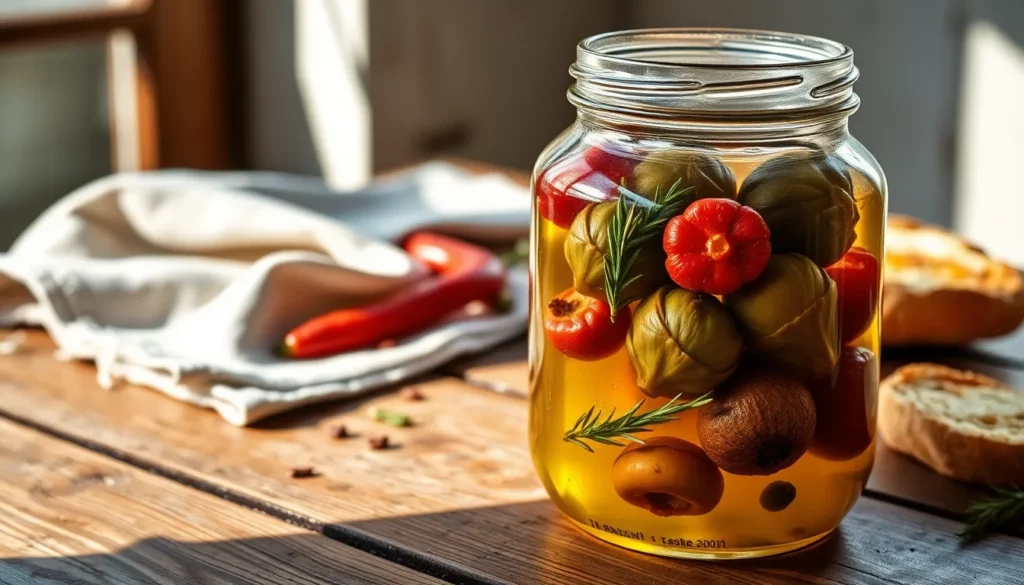
Sott’olio (literally “under oil” in Italian) is a traditional preservation method originating from the Mediterranean regions of Italy, particularly in the south such as Puglia, Sicily, and Campania. It involves blanching or salting vegetables, mushrooms, or sometimes fish, then submerging them in high-quality olive oil, often with herbs and spices. This technique dates back to ancient Roman times when oil was used to seal out air and prevent spoilage. Today, many sott’olio products are made with DOP (Denominazione di Origine Protetta) ingredients, such as DOP olive oil or DOP artichokes, but the term sott’olio itself is not a DOP designation. However, some regional products like “Melanzane sott’olio” from specific areas may have PGI status. The method relies on the oil’s ability to create an anaerobic environment, inhibiting microbial growth while infusing the vegetables with rich flavor.
Types & Grades
Sott’olio products vary widely based on the main ingredient, preparation method, and quality of oil. Below is a classification of common types and grades:
| Type | Main Ingredient | Typical Preparation | Grade/Quality |
|---|---|---|---|
| Classic Sott’olio | Mixed vegetables (carrots, celery, onions, peppers) | Blanched, salted, then packed in extra virgin olive oil with herbs | Standard (commercial) or Artisan (hand-packed, premium oil) |
| Funghi Sott’olio | Mushrooms (porcini, champignons, chanterelles) | Cleaned, sliced, briefly cooked in vinegar and water, then oil-packed | Wild vs cultivated; often graded by mushroom size and oil quality |
| Peperoni Sott’olio | Roasted bell peppers | Charred, peeled, seeded, then packed in oil with garlic and oregano | Sweet vs spicy; whole pieces vs strips |
| Carciofi Sott’olio | Artichokes (often from Paestum or Sardinia) | Trimmed, blanched in lemon water, then oil-packed | Baby artichokes vs large; often with mint or chili |
| Pesce Sott’olio | Anchovies, tuna, sardines | Cured or cooked, then packed in oil | Often with DOP oil; quality depends on fish freshness |
Grades are typically categorized as “Standard” (mass-produced, lower oil quality) and “Artisan” (small-batch, using DOP extra virgin olive oil, hand-selected ingredients). Some producers also offer “Aged” sott’olio, where the product is left to mature for several months to develop deeper flavors.
How It’s Used in Cooking
Sott’olio is a versatile ingredient in Italian cuisine. It can be used as an antipasto, a condiment, or a component in main dishes. Traditional applications include:
- Antipasto Platters: Sott’olio vegetables are a staple on Italian antipasto boards, served alongside cured meats, cheeses, and bread.
- Pasta and Risotto: Chopped sott’olio mushrooms or artichokes can be sautéed and added to pasta or risotto for an instant flavor boost.
- Salads: The oil from sott’olio can be used as a dressing base, and the vegetables themselves add texture and taste.
- Bruschetta and Crostini: Topped with sott’olio peppers or eggplants, these make quick appetizers.
- Sandwiches and Panini: Sott’olio vegetables add moisture and flavor without the need for additional condiments.
Signature dishes include “Bruschetta con peperoni sott’olio” and “Pasta con funghi sott’olio”. The oil itself is often reused for cooking or drizzling, as it carries the infused flavors.
How to Choose/Identify Authentic SOTT’OLIO
When purchasing sott’olio, look for these authenticity cues:
- Oil Quality: The oil should be extra virgin olive oil (EVOO), preferably with DOP certification. Avoid products with seed oils or “olive oil” without specification.
- Ingredient List: Should be short: vegetables, oil, salt, vinegar, herbs. No artificial preservatives or colorings.
- Packaging: Glass jars are preferred; the vegetables should be fully submerged in oil. Check for any signs of spoilage (cloudiness, off smells).
- Origin: Look for “Prodotto in Italia” and ideally a specific region. Some products have PGI or DOP for the main ingredient (e.g., Carciofo di Paestum PGI).
- Texture: Authentic sott’olio vegetables should be firm, not mushy. The oil should be clear and aromatic.
- Price: Artisan sott’olio is more expensive due to quality ingredients and hand-processing. Extremely cheap products likely use low-quality oil.
“Il vero sott’olio si riconosce dall’olio extravergine e dalla consistenza delle verdure.” – Traditional Italian saying
Substitutes
If sott’olio is unavailable, consider these Italian substitutes:
- Sott’aceto (Pickled vegetables): Preserved in vinegar instead of oil; lighter and tangier. Use in salads or antipasti.
- Giardiniera: Mixed pickled vegetables, often with a spicy kick. Good for sandwiches and relish.
- Olive Ascolane: Stuffed and fried olives, but not a direct substitute; more of a different preparation.
- Homemade version: You can quickly make a simple sott’olio by blanching vegetables and packing them in good olive oil with herbs, though it requires proper sterilization for safety.
Each substitute changes the flavor profile, so choose based on the dish: for a rich, oily texture, nothing replaces authentic sott’olio; for acidity, use sott’aceto.
Conclusion
Sott’olio is a cornerstone of Italian preserved food, embodying the country’s respect for seasonal ingredients and traditional methods. Whether you’re an Italian chef or a home cook, understanding the types, grades, and uses of sott’olio will elevate your culinary repertoire. Always prioritize quality—look for extra virgin olive oil, transparent ingredient lists, and Italian origin. With this guide, you can confidently select and use authentic sott’olio in your kitchen.
FAQ
What is the difference between sott'olio and sott'aceto?
Sott'olio preserves vegetables in olive oil, giving a rich, smooth flavor, while sott'aceto uses vinegar, resulting in a tangy, acidic taste. Sott'olio is typically used as an antipasto or condiment, whereas sott'aceto is often used in salads or as a pickle.
How long does sott'olio last after opening?
Once opened, sott'olio should be refrigerated and consumed within about one month. Always ensure the vegetables remain fully submerged in oil to prevent spoilage.
Can I make sott'olio at home?
Yes, but it requires careful sterilization and proper acidification (usually with vinegar or lemon juice) to prevent botulism. Blanch vegetables, pack them in clean jars, cover with high-quality extra virgin olive oil, and store in a cool, dark place. For safety, follow tested recipes from reputable sources.
Leave a Reply