
Short Answer
What It Is
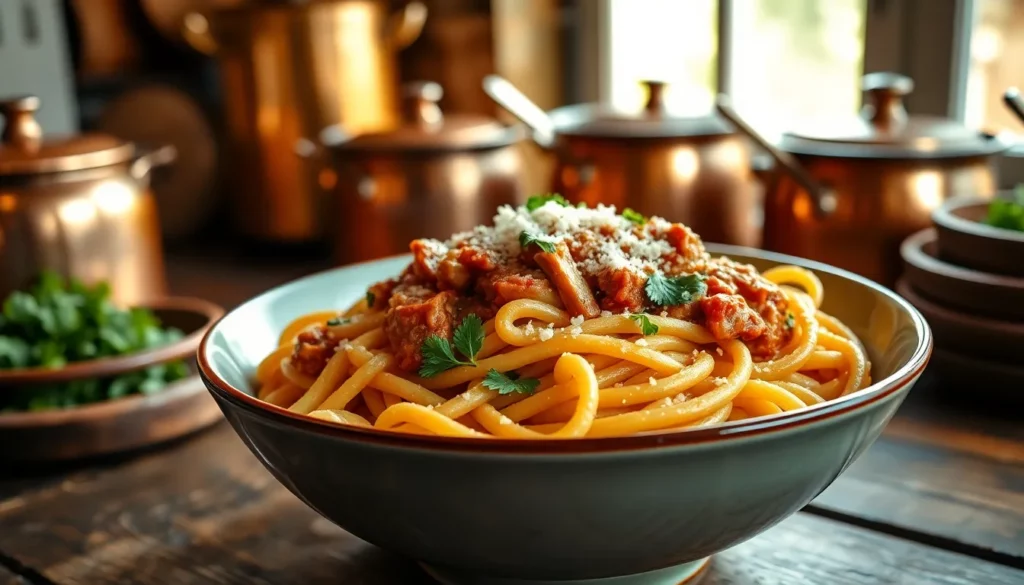
Bigoli (also known as bigoi in Venetian dialect) is a type of pasta originating from the Veneto region of northeastern Italy. It is characterized by its thick, round shape—similar to spaghetti but much thicker, typically 2–3 mm in diameter—and its porous, rough surface achieved by extrusion through bronze dies. Traditionally, bigoli is made with whole wheat flour (farina integrale) and eggs, giving it a hearty, nutty flavor and a firm, chewy texture. Some variations use buckwheat flour or corn flour (bigoli di granturco). The pasta is typically fresh, but dried versions are also common.
Bigoli is not a DOP or PGI product, but Bigoli di Granturco is recognized as a Traditional Agri-Food Product (PAT) by the Italian Ministry of Agricultural Policies, indicating its historical and cultural significance. The production method involves mixing flour, eggs, and water to form a stiff dough, which is then extruded through a bigolaro (a traditional hand-operated press) or modern bronze dies. The rough surface helps sauces cling better, making bigoli ideal for hearty ragùs and savory sauces.
“Bigoli co l’anara” (bigoli with duck) is a cornerstone of Venetian home cooking, a dish that speaks to the region’s agricultural roots and love for robust flavors.
Types & Grades
Bigoli comes in several varieties based on the flour used and the production method. The table below summarizes the main types:
| Type | Main Ingredient | Texture | Typical Use |
|---|---|---|---|
| Bigoli Classici | Whole wheat flour, eggs | Rough, chewy | Duck ragù, meat sauces |
| Bigoli di Granturco | Corn flour (sometimes mixed with wheat) | Slightly gritty, firm | Anchovy sauce, vegetable ragù |
| Bigoli di Grano Saraceno | Buckwheat flour | Earthy, dense | Mushroom sauces, hearty stews |
| Bigoli all’Uovo | Refined wheat flour, eggs | Smoother, still porous | Classic ragù, butter and sage |
Grades are distinguished by freshness and production scale:
- Fresh bigoli – Made daily, often sold in specialty pasta shops; cooks in 8–10 minutes.
- Dried bigoli – Longer shelf life; cooking time 12–14 minutes; texture slightly less tender.
- Artisanal – Extruded through bronze dies, rough surface, small-batch production.
- Industrial – Often Teflon-die extruded, smoother surface, less sauce adherence.
How It’s Used in Cooking
Bigoli’s porous texture and sturdy structure make it a perfect canvas for bold, slow-cooked sauces. Traditional Venetian dishes include:
- Bigoli con l’Anatra – Duck ragù simmered with red wine, rosemary, and garlic. The sauce clings to the rough pasta, creating a rich, satisfying dish.
- Bigoli in Salsa – A sauce of anchovies, onions, and olive oil, often served during Lent. The saltiness of the anchovies balances the nutty whole wheat flavor.
- Bigoli con le Sarde – Fresh sardines cooked with onions, pine nuts, and raisins, a sweet-savory combination typical of Venice.
- Bigoli con Ragù di Carne – A meat-based ragù, often using beef or pork, slow-cooked with tomatoes and herbs.
To cook bigoli, bring a large pot of salted water to a boil. Add the pasta and cook until al dente (firm to the bite). Drain, reserving a cup of pasta water. Toss immediately with the sauce, adding a splash of pasta water if needed to loosen. Serve with grated Parmigiano-Reggiano or Grana Padano.
How to Choose/Identify Authentic BIGOLI
When buying bigoli, look for these signs of authenticity:
- Bronze-die extrusion – The pasta surface should be rough and matte, not shiny or smooth. This indicates traditional production.
- Simple ingredients – Authentic bigoli contains only flour (whole wheat, corn, or buckwheat), eggs, and water. No additives or preservatives.
- Color – Whole wheat bigoli is brownish; corn bigoli is bright yellow; buckwheat bigoli is dark gray-brown.
- Origin – Look for producers from Veneto, especially those with PAT certification for corn bigoli.
- Packaging – Artisanal brands often mention “bronze die” or “trafilata al bronzo” on the label.
Avoid bigoli that appears overly uniform or glossy, as this indicates Teflon-die extrusion, which reduces sauce adherence. For the best experience, purchase fresh bigoli from a reputable Italian deli or order online from specialty pasta makers.
Substitutes
If bigoli is unavailable, these Italian pasta shapes offer similar texture and sauce-holding ability:
- Pici – Thick, hand-rolled pasta from Tuscany, made with flour and water. Its irregular shape and chewy texture make it an excellent substitute for bigoli in meat ragùs.
- Spaghetti alla Chitarra – Square-cut spaghetti from Abruzzo, made with eggs. The rough edges catch sauce well, though it is thinner than bigoli.
- Bucatini – Thick, hollow spaghetti. While not identical, its sturdy structure works with hearty sauces, especially duck ragù.
For corn-based bigoli, substitute with polenta (as a side) or gnocchi (for a different texture). Avoid using standard spaghetti or linguine, as they lack the thickness and porosity needed for traditional bigoli dishes.
Conclusion
Bigoli is a versatile, traditional pasta that embodies the rustic cuisine of Veneto. Its unique texture and ability to pair with hearty sauces make it a favorite among chefs and home cooks alike. Whether you choose classic whole wheat or corn bigoli, authentic production methods ensure an exceptional culinary experience. By understanding its history, types, and proper use, you can bring a taste of northeastern Italy to your table.
FAQ
What is the difference between bigoli and spaghetti?
Bigoli is much thicker (2–3 mm vs. 1.5–2 mm for spaghetti), has a rougher surface due to bronze-die extrusion, and is traditionally made with whole wheat flour and eggs, giving it a nuttier flavor and chewier texture. Spaghetti is typically made from refined durum wheat semolina and has a smoother surface.
Can I make bigoli at home?
Yes, but it requires a bigolaro press or a heavy-duty pasta extruder with a bronze die. The dough is stiff and can be difficult to roll by hand. Alternatively, you can shape bigoli by hand-rolling thick ropes, though the texture will differ. Many home cooks prefer to buy fresh bigoli from specialty stores.
Is bigoli gluten-free?
Traditional bigoli contains wheat flour and eggs, so it is not gluten-free. However, some producers make gluten-free versions using rice or corn flour, but these are not traditional. Bigoli di Granturco (corn bigoli) may still contain wheat, so check the label if you have celiac disease.
Leave a Reply