
Short Answer
What It Is
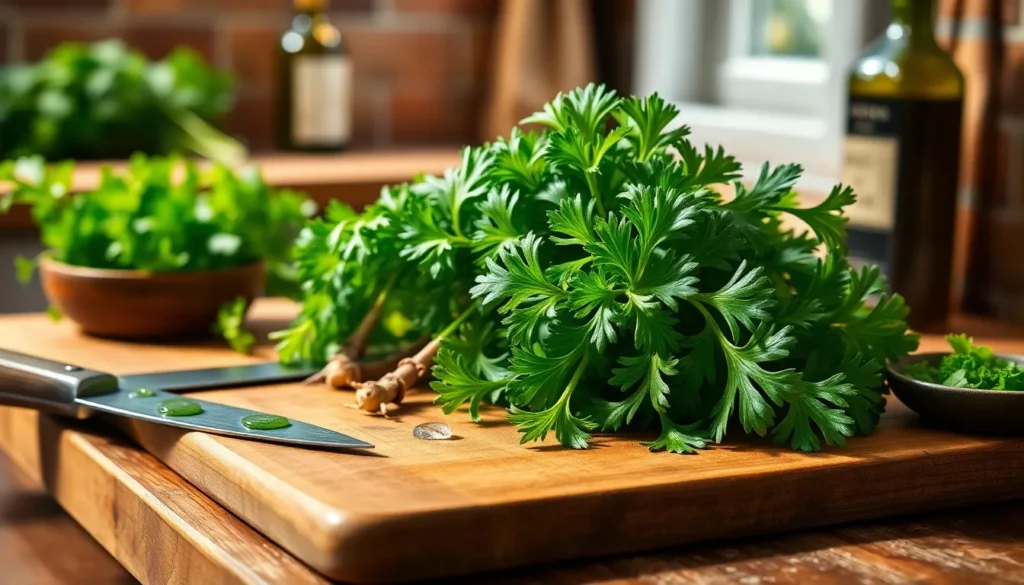
Prezzemolo is the Italian term for parsley (Petroselinum crispum), a biennial herb native to the central Mediterranean region. In Italy, it is cultivated extensively, with the flat-leaf variety (Prezzemolo comune or Prezzemolo di Genova) being the most prized for its robust flavor and aromatic intensity. Unlike the curly parsley often seen in other cuisines, Italian prezzemolo is an indispensable foundation of the country’s culinary tradition.
The herb has been grown in Italy since Roman times, when it was used both as a seasoning and a medicinal plant. Today, it is produced in nearly every region, but the most renowned is the Prezzemolo di Genova, a traditional product recognized by the Italian Ministry of Agricultural Policies as a Prodotto Agroalimentare Tradizionale (PAT). While it does not hold a DOP or PGI certification, its cultivation follows strict local practices: seeds are sown in well-drained, fertile soils, and the leaves are harvested when young and tender, usually within 70–90 days. The entire plant is often sold with roots attached to preserve freshness.
Prezzemolo is a cornerstone of Italian soffritto (along with onion and carrot), and its bright, slightly peppery notes are essential in countless regional dishes. Its production is concentrated in Liguria, Campania, and Sicily, where the mild climate allows for multiple harvests per year.
Types & Grades
Italian prezzemolo is primarily divided into two botanical types, each with distinct characteristics. Within these, there are also commercial grades based on freshness and processing.
| Type | Description | Best Use |
|---|---|---|
| Flat-Leaf (Italian) Parsley Petroselinum crispum var. neapolitanum | Broad, flat leaves with a strong, earthy, and slightly peppery flavor. The most common variety in Italian kitchens. | Gremolata, salsa verde, soffritto, salads, and as a finishing herb. |
| Curly Parsley Petroselinum crispum var. crispum | Finely curled, frilly leaves with a milder, less assertive flavor. Often used as a garnish in non-Italian cuisines. | Garnish, mild-flavored dishes, or when a decorative touch is needed. |
Within the flat-leaf category, several local varieties exist, such as Gigante d’Italia (large leaves) and Comune (standard). Commercial grades are determined by freshness:
- Fresh bunches – sold with or without roots; the highest quality, with vibrant green leaves and crisp stems.
- Dried parsley – inferior in flavor; used only when fresh is unavailable, but not recommended for authentic Italian cooking.
- Frozen parsley – retains some aroma but loses texture; acceptable for cooked dishes.
How It’s Used in Cooking
Prezzemolo is a workhorse in Italian cuisine, appearing in both raw and cooked applications. Its fresh, grassy notes brighten dishes and balance richness.
Traditional Preparations
- Gremolata – a classic condiment for ossobuco, made with finely chopped prezzemolo, garlic, and lemon zest.
- Salsa Verde – a piquant sauce of prezzemolo, capers, anchovies, vinegar, and olive oil, served with boiled meats or fish.
- Soffritto – the aromatic base of many Italian soups, stews, and sauces, combining finely diced onion, carrot, and prezzemolo (or celery).
- Minestrone – added at the end of cooking to preserve its fresh flavor.
- Insalata di prezzemolo – a simple salad of chopped parsley, lemon juice, olive oil, and salt, often served alongside grilled fish.
Prezzemolo is also used in frittate, ripieni (stuffings), and as a garnish for bruschetta and carpaccio. Its versatility stems from its ability to enhance without overpowering.
How to Choose/Identify Authentic PREZZEMOLO
Selecting high-quality prezzemolo is essential for achieving authentic Italian flavor. Follow these guidelines:
- Appearance: Look for bright, deep green leaves without yellowing or wilting. The stems should be firm and crisp.
- Aroma: Fresh prezzemolo has a clean, grassy, slightly peppery scent. Avoid bunches with a musty or flat odor.
- Roots: In Italy, prezzemolo is often sold with the roots attached, which helps retain moisture. If available, choose bunches with intact roots.
- Labeling: Seek out Prezzemolo di Genova or other PAT-labeled products for guaranteed traditional cultivation methods. While not DOP, these labels indicate adherence to local standards.
- Source: Purchase from reputable greengrocers or farmers’ markets. Supermarket parsley may be older and less flavorful.
For commercial buyers, look for suppliers who harvest within 24 hours of delivery and maintain cold chain logistics. Avoid pre-chopped or dried parsley for authentic recipes.
Substitutes
When prezzemolo is unavailable, Italian cooks turn to other fresh herbs that mimic its brightness. The following are genuine Italian substitutes, each with specific applications:
- Basil (Basilico) – Use in raw preparations like salads or as a garnish. Its sweet, aromatic profile works well in place of parsley in pesto-like sauces, but not in soffritto.
- Mint (Menta) – A common substitute in southern Italian and Sicilian dishes, especially with fish or in salads. Mint adds a cooler, more pungent note.
- Chervil (Cerfoglio) – Delicate and slightly anise-like, chervil can replace parsley in light sauces and egg dishes, though it is less robust.
- Celery leaves (Foglie di sedano) – The closest substitute in soffritto and soups, offering a similar earthy, herbal character. Use sparingly as they are stronger.
Dried parsley is not recommended as a substitute; it lacks the essential volatile oils that define fresh prezzemolo.
Conclusion
Prezzemolo is a humble yet indispensable herb in Italian cooking. Its bright, peppery flavor and versatility make it a staple in everything from simple salads to complex braises. By understanding its types, selecting authentic bunches, and using it correctly, you can bring a touch of genuine Italian tradition to your kitchen. Whether you are making gremolata for ossobuco or a simple insalata di prezzemolo, this herb is the green heart of Italian cuisine.
FAQ
What is the difference between Italian parsley and curly parsley?
Italian parsley (flat-leaf) has broad, flat leaves and a stronger, more peppery flavor. Curly parsley has frilly leaves and a milder taste, often used as a garnish. For authentic Italian cooking, flat-leaf parsley is preferred.
Can I substitute dried parsley for fresh prezzemolo?
Dried parsley is not a good substitute for fresh prezzemolo in Italian recipes. The drying process destroys the volatile oils that give fresh parsley its bright, grassy flavor. Use fresh herbs like basil, mint, or chervil instead.
How should I store fresh parsley to keep it fresh longer?
Trim the stems and place the bunch in a glass of water, covering the leaves loosely with a plastic bag. Refrigerate and change the water every two days. Alternatively, wrap in a damp paper towel and store in a sealed bag in the crisper drawer. Use within 3–5 days.
Leave a Reply