
Short Answer
What It Is
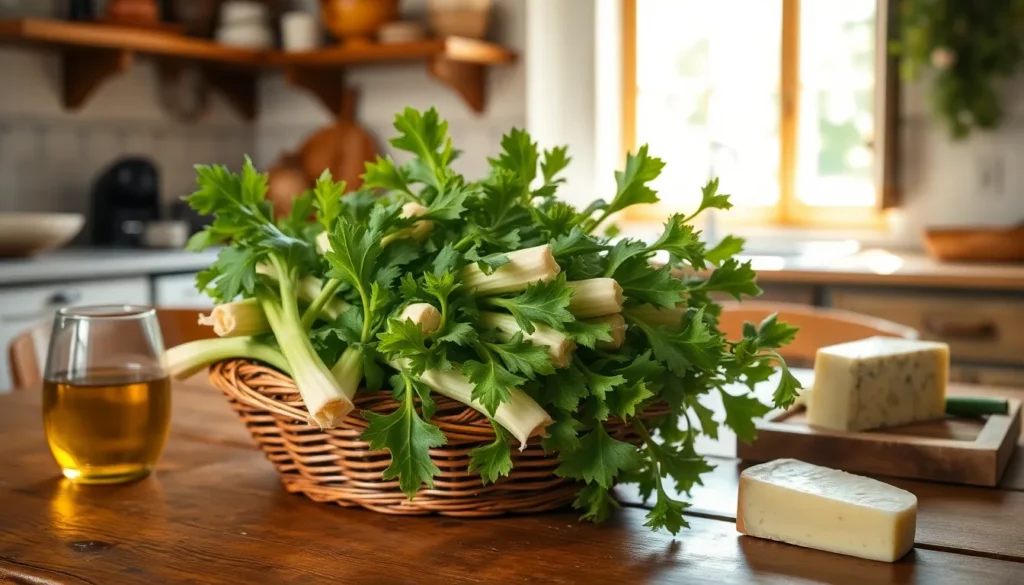
Cicoria di Campo (literally “field chicory”) is the wild form of Cichorium intybus, a perennial herbaceous plant native to Europe and widely naturalized across temperate regions. In Italy, it is foraged or semi-cultivated in the open fields of central and southern regions, particularly in Lazio, Campania, Puglia, Basilicata, and Sicily. Unlike its domesticated relatives (e.g., radicchio, Belgian endive), Cicoria di Campo grows spontaneously in meadows, along roadsides, and in fallow fields, developing a more pronounced bitterness and a tougher, more fibrous texture.
While it does not hold a DOP (Denominazione di Origine Protetta) or PGI (Indicazione Geografica Protetta) status, it is recognized as a Prodotto Agroalimentare Tradizionale (PAT) by the Italian Ministry of Agricultural Policies in several regions. This designation acknowledges its deep-rooted presence in local culinary traditions and artisanal harvesting practices. The plant thrives in poor, well-drained soils and is typically harvested from early spring to late autumn, with the most tender leaves appearing in the cooler months.
“La cicoria di campo è l’amaro che fa bene” – Italian proverb (“Field chicory is the bitterness that does good”)
Types & Grades
Cicoria di Campo is not a single uniform product; it varies by region, harvest time, and plant maturity. The following table outlines the main types and their characteristics:
| Type | Region | Leaf Shape | Flavor Profile | Best Use |
|---|---|---|---|---|
| Cicoria Selvatica (Wild) | All central-south Italy | Deeply lobed, jagged edges | Intensely bitter, earthy | Boiled then sautéed; soups |
| Cicoria di Puglia | Apulia | Broad, slightly fleshy | Mildly bitter, nutty | Salads, grilled |
| Cicoria di Campagna | Lazio, Tuscany | Narrow, elongated | Bitter with a hint of spice | Pasta dishes, frittatas |
| Cicoria a Foglia Larga (Broad-leaf) | Campania, Basilicata | Large, rounded, slightly hairy | Less bitter, tender | Raw in salads, lightly steamed |
Grades are also determined by harvest timing: early spring yields the most tender, mild leaves; summer leaves become tougher and more bitter; autumn regrowth (after the first rains) offers a second tender crop. Foraged specimens are generally considered superior to cultivated ones due to their more complex flavor profile.
How It’s Used in Cooking
Cicoria di Campo is a versatile bitter green that plays a starring role in many traditional Italian dishes. Its bitterness is often balanced with rich, fatty, or sweet components. Below are the most iconic applications:
Boiled and Sautéed (Ripassata)
The most common preparation: the greens are boiled until tender, then drained and sautéed in extra-virgin olive oil with garlic, chili flakes, and sometimes anchovies. This method tempers the bitterness and creates a side dish (contorno) that pairs perfectly with grilled meats or fish.
In Pasta
Cicoria di Campo is a classic pairing with orecchiette (Apulian ear-shaped pasta) and breadcrumbs. The pasta is cooked al dente, then tossed with sautéed chicory, garlic, olive oil, and a sprinkle of toasted breadcrumbs for texture. Another regional specialty is pasta e cicoria, a rustic soup where the greens are simmered with pasta, beans, and broth.
With Legumes
The bitterness of cicoria complements the creaminess of beans and lentils. A traditional dish from Basilicata is cicoria e fagioli – boiled chicory served with a warm bean stew, drizzled with raw olive oil.
In Frittatas and Savory Pies
Blanched and chopped cicoria is mixed with eggs, pecorino cheese, and herbs to make a hearty frittata. It also appears as a filling for torte salate (savory pies) along with ricotta and wild herbs.
Raw in Salads
Only the youngest, most tender leaves are suitable for raw consumption. They are often combined with sweet elements like oranges, pomegranate seeds, or a honey-lemon dressing to offset the bitterness.
“La cicoria di campo non si compra, si raccoglie” – Traditional saying (“Field chicory is not bought, it is gathered”)
How to Choose/Identify Authentic Cicoria di Campo
For home cooks and chefs seeking authentic Cicoria di Campo, the following cues will help ensure you are getting the real wild product rather than a cultivated substitute:
- Leaf morphology: True wild chicory has deeply lobed, dandelion-like leaves with a prominent central rib. The edges are often jagged or toothed. Cultivated varieties tend to have smoother, more uniform leaves.
- Bitterness test: A small nibble should deliver a distinct, lingering bitterness that is not harsh but pleasantly sharp. If the bitterness is mild or absent, it may be a hybrid or a different species.
- Source transparency: Purchase from trusted Italian greengrocers or farmers’ markets. Look for labels indicating selvatica (wild) or di campo (field). In Italy, foragers often sell directly at local markets.
- Seasonality: Authentic Cicoria di Campo is most abundant in spring and autumn. Out-of-season availability may indicate forced cultivation or importation.
- Texture: The leaves should feel slightly tough and fibrous, not overly tender or succulent. Cultivated chicories are often bred for tenderness, which reduces the characteristic bite.
- Certification: While no DOP exists, look for the PAT (Traditional Agri-food Product) logo on packaging from Italian producers. This guarantees adherence to traditional methods.
Substitutes
If Cicoria di Campo is unavailable, several Italian chicory varieties can serve as substitutes, each with its own flavor and texture profile:
- Radicchio di Treviso (Tardivo or Precoce): A cultivated chicory with a similar bitterness but a more compact, wine-red head. Use in salads or grilled dishes; it lacks the wild, jagged leaf shape.
- Puntarelle (Cicoria di Catalogna): A specific variety from Lazio with long, hollow stems and a crisp texture. It is milder than wild chicory and is traditionally served raw with anchovy dressing.
- Dandelion greens (Tarassaco): Not a true chicory but botanically related and with a comparable bitter profile. Foraged dandelion leaves can be used in the same ways, though they are slightly more astringent.
- Endive (Belgian or curly): Cultivated endives offer a milder bitterness and a crunchy texture. They work well in salads but lack the earthy depth of wild chicory when cooked.
When substituting, adjust cooking times and seasoning to match the intensity of the substitute. For boiled preparations, add a pinch of sugar to the water to help balance bitterness.
Conclusion
Cicoria di Campo is more than a simple wild green; it is a living link to Italy’s pastoral traditions and a testament to the culinary value of bitterness. Whether foraged from the fields of Puglia or sourced from a trusted market, this chicory brings an unmistakable depth to salads, pastas, and contorni. By understanding its varieties, selecting authentic specimens, and mastering traditional cooking techniques, you can bring a taste of the Italian countryside to your table.
FAQ
What is Cicoria di Campo?
Cicoria di Campo is the wild form of chicory (Cichorium intybus) that grows spontaneously in fields and meadows across central and southern Italy. It is foraged for its bitter, earthy leaves and is a staple in traditional Italian cooking.
How does Cicoria di Campo differ from other chicories like radicchio or Belgian endive?
Unlike cultivated chicories, Cicoria di Campo is not domesticated; it has deeply lobed, jagged leaves, a more intense bitterness, and a tougher texture. It is typically foraged rather than farmed, and its flavor varies with season and location.
Can I grow Cicoria di Campo at home?
Yes, you can grow wild chicory from seed, but the flavor may be milder than foraged specimens. Sow seeds in well-drained soil in full sun, and harvest young leaves for salads or mature leaves for cooking. Note that true wild chicory is often considered a weed and can be invasive.
What are the best cooking methods for Cicoria di Campo?
The most common method is to boil the leaves until tender, then sauté them in olive oil with garlic and chili. They are also excellent in pasta dishes (e.g., orecchiette con cicoria), with beans, in frittatas, or as a filling for savory pies. Young leaves can be eaten raw in salads.
Leave a Reply