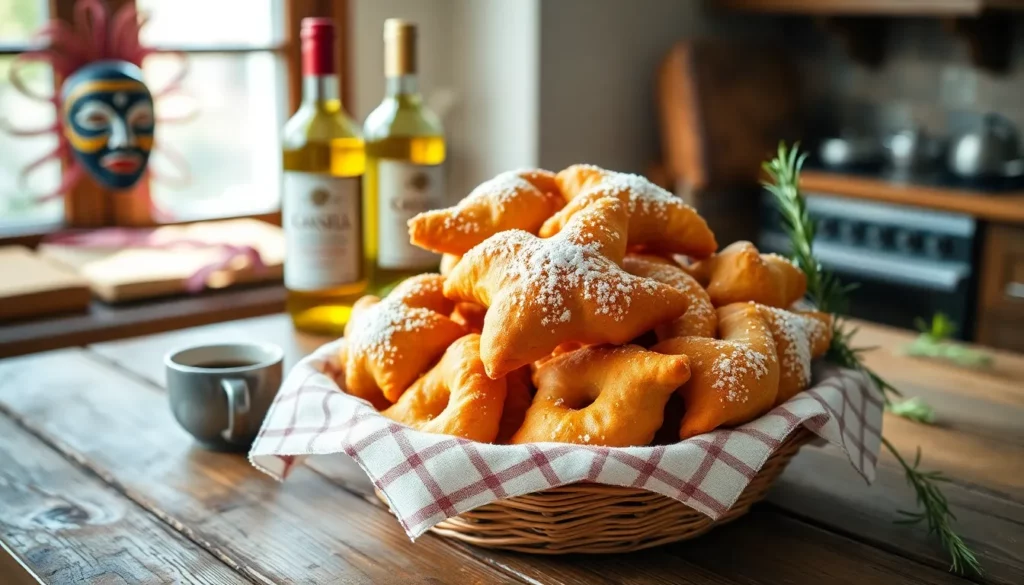
AI-generated illustration for Chiacchiere: The Crispy Carnival Pastry of Italy
Short Answer
Chiacchiere are delicate, fried pastries dusted with powdered sugar, traditionally prepared during Carnevale in Italy. Originating from Lazio but beloved nationwide, these crispy strips of dough are a festive treat that varies by region, from Roman frappe to Neapolitan chiacchiere. Learn about their history, ingredients, and how to enjoy them authentically.
What Is Chiacchiere? Italian Carnival Pastry Explained
Chiacchiere (pronounced kee-AH-kee-reh) are a classic Italian Carnival pastry: thin strips of dough that are fried until golden and crisp, then generously dusted with powdered sugar. They are a quintessential dolce di Carnevale (Carnival sweet) enjoyed throughout Italy, particularly in Lazio (Rome), Campania (Naples), and Sicily. The dough is typically made from flour, eggs, butter, sugar, and a splash of liqueur such as vin santo or grappa, which adds a subtle aromatic note. Chiacchiere are known for their light, airy texture and delicate crunch, making them a beloved treat during the pre-Lenten festivities.
Origin & History
The origins of Chiacchiere are deeply rooted in Italy’s Carnival traditions, which date back to medieval times. The name chiacchiere literally means “chatter” or “gossip” in Italian, a playful reference to the sound the pastries make when eaten—a light, crispy crackle reminiscent of lively conversation. While the exact birthplace is debated, most culinary historians trace the pastry to the Lazio region, particularly Rome, where they are also known as frappe. The earliest documented recipes appear in 16th-century cookbooks, such as Bartolomeo Scappi’s Opera (1570), which describes a similar fried dough dusted with sugar. However, the modern version likely evolved in the 19th century as Carnival celebrations became more elaborate. A popular myth claims that the pastries were invented by Roman nuns who used leftover dough from making pasta, but this is unsubstantiated. What is certain is that Chiacchiere are inextricably linked to Carnevale, a period of indulgence before Lent, when rich ingredients like butter, eggs, and sugar were used up.
What’s In It
The core ingredients for Chiacchiere are simple and pantry-friendly: all-purpose flour, eggs, granulated sugar, unsalted butter (or olive oil in some variations), a pinch of salt, and a small amount of liqueur (vin santo, grappa, or even rum) or lemon zest for flavor. The dough is rolled out very thin—almost translucent—then cut into strips or rectangles, each with a slit in the center through which one end is passed to create a twisted shape. The pastries are deep-fried in vegetable oil or olive oil until puffed and golden, then immediately dusted with confectioners’ sugar. Unlike similar-sounding Italian dishes like pasta fritta (fried pasta dough), Chiacchiere are sweet and not served with sauce. They are also distinct from zeppole, which are yeast-leavened and often filled with cream, and from frittelle, which are batter-based fritters with raisins or apples.
Regional Variations
Chiacchiere go by many names and exhibit subtle differences across Italy. Below is a comparison of three major regional styles:
Region
Local Name
Key Characteristics
Lazio (Rome)
Frappe
Thin, rectangular strips; often flavored with vin santo; dusted with powdered sugar; sometimes drizzled with honey.
Campania (Naples)
Chiacchiere
Slightly thicker, more puffy; often made with olive oil instead of butter; may include a touch of lemon zest; served with a heavy dusting of sugar.
Sicily
Chiacchiere or Sfingi di Carnevale
Sometimes shaped into bows or knots; fried in olive oil; dusted with sugar and cinnamon; occasionally filled with ricotta or honey.
Emilia-Romagna: Known as crostoli or sfrappole, these are often thinner and more delicate, sometimes served with a dusting of sugar and a side of zabaglione.
Veneto: Called galani or crostoli, they are typically cut into long strips and fried in lard for extra crispness.
Piedmont: Referred to as bugie (“lies”), a whimsical name reflecting the pastry’s deceptive lightness.
How It’s Traditionally Eaten
Chiacchiere are exclusively a dessert or snack, never served as a primo or secondo. They are typically enjoyed during Carnevale, from the week before Ash Wednesday through Shrove Tuesday (Martedì Grasso). In many Italian homes, they are made in large batches and shared with family and friends during festive gatherings. They are often accompanied by a glass of sweet wine such as vin santo or a cup of espresso. In some regions, they are served alongside other Carnival treats like castagnole (fried dough balls) and frittelle. While primarily a holiday food, some pasticcerie (pastry shops) offer them year-round, but the authentic experience is tied to the Carnival season.
Common Mistakes / What It’s Not
A frequent misconception, especially among American-Italian adaptations, is that Chiacchiere are a type of pasta or a savory snack. They are not pasta; the dough is sweet and fried, not boiled. Another error is confusing them with zeppole (which are yeast-risen and often filled) or frittelle (batter-based). Some recipes incorrectly add baking powder or yeast, which yields a cake-like texture rather than the desired thin, crispy layers. Additionally, Chiacchiere should not be served with marinara sauce or cheese—they are strictly a sweet confection. The proper dusting is confectioners’ sugar, not granulated sugar, and they should be eaten fresh, as they lose crispness within a day.
Where to Try It / What to Order
For an authentic experience, visit Italy during Carnevale. In Rome, head to a traditional pasticceria like Pasticceria Boccione in the Jewish Ghetto or Pasticceria Regoli near Piazza Vittorio. In Naples, try Pasticceria Scaturchio or Pasticceria Poppella. In Sicily, look for Pasticceria Cappello in Palermo or Pasticceria Savia in Catania. When ordering, simply ask for chiacchiere or frappe depending on the region. They are usually sold by weight (etto, 100g). For travelers, many Italian supermarkets also sell packaged versions during Carnival, but fresh from a pastry shop is best. If you cannot travel, seek out Italian bakeries in your area that specialize in Carnival pastries.
What are Chiacchiere called in different regions of Italy?
Chiacchiere are known by many names: frappe in Rome, cenci in Tuscany, galani in Veneto, bugie in Piedmont, crostoli in Emilia-Romagna, and sfrappole in Lombardy. Despite the different names, they are all variations of the same fried Carnival pastry.
Are Chiacchiere the same as zeppole?
No. Zeppole are yeast-leavened dough balls that are fried and often filled with custard or ricotta, while Chiacchiere are thin, unleavened strips of dough that are fried and dusted with sugar. They are distinct in texture and preparation.
Can Chiacchiere be made without alcohol?
Yes. The liqueur (vin santo or grappa) adds flavor but can be omitted or replaced with lemon zest, vanilla extract, or a splash of orange juice. The dough will still be delicious, though the traditional aromatic note will be missing.
How long do Chiacchiere stay fresh?
Chiacchiere are best eaten within a few hours of frying. They can be stored in an airtight container for up to 2 days, but they will lose their crispness. To refresh, reheat in a 350°F oven for a few minutes.
What is the best oil for frying Chiacchiere?
A neutral oil with a high smoke point, such as vegetable oil, canola oil, or peanut oil, is ideal. Some traditional recipes use olive oil for a fruity flavor, but it may impart a stronger taste.
References
Scappi, Bartolomeo. Opera dell'arte del cucinare. 1570.
Riley, Gillian. The Oxford Companion to Italian Food. Oxford University Press, 2007.
Field, Carol. The Italian Baker. HarperCollins, 1985.
Accademia Italiana della Cucina. La Cucina del Carnevale. 2019.
Gambero Rosso. 'Chiacchiere: la ricetta originale e le varianti regionali.' Gambero Rosso, 2023.
Related Terms
Carnevale
The Italian Carnival season, a period of feasting and celebration before Lent, typically culminating on Shrove Tuesday (Martedì Grasso).
Vin Santo
A traditional Italian dessert wine, often used in Chiacchiere dough for flavor. It means 'holy wine' and is typically made from Trebbiano and Malvasia grapes.
Frappe
The Roman name for Chiacchiere; also used in other central Italian regions. The term may derive from the Latin 'frangere' (to break), referring to the pastry's brittle texture.

Leave a Reply