
Short Answer
What Is Colomba di Pasqua? Italian Easter Bread Explained
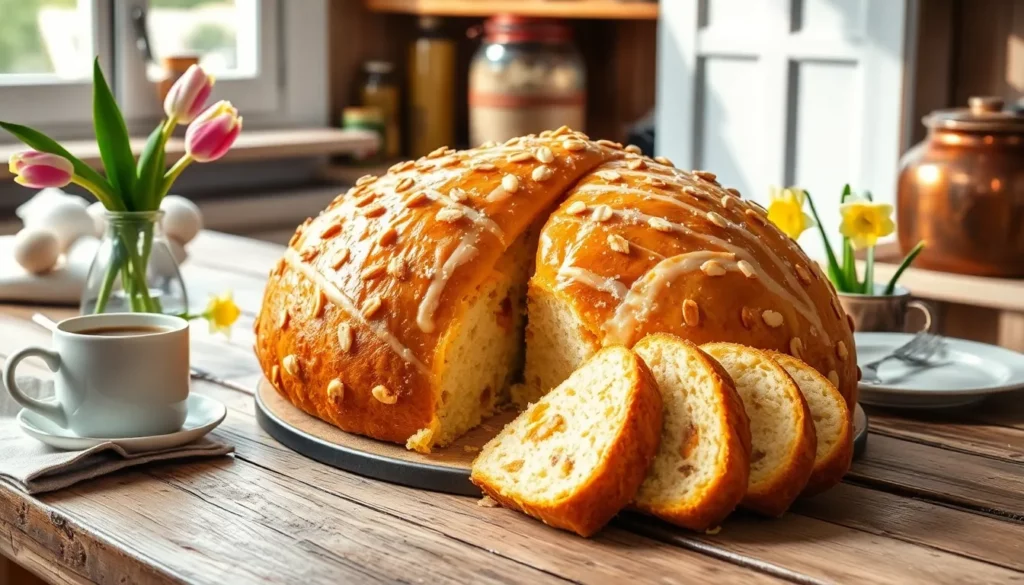
Colomba di Pasqua (Italian for “Easter dove”) is a soft, yeasted sweet bread shaped like a dove, traditionally baked in Italy for Easter celebrations. It belongs to the family of Italian holiday breads that includes panettone (Christmas) and pandoro (Christmas/New Year). The dough is enriched with butter, eggs, and sugar, studded with candied orange peel, and topped with a crunchy almond glaze and pearl sugar. While its exact origins are debated, the cake is most closely associated with the city of Milan and the region of Lombardy, though it is now produced and enjoyed throughout Italy and beyond.
Origin & History
The history of Colomba di Pasqua is interwoven with legend and documented commercial development. One popular myth traces the cake to the 6th century, when the Lombard king Alboin was besieging the city of Pavia. According to the story, the city’s defenders offered him a dove-shaped bread as a peace offering, and the king was so moved that he lifted the siege. However, most food historians consider this tale apocryphal.
The modern Colomba di Pasqua is more reliably linked to the early 20th century. In the 1930s, the Milanese baker and confectioner Angelo Motta (famous for revolutionizing panettone) is credited with creating the dove shape as an Easter counterpart to his Christmas panettone. Motta’s company, along with other industrial bakers like Pavesi, standardized the recipe and popularized it across Italy. The cake’s dove shape symbolizes peace, the Holy Spirit, and the arrival of spring, making it a fitting centerpiece for Easter tables.
Today, Colomba di Pasqua is protected under Italian food traditions, and many artisanal producers follow strict guidelines regarding ingredients and natural leavening. The cake is typically sold from late February through Easter Sunday.
What’s In It
Colomba di Pasqua is made from a rich, naturally leavened dough that requires a long fermentation process, often 24–36 hours. The core ingredients include:
- Flour – high-protein “00” or bread flour for structure.
- Butter – unsalted, high-fat butter for tenderness.
- Eggs and egg yolks – for richness and color.
- Sugar – fine granulated sugar.
- Natural yeast (lievito madre) – a sourdough starter that gives the cake its characteristic airy crumb and complex flavor.
- Candied orange peel – the most traditional fruit addition; some variations include candied citron or lemon zest.
- Vanilla – often in the form of vanilla bean or extract.
- Salt – to balance sweetness.
The topping is a mixture of almond flour, sugar, egg whites, and whole almonds, often sprinkled with pearl sugar. Unlike panettone, which is baked in a tall cylindrical mold, Colomba is baked in a dove-shaped paper or metal mold, giving it a distinctive silhouette.
It is important to note that Colomba di Pasqua is not a fruitcake; it contains no raisins, dried figs, or spices like cinnamon or nutmeg. Its flavor is delicate, buttery, and citrus-forward.
Regional Variations
While the classic Colomba di Pasqua is a Lombard creation, regional bakers have developed their own interpretations. The table below highlights key differences:
| Region | Variation | Key Characteristics |
|---|---|---|
| Lombardy (Milan) | Classic Colomba | Natural leavening, candied orange peel, almond glaze, pearl sugar. Light, airy crumb. |
| Piedmont | Colomba with hazelnuts | Topping includes crushed hazelnuts (often from the Langhe region) in addition to almonds; sometimes hazelnut cream filling. |
| Sicily | Colomba with pistachio and chocolate | Dough may include pistachio paste; topped with pistachio granules and dark chocolate chips or a chocolate glaze. |
| Campania (Naples) | Colomba with limoncello or lemon glaze | Uses local Sorrento lemons; glaze may be infused with limoncello; sometimes filled with lemon cream. |
| Veneto | Colomba with grappa or prosecco | Dough or glaze incorporates local wine or grappa; often paired with a lighter, less sweet profile. |
Additionally, some artisanal producers offer savory versions or gluten-free alternatives, but these are modern innovations rather than traditional.
How It’s Traditionally Eaten
Colomba di Pasqua is a breakfast or dessert item, not a main course. It is typically served at Easter breakfast, brunch, or as a mid-afternoon treat with coffee, tea, or a glass of sweet wine such as Moscato d’Asti or Passito. In many Italian households, it is sliced and enjoyed plain, though some prefer to toast it lightly and spread with butter or mascarpone.
On Easter Sunday, the cake often appears on the table alongside other festive foods like lamb, artichokes, and eggs. It is also given as a gift, wrapped in decorative paper, much like panettone at Christmas. Unlike panettone, which is sometimes used in bread puddings or French toast, Colomba is most often eaten fresh within a few days of purchase.
Common Mistakes / What It’s Not
One frequent misconception is that Colomba di Pasqua is simply a panettone baked in a different shape. While the dough is similar, Colomba has a distinct formula: it typically contains more butter and egg yolks, and the candied fruit is limited to orange peel (panettone often includes raisins and citron). The shaping and baking process also differ, resulting in a slightly denser, more tender crumb.
Another mistake is assuming all dove-shaped cakes are authentic. Many mass-produced versions use artificial flavors, preservatives, and chemical leavening agents, which produce a dry, cake-like texture. Authentic Colomba di Pasqua should have a natural sourdough tang, a moist crumb, and a pronounced aroma of butter and orange.
Finally, Colomba is not a year-round product. It is strictly an Easter specialty, and while some bakeries may offer it in the weeks before Easter, it is rarely found outside that season. In Italy, buying a Colomba in December would be considered odd.
Where to Try It / What to Order
For the most authentic experience, visit a pasticceria (pastry shop) in Milan or other northern Italian cities during the Easter season. Artisanal producers such as Pasticceria Marchesi (Milan), Pasticceria Cova (Milan), and Pasticceria Scarpato (Naples) are renowned for their high-quality Colomba. In Rome, Pasticceria Boccione offers a traditional version, while in Sicily, Pasticceria Cappello in Palermo is known for its pistachio-topped variation.
When ordering, look for the term “Colomba artigianale” (artisanal) or “Colomba con lievito madre” (with sourdough). Avoid products labeled “Colomba industriale” if you seek the traditional taste. If traveling to Italy during Easter, many supermarkets also carry good-quality versions from brands like Motta or Pavesi, but artisanal is always superior.
For those outside Italy, Italian specialty food stores and online retailers (e.g., Eataly, Gustiamo) import authentic Colomba di Pasqua each spring. Order early, as supplies are limited.
Related Dishes
FAQ
What is Colomba di Pasqua?
Colomba di Pasqua is a traditional Italian Easter cake shaped like a dove. It is a soft, yeasted sweet bread made with butter, eggs, candied orange peel, and topped with an almond glaze and pearl sugar. It originated in Lombardy and is now a national symbol of Easter.
How is Colomba di Pasqua different from panettone?
While both are enriched yeasted breads, Colomba di Pasqua contains more butter and egg yolks, uses only candied orange peel (no raisins or citron), and is baked in a dove-shaped mold. Panettone is taller, dome-shaped, and often includes raisins and candied citron. The fermentation and shaping processes also differ.
Can I make Colomba di Pasqua at home?
Yes, but it is a challenging recipe that requires a natural sourdough starter (lievito madre) and a long fermentation process (24-36 hours). Many home bakers use a simplified version with commercial yeast, but the authentic texture and flavor are best achieved with traditional methods. Special dove-shaped molds are also needed.
When is Colomba di Pasqua eaten?
It is eaten during the Easter season, from about a month before Easter Sunday through Easter Monday. It is typically served for breakfast, brunch, or as a dessert, often with coffee or sweet wine.
Is Colomba di Pasqua gluten-free?
Traditional Colomba di Pasqua is made with wheat flour and is not gluten-free. However, some artisanal bakeries and brands offer gluten-free versions, though they are not considered traditional.
Leave a Reply