
Short Answer
What Is Brioche? Italian Pastry Explained
In Italian culinary tradition, brioche refers to a category of soft, leavened sweet pastries rather than a single specific item. Unlike the French brioche, which is defined by its high butter and egg content, Italian brioche encompasses a variety of regional shapes and fillings, often made with a yeasted dough enriched with butter, eggs, sugar, and sometimes milk. The most famous Italian brioche is the brioche col tuppo from Sicily—a round bun with a characteristic topknot—traditionally served with granita or gelato. Across Italy, brioche is a staple of breakfast (colazione) and is also enjoyed as a snack or dessert.
Origin & History
The history of brioche in Italy is deeply intertwined with the island of Sicily, where the pastry likely arrived through French influence during the Norman rule (11th–13th centuries). The French brought their brioche recipe, which Sicilian bakers adapted using local ingredients and techniques. The iconic brioche col tuppo (with a topknot) emerged in the 19th century in the city of Palermo, where it became the perfect companion to the cold, semi-frozen granita. Unlike the French version, which is often baked in a fluted mold, the Sicilian brioche is shaped by hand, with a small ball of dough placed on top of a larger one, creating the signature “hat.” Over time, the pastry spread to other regions, each developing its own variation—from the brioche con crema of Campania to the brioche farcita of Puglia. Despite its French name, Italian brioche has become a distinct and beloved part of the country’s pastry heritage.
What’s In It
The core ingredients of Italian brioche are simple but precise: flour, butter, eggs, sugar, milk, yeast, and salt. Some recipes add a touch of vanilla or lemon zest for aroma. The dough is enriched with a high proportion of butter and eggs, giving it a tender, flaky crumb. Unlike croissant dough, which is laminated, brioche dough is simply mixed and kneaded, then left to rise. The key to a perfect brioche is the balance of hydration and fat—too much butter can make it greasy, too little yields a dry pastry. Italian brioche is often less sweet than its French counterpart, allowing the natural flavors of the dough to shine. It is important to note that Italian brioche is not a cake; it is a yeasted bread pastry, similar to a pan brioche but sweeter and richer.
Regional Variations
Italian brioche varies significantly by region, reflecting local tastes and traditions. Below is a comparison of three major regional styles:
| Region | Name / Style | Characteristics | Typical Pairing |
|---|---|---|---|
| Sicily | Brioche col tuppo | Round bun with a topknot; soft, slightly sweet, golden crust; often made with lard or butter | Granita (especially almond or coffee) or gelato |
| Campania (Naples) | Brioche napoletana | Larger, softer, often filled with pastry cream (crema pasticcera) or jam; sometimes topped with streusel | Espresso or cappuccino for breakfast |
| Lombardy (Milan) | Brioche milanese | Smaller, more buttery, often shaped like a crescent or a small loaf; less sweet, with a fine crumb | Hot chocolate or caffè latte |
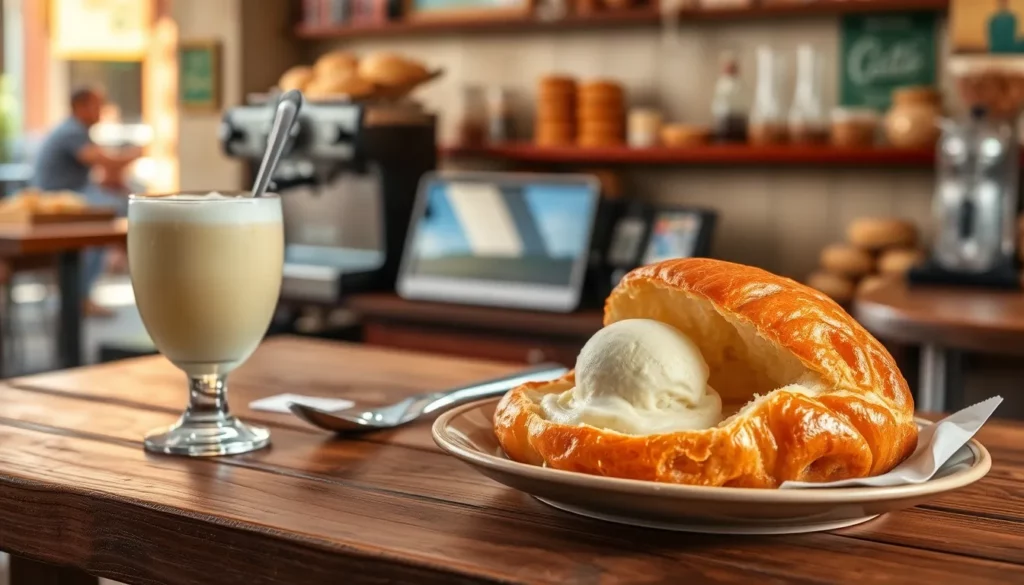
Other notable variations include the brioche farcita of Puglia (stuffed with ricotta or custard) and the brioche con gelato found throughout Italy, which is essentially a split brioche filled with a scoop of gelato—a popular street food.
How It’s Traditionally Eaten
In Italy, brioche is primarily a breakfast food, often enjoyed with a hot beverage. It is not a primo or secondo course but rather a dolce (sweet) or colazione item. The classic Italian breakfast consists of a cappuccino or espresso and a brioche, often plain or filled with cream, jam, or Nutella. In Sicily, the iconic pairing is brioche con granita—a cold, semi-frozen dessert made from coffee, almonds, or fruit, served with a soft brioche for dipping. This is a common summer breakfast or afternoon snack. Brioche is also used as a base for desserts like zuppa inglese or as a bread for sweet sandwiches. On holidays, larger brioche loaves may be baked and filled with candied fruit or chocolate.
Common Mistakes / What It’s Not
One of the most common misconceptions is that Italian brioche is the same as French brioche. While they share a name and similar ingredients, Italian brioche is generally less buttery, less sweet, and more varied in shape and filling. Another mistake is confusing brioche with croissant—croissants are laminated with butter, while brioche is an enriched dough. In Italy, a croissant is called cornetto, and it is a different pastry altogether. Additionally, some American-Italian restaurants serve a dense, cake-like brioche that is far from the light, airy Italian original. Authentic Italian brioche should be soft, slightly chewy, and not overly sweet. It is not a bread for savory sandwiches (though it can be used that way), nor is it a dry, crumbly pastry.
Where to Try It / What to Order
For the most authentic experience, head to Sicily, especially Palermo or Catania. Look for a pasticceria or bar that serves brioche col tuppo with granita. In Naples, try a brioche napoletana filled with crema pasticcera at a historic café like Gambrinus. In Milan, seek out a brioche milanese at a traditional pasticceria such as Pasticceria Marchesi. When ordering, ask for “una brioche con gelato” (with ice cream) or “una brioche con granita” (with granita). For breakfast, simply order “un cappuccino e una brioche.” Avoid pre-packaged supermarket brioche; fresh, artisanal versions are far superior.
Related Dishes
FAQ
What is the difference between Italian brioche and French brioche?
Italian brioche is generally less buttery and less sweet than French brioche. It also varies more in shape and filling, with regional specialties like the Sicilian brioche col tuppo. French brioche is typically baked in a fluted mold and has a richer, more uniform crumb.
Is brioche the same as a croissant?
No. A croissant is made from laminated dough (layers of butter and dough), while brioche is an enriched dough with butter mixed in. In Italy, a croissant is called a cornetto, and it is a different pastry.
What is the best way to eat Italian brioche?
In Sicily, the classic way is to dip a brioche col tuppo into a glass of granita (coffee or almond flavor) or to split it and fill it with gelato. For breakfast nationwide, it is simply enjoyed with a cappuccino or espresso.
Can I make Italian brioche at home?
Yes, but it requires patience. The dough needs to be kneaded until smooth, then left to rise twice. Use high-quality butter and eggs. For the Sicilian shape, form a large ball and a small ball, place the small one on top, and let it rise again before baking.
Where can I find authentic Italian brioche outside Italy?
Look for Italian bakeries or pasticcerie in major cities. In the US, cities like New York, Boston, and San Francisco have Italian neighborhoods with authentic options. Avoid supermarket versions; seek out artisanal shops.


Leave a Reply