
Short Answer
What Is Cappon magro? Italian Seafood Salad Explained
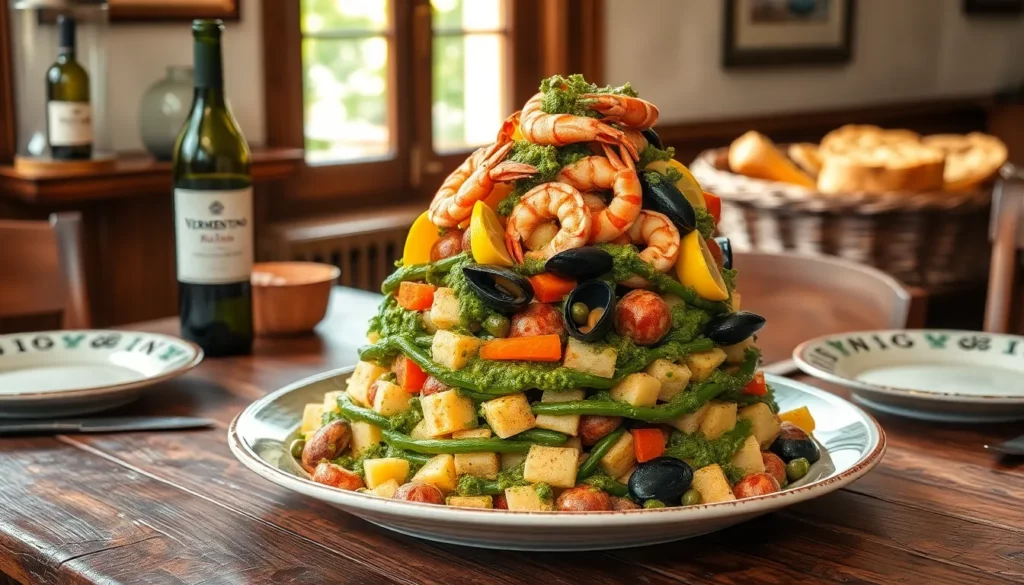
Cappon magro (also spelled cappon magro or cappon magro alla genovese) is a cold, composed seafood salad from the Liguria region of northwestern Italy, specifically the city of Genoa. It consists of a base of hardtack (gallette) or stale bread, layered with a medley of boiled vegetables (potatoes, carrots, green beans, artichokes, cauliflower), pickled vegetables, and an assortment of poached or steamed seafood such as shrimp, lobster, crab, mussels, clams, and squid. The entire construction is dressed generously with salsa verde, a Ligurian green sauce made from parsley, capers, anchovies, garlic, olive oil, and vinegar. The dish is assembled in a pyramid or dome shape, chilled, and served cold as a secondo (main course) or a substantial antipasto on festive occasions.
Origin & History
Cappon magro originated in the 16th century in the Republic of Genoa, a powerful maritime republic with a thriving fishing and trading economy. The name itself is a linguistic puzzle: cappon may derive from the Genoese word cappon meaning “capon” (a castrated rooster), but the dish contains no poultry. Some food historians suggest the term was used ironically to describe a dish that was a “mock capon” – a luxurious substitute for meat on days of abstinence. The word magro means “lean” or “meager,” referring to the Catholic practice of eating fish instead of meat on Fridays and during Lent. Thus, cappon magro literally translates to “lean capon,” a meatless feast.
The dish’s foundation is the gallette (hardtack), a dry, long-lasting biscuit that was a staple on Genoese ships. Sailors would soak the hardtack in seawater or broth to soften it, then top it with whatever seafood and vegetables were available. Over time, this humble sailor’s meal evolved into an elaborate, decorative centerpiece for festive tables, especially for the Vigilia di Natale (Christmas Eve) dinner, when Catholics abstain from meat. Historical cookbooks from the 18th and 19th centuries, such as Giovanni Battista Ratto’s La Cucina Genovese (1863), document the dish’s transformation from a simple shipboard fare to a symbol of Genoese culinary artistry.
What’s In It
The core ingredients of cappon magro are divided into three components: the base, the layers, and the sauce.
- Base: Gallette (hardtack) or stale, crusty bread. The hardtack is soaked in a mixture of water, vinegar, and sometimes white wine until softened but not mushy.
- Vegetables: Boiled potatoes, carrots, green beans, artichokes, cauliflower, and beets. Pickled vegetables like capers, olives, and giardiniera (mixed pickled vegetables) add acidity.
- Seafood: A variety of shellfish and crustaceans: shrimp, lobster, crab, mussels, clams, squid, and sometimes octopus. The seafood is poached or steamed, then shelled and sliced.
- Salsa Verde: A thick, emulsified sauce made from finely chopped parsley, capers, anchovy fillets, garlic, extra-virgin olive oil, white wine vinegar, and sometimes a hard-boiled egg yolk for richness. The sauce is the unifying element that binds the layers.
Preparation is meticulous: each ingredient is cooked separately, then arranged in concentric layers on the soaked hardtack, with salsa verde spread between each layer. The final assembly is inverted onto a serving platter, creating a dome, and covered with more salsa verde. It is then chilled for several hours to allow flavors to meld.
Cappon magro is often confused with insalata di mare (Italian seafood salad), but the latter is a simpler, tossed salad without the layered structure or hardtack base. It also differs from cappon magro alla ligure (a variant from other parts of Liguria) which may use different vegetables or omit certain seafood.
Regional Variations
While cappon magro is quintessentially Genoese, variations exist along the Ligurian coast and in neighboring regions. The table below highlights key differences:
| Region | Key Differences |
|---|---|
| Genoa (Liguria) | Uses gallette (hardtack) as base; includes a wide variety of seafood (lobster, crab, shrimp, mussels, clams); salsa verde is the only sauce; often decorated with whole prawns and lemon slices. |
| Riviera di Ponente (Western Liguria) | May substitute gallette with stale bread; sometimes adds boiled eggs or tuna; salsa verde may include basil or mint. |
| Riviera di Levante (Eastern Liguria) | Emphasizes local fish like anchovies and sardines; uses fewer crustaceans; sometimes includes a layer of mostarda (candied fruit mustard) for sweetness. |
| Piedmont (inland) | Rarely made due to lack of fresh seafood; when prepared, uses preserved fish (baccalà, stockfish) and more vegetables; salsa verde is often replaced with bagnetto verde (a similar Piedmontese sauce). |
Outside Liguria, the dish is sometimes simplified or misinterpreted. In some American-Italian contexts, “cappon magro” may refer to a seafood salad without the hardtack base, but this is a deviation from tradition.
How It’s Traditionally Eaten
Cappon magro is served cold, typically as a secondo piatto (main course) during festive meals, especially on Christmas Eve (the Feast of the Seven Fishes) and La Vigilia di Natale. It can also appear as a lavish antipasto for special occasions like Easter or weddings. The dish is meant to be shared, with each diner receiving a portion that includes all layers. It is often accompanied by a crisp white wine from Liguria, such as Vermentino or Pigato, which cuts through the richness of the salsa verde and seafood. Because of its complexity, cappon magro is rarely an everyday meal; it is a labor-intensive showpiece reserved for celebrations.
Common Mistakes / What It’s Not
One frequent misconception is that cappon magro is a hot seafood stew or soup. In reality, it is a cold, layered salad. Another error is omitting the hardtack base; without it, the dish becomes a simple seafood salad. Some American-Italian restaurants serve a version with mayonnaise-based dressing, but authentic cappon magro uses only salsa verde. Additionally, the dish is not a “capon” (castrated rooster) – the name is historical and ironic. Finally, cappon magro should not be confused with cappon magro alla ligure (a variant that sometimes includes chicken or meat, which would contradict the “magro” principle).
Where to Try It / What to Order
To experience authentic cappon magro, visit Genoa and the Ligurian coast. Traditional trattorie and ristoranti in the historic center, such as Trattoria da Maria or Ristorante Il Genovese, often feature it on their Christmas Eve menu. During the Festa della Marineria in Camogli or the Sagra del Pesce in various coastal towns, you may find local versions. When ordering, ask for cappon magro alla genovese to ensure you get the classic preparation. If visiting in summer, some restaurants offer a lighter, deconstructed version as a primo or antipasto. For travelers, the Mercato Orientale in Genoa sells prepared cappon magro to take away.
Related Dishes
- Insalata di Mare (Italian Seafood Salad)
- Salsa Verde (Ligurian Green Sauce)
- Cacciucco (Tuscan Fish Stew)
- Vitello Tonnato (Veal with Tuna Sauce)
- Farinata (Ligurian Chickpea Flatbread)
FAQ
What is the origin of cappon magro?
Cappon magro originated in 16th-century Genoa, likely as a sailor's meal using hardtack and available seafood. It evolved into a festive dish for Christmas Eve and other celebrations.
Is cappon magro served hot or cold?
Cappon magro is always served cold. After assembly, it is chilled for several hours to allow the flavors to meld.
What is the difference between cappon magro and insalata di mare?
Insalata di mare is a simple, tossed seafood salad without a hardtack base or layered structure. Cappon magro is a composed, layered dish with a base of soaked hardtack and a generous coating of salsa verde.
Can cappon magro be made vegetarian?
Traditionally no, as seafood is essential. However, a vegetarian version might omit seafood and use more vegetables and perhaps hard-boiled eggs, but it would not be authentic.
What wine pairs well with cappon magro?
Ligurian white wines such as Vermentino, Pigato, or a dry Rossese (red) for a bolder pairing. The wine should be crisp and acidic to balance the richness of the salsa verde and seafood.


Leave a Reply