
Short Answer
What Is Capricciosa pizza? Italian Pizza Explained
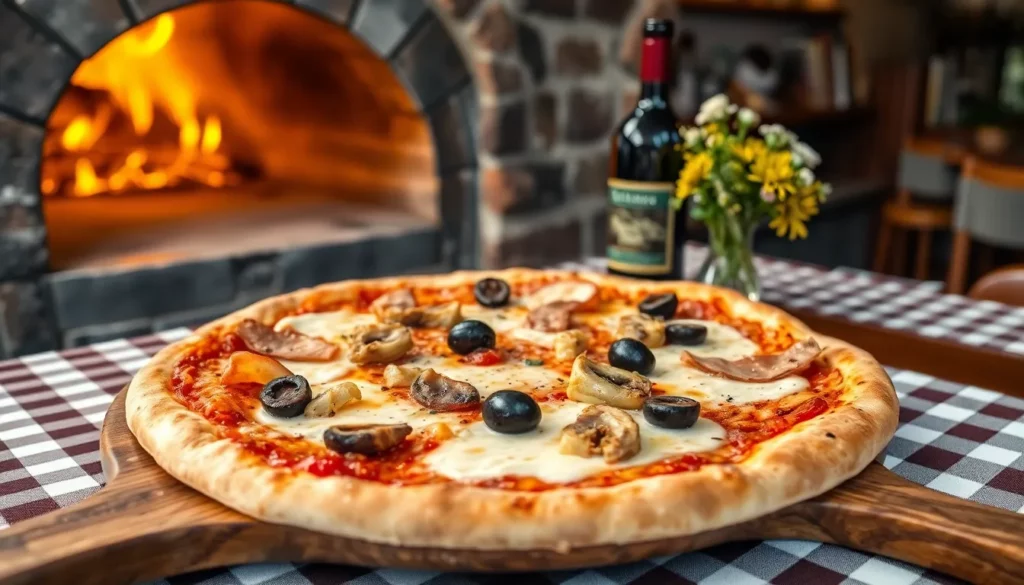
Capricciosa pizza is a classic Italian pizza originating from Rome, characterized by its generous topping of cooked ham (prosciutto cotto), mushrooms, artichokes (often preserved in oil), black olives, and mozzarella cheese, all on a thin, crispy crust. The name “capricciosa” translates to “capricious” or “whimsical,” suggesting that the pizza was created according to the chef’s fancy, using whatever ingredients were on hand. Unlike the more structured Margherita, Capricciosa allows for slight variations but always includes the core quartet of ham, mushrooms, artichokes, and olives. It is often confused with Pizza Quattro Stagioni, which separates the same toppings into four distinct quadrants representing the seasons.
Origin & History
The exact origins of Capricciosa pizza are debated, but most food historians agree it emerged in Rome during the mid-20th century, likely in the 1950s or 1960s. One popular story attributes its creation to a pizzaiolo in Rome who, when asked to prepare a pizza with whatever he had, whimsically combined leftover ingredients—hence the name “capricciosa.” Another theory links it to the Italian film La Capricciosa (1958), though this is less substantiated. Unlike Neapolitan pizza, which has a protected status (STG), Capricciosa is a free-style Roman pizza, reflecting the city’s culinary pragmatism. It gained popularity across Italy and abroad as a hearty, flavorful option that showcases preserved vegetables and cured meats typical of central Italian cuisine.
What’s In It
The core ingredients of Capricciosa pizza are:

- Dough: Thin, crispy Roman-style base (often made with high-gluten flour, water, yeast, salt, and olive oil).
- Tomato sauce: Usually a simple crushed San Marzano tomato sauce, sometimes omitted for a white version.
- Mozzarella: Fresh mozzarella (fior di latte) or low-moisture mozzarella, shredded or sliced.
- Prosciutto cotto: Cooked ham, sliced thin.
- Mushrooms: Typically champignon mushrooms, sliced and sautéed or raw.
- Artichokes: Preserved in oil (often Romanesco artichokes) or marinated, cut into quarters.
- Black olives: Usually Gaeta or Kalamata, pitted.
- Olive oil: Drizzled before baking for extra flavor.
Preparation nuances: The pizza is assembled with sauce, cheese, and toppings, then baked at high heat (400-500°F) until the crust is golden and crispy. Some versions add a sprinkle of oregano or basil after baking. Capricciosa is distinct from Pizza Quattro Stagioni, which separates the same toppings into four sections, and from Pizza ai Funghi e Prosciutto, which omits artichokes and olives.
Regional Variations
While Capricciosa is a Roman invention, it has been adapted across Italy. Here is a comparison of three major regional styles:
| Region | Characteristics | Key Differences |
|---|---|---|
| Rome (Lazio) | Thin, crispy crust; generous use of Romanesco artichokes; prosciutto cotto; black Gaeta olives; often includes a drizzle of olive oil. | Artichokes are typically preserved in oil; mushrooms are fresh champignons; no bell peppers or eggs. |
| Naples (Campania) | Thicker, softer crust (Neapolitan style); uses buffalo mozzarella; sometimes adds anchovies or capers. | Artichokes may be fresh and grilled; olives are often black or green; ham can be replaced with salami. |
| Sicily | Thick, rectangular crust (sfincione style); uses caciocavallo or provola cheese; includes local ingredients like caponata or eggplant. | Artichokes are often pickled; olives are local varieties; ham may be omitted in favor of anchovies or sardines. |
Other variations: In northern Italy, Capricciosa might include arugula or bresaola, while abroad it often substitutes ham with bacon or adds bell peppers.
How It’s Traditionally Eaten
In Italy, Capricciosa pizza is typically served as a piatto unico (single dish) for lunch or dinner, not as a starter. It is eaten with a knife and fork, especially in restaurants, though casual settings allow eating by hand. It pairs well with a light, crisp beer (e.g., Moretti or Peroni) or a medium-bodied red wine like Chianti or Montepulciano d’Abruzzo. Capricciosa is an everyday pizza, not reserved for holidays, but it is a popular choice for family gatherings or casual dinners. In Rome, it is often enjoyed at lunchtime in pizzerias, sometimes accompanied by a side salad or roasted vegetables.
Common Mistakes / What It’s Not
Many American-Italian restaurants misinterpret Capricciosa pizza. Common mistakes include:
- Using raw ham instead of cooked ham: Authentic Capricciosa uses prosciutto cotto, not prosciutto crudo.
- Adding bell peppers or onions: These are not traditional; the classic toppings are ham, mushrooms, artichokes, and olives.
- Confusing it with Quattro Stagioni: Quattro Stagioni separates toppings into quadrants; Capricciosa mixes them evenly.
- Overloading with cheese: Capricciosa should have a balanced amount of mozzarella, not a thick layer.
- Using canned artichokes in brine: Authentic versions use oil-preserved or marinated artichokes.
Capricciosa is not a vegetarian pizza (due to ham) nor a white pizza (though a white version exists, it is less common). It is also not a spicy pizza; it relies on savory, earthy flavors.
Where to Try It / What to Order
For an authentic Capricciosa pizza, visit Rome and try these renowned pizzerias:
- Pizzeria da Baffetto (Rome) – A historic spot known for its classic Roman pizzas.
- Pizzeria La Montecarlo (Rome) – Offers a traditional Capricciosa with a thin, crispy crust.
- Pizzeria ai Marmi (Rome) – Famous for its wood-fired pizzas and lively atmosphere.
Outside Italy, look for pizzerias that specialize in Roman-style pizza. When ordering, specify “Capricciosa classica” to ensure the traditional toppings. Avoid places that list it with pineapple or barbecue sauce. For travelers, the best time to enjoy Capricciosa is during lunch (12-2 PM) or dinner (7:30-10 PM) in a sit-down pizzeria.
Related Dishes
FAQ
What is the difference between Capricciosa and Quattro Stagioni pizza?
Capricciosa pizza has all toppings mixed evenly across the pizza, while Quattro Stagioni divides the same toppings (ham, mushrooms, artichokes, olives) into four separate quadrants, each representing a season.
Is Capricciosa pizza vegetarian?
No, traditional Capricciosa contains cooked ham (prosciutto cotto), making it unsuitable for vegetarians. However, some pizzerias offer a vegetarian version without ham.
What wine pairs best with Capricciosa pizza?
A medium-bodied red wine like Chianti or Montepulciano d'Abruzzo complements the savory flavors of ham, mushrooms, and artichokes. A light beer such as Peroni is also a classic choice.
Can I make Capricciosa pizza at home?
Yes, use a thin Roman-style dough, top with tomato sauce, mozzarella, cooked ham, sliced mushrooms, marinated artichokes, and black olives. Bake at high heat (450-500°F) on a preheated stone or steel for 8-10 minutes.
Why is it called 'capricciosa'?
The name means 'capricious' in Italian, reflecting the chef's whimsical combination of available ingredients. It suggests a pizza made on a whim, without strict rules.

Leave a Reply