
Short Answer
What Is Cesta? Italian Savory Pie Explained
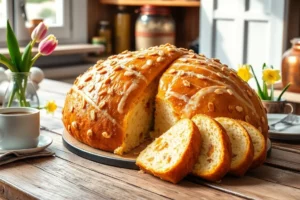
Cesta is a traditional Italian savory pie originating from the Marche region, particularly the provinces of Pesaro and Urbino. It consists of a rich, yeast-leavened dough filled with a mixture of cheeses (such as pecorino and parmesan), eggs, and often cured meats like prosciutto or salami. Baked until golden and puffed, Cesta is a staple of Easter celebrations and family gatherings, known for its hearty, satisfying flavor and rustic appearance.
Origin & History
The origins of Cesta date back to the Renaissance period in the Marche region, where it was prepared as a festive bread for Easter. The name “Cesta” means “basket” in Italian, likely referring to the woven pattern often scored on the dough before baking. Historical records from the 16th century mention similar filled breads served at noble banquets. Unlike the more famous Italian Easter pie “Pizza di Pasqua” from nearby Umbria, Cesta is distinguished by its use of a softer, enriched dough and a higher proportion of cheese. Local folklore tells of farmers bringing Cesta to the fields as a portable, nourishing meal during harvest season.
What’s In It
The core ingredients of Cesta include: flour (type 00 or all-purpose), eggs, butter or lard, yeast, milk, salt, and black pepper. The filling typically combines pecorino romano, parmigiano-reggiano, ricotta, and mozzarella, along with prosciutto cotto or salami. Some versions include spinach or Swiss chard. Preparation involves making a soft dough, rolling it out, layering the filling, and folding or sealing the edges. Unlike a quiche, Cesta has a thicker, bread-like crust and is not custard-based. It differs from pizza rustica in its leavened dough and from crostata in being savory and filled.

Regional Variations
Cesta varies across central Italy:
- Marche (Pesaro-Urbino): The classic version uses a mix of pecorino and parmesan, with prosciutto cotto and hard-boiled eggs. The dough is often braided or scored in a basket pattern.
- Umbria (near Spoleto): Known as Pizza di Pasqua, it is similar but uses a drier dough and includes more pepper and sometimes anise seeds.
- Lazio (Rome): A variant called Pizza di Pasqua Romana adds bits of salami and provolone, and is often served as an appetizer.
- Abruzzo: Here, Cesta may incorporate scamorza cheese and peperoni cruschi (crispy dried peppers) for a spicy kick.
| Region | Key Ingredients | Dough Style |
|---|---|---|
| Marche | Pecorino, parmesan, prosciutto cotto, eggs | Soft, enriched, scored |
| Umbria | Pecorino, parmesan, anise seeds, black pepper | Drier, denser |
| Lazio | Provolone, salami, hard-boiled eggs | Flaky, buttery |
| Abruzzo | Scamorza, peperoni cruschi, sausage | Rustic, whole wheat |
How It’s Traditionally Eaten
Cesta is typically served as a primo piatto (first course) or as a piatto unico (single dish) during Easter lunch. It is often accompanied by a simple salad of arugula and cherry tomatoes, or by cured meats and pickled vegetables. In Marche, it is common to enjoy Cesta at room temperature, sliced thickly, with a glass of Verdicchio white wine. While primarily a holiday dish, some families prepare it for Sunday gatherings or picnics. It is not typically eaten as a dessert or breakfast item.
Common Mistakes / What It’s Not
Many American-Italian adaptations confuse Cesta with Italian Easter bread (which is sweet) or pizza rustica (which uses a shortcrust pastry). Cesta is not a quiche; it has a leavened, bread-like crust. It is also not a calzone, as it is baked as a single large pie rather than individual turnovers. Avoid overfilling, as the dough may not rise properly. The correct texture should be soft and airy, not dense or dry.
Where to Try It / What to Order
To experience authentic Cesta, visit the Marche region during Easter season. In Urbino, try Antica Osteria dei Duchi or Ristorante La Vecchia Fornace. In Pesaro, look for Panificio Gherardi for a bakery version. For ordering, ask for “Cesta di Pasqua” or “Cesta marchigiana”. If traveling outside Italy, seek out Italian delis that specialize in regional products, especially those from central Italy.
Related Dishes
FAQ
What is Cesta in Italian cuisine?
Cesta is a traditional savory pie from the Marche region, made with a leavened dough filled with cheese, eggs, and cured meats, typically served at Easter.
How is Cesta different from pizza rustica?
Cesta uses a yeast-leavened, bread-like dough, while pizza rustica typically has a shortcrust or pastry crust. Cesta is also lighter and more bread-like in texture.
Can Cesta be made vegetarian?
Yes, omit the cured meats and add vegetables like spinach, Swiss chard, or roasted peppers. The cheese and eggs provide ample flavor and protein.
Is Cesta served hot or cold?
Traditionally, Cesta is served at room temperature, though it can be enjoyed warm. It is not typically reheated.
What wine pairs best with Cesta?
A crisp white wine like Verdicchio from the Marche region complements the richness of the cheese and eggs. A light red like Rosso Piceno also works.
Leave a Reply