
Short Answer
What Is Desco? Italian Flatbread Explained
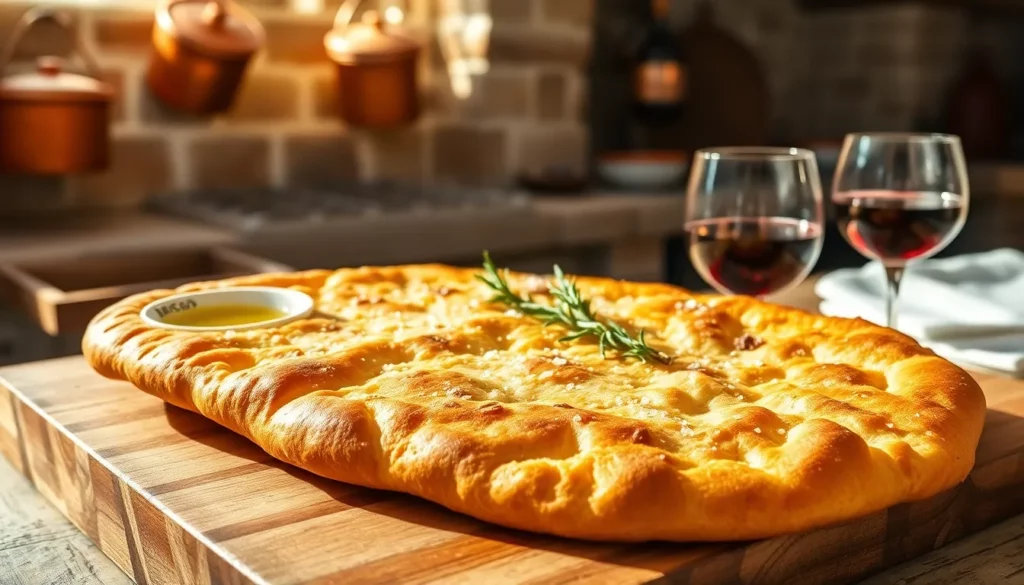
Desco is a rustic Italian flatbread originating from the Umbria region, characterized by its thin, crisp crust and soft, chewy interior. The dough is typically made from whole wheat flour, extra virgin olive oil, water, salt, and sometimes fresh rosemary or sage. Unlike focaccia, Desco is not leavened with yeast but relies on a natural starter or baking powder, giving it a denser texture. It is often baked on a hot stone or in a wood-fired oven, resulting in a slightly charred, smoky flavor. Desco is traditionally served as a table bread, accompanying soups, stews, or cured meats, and is also used as a base for bruschetta.
Origin & History
The name “Desco” derives from the Latin discus, meaning “disk” or “table,” reflecting the bread’s round, flat shape and its role as a communal food. Historical records from the 14th century mention pane desco in Umbrian monasteries, where monks baked large flat loaves on heated stones. Unlike the more famous Tuscan bread (which is saltless), Desco always includes salt and olive oil, a distinction tied to Umbria’s inland location and access to olive groves. Folklore suggests that Desco was originally a peasant bread, made with leftover grains and baked on the hearth. Over centuries, it evolved into a staple of Umbrian cuisine, often served during harvest festivals and religious celebrations.
What’s In It
The core ingredients of Desco are simple: whole wheat flour (or a mix of whole wheat and all-purpose), water, extra virgin olive oil, salt, and a leavening agent. Traditional recipes use a sourdough starter (lievito madre), but modern versions may employ baking powder for convenience. Herbs like rosemary, sage, or thyme are common additions, and some variations include black olives or sun-dried tomatoes. The dough is kneaded briefly, rolled out to about 1 cm thickness, and scored with a knife before baking. Unlike pizza dough, Desco is not stretched thin; it retains a substantial crumb. It differs from piadina (which uses lard) and focaccia (which is thicker and oilier) in its leaner composition and denser texture.
Regional Variations
While Desco is primarily Umbrian, similar flatbreads exist across central Italy. The table below highlights key differences:
| Region | Name | Key Differences |
|---|---|---|
| Umbria | Desco | Whole wheat, olive oil, herbs; baked on stone; medium thickness |
| Tuscany | Pane Sciocco | Saltless, no oil, larger loaf, softer crumb |
| Emilia-Romagna | Piadina | Lard or butter, thinner, cooked on a griddle, often filled |
| Lazio | Pizza Bianca | Yeast-leavened, thicker, more oil, often topped with salt and rosemary |
In Umbria itself, variations exist between the northern (Perugia) and southern (Terni) areas: northern Desco tends to be thicker and more herbaceous, while southern versions are thinner and crispier, sometimes incorporating local pecorino cheese into the dough.
How It’s Traditionally Eaten
Desco is a versatile bread served at any meal. It is most commonly eaten as a contorno (side dish) alongside zuppa di farro (spelt soup) or lenticchie di Castelluccio (lentils). It also appears as a primo when topped with fresh tomatoes, basil, and olive oil as a bruschetta. During holidays, Desco is often paired with cured meats like prosciutto di Norcia and aged pecorino. In everyday settings, it is simply torn and dipped in olive oil or used to mop up sauces. Unlike bread served in a basket, Desco is usually presented on a wooden board (tagliere) and broken by hand.
Common Mistakes / What It’s Not
Many American-Italian restaurants confuse Desco with focaccia or pizza. Desco is not a yeast-risen bread; its texture is denser and less airy. It is also not a substitute for pane carasau (Sardinian carta da musica), which is paper-thin and twice-baked. Another misconception is that Desco must be served warm; while fresh from the oven is ideal, it is equally delicious at room temperature. Avoid over-kneading the dough, which can make it tough, and do not skimp on olive oil—it is essential for flavor and texture.
Where to Try It / What to Order
For an authentic experience, visit the town of Spoleto in Umbria, where local bakeries (forni) bake Desco daily. The Forno di Spoleto on Via del Trivio is renowned for its traditional recipe. In Perugia, the Antica Forneria serves Desco with a side of olio novello (new olive oil). Travelers should order “Desco con rosmarino” (with rosemary) or “Desco integrale” (whole wheat). During the Festa del Desco in late September in the village of Trevi, bakers compete for the best loaf. When ordering in a restaurant, ask for “pane desco” as a side, and pair it with a local Sagrantino di Montefalco wine.
Related Dishes
FAQ
What is Desco bread made of?
Desco is made from whole wheat flour, extra virgin olive oil, water, salt, and often fresh herbs like rosemary. It is leavened with a sourdough starter or baking powder.
How is Desco different from focaccia?
Desco is denser, less oily, and not as thick as focaccia. It uses whole wheat flour and is typically baked on a stone, resulting in a crispier crust and a chewier crumb.
Where can I buy authentic Desco?
Authentic Desco is found in Umbrian bakeries, especially in Spoleto, Perugia, and Trevi. It is also available at some Italian specialty stores abroad, but fresh is best.
Can I make Desco at home?
Yes, with whole wheat flour, olive oil, and a hot baking stone or cast-iron skillet. The dough is simple, but achieving the right texture requires a hot oven (230°C/450°F) and minimal kneading.
Is Desco gluten-free?
Traditional Desco is not gluten-free as it uses wheat flour. However, gluten-free versions using rice or buckwheat flour exist, but they are not considered authentic.



Leave a Reply