

Short Answer
What It Is
Farro is an ancient hulled wheat that has been cultivated in the Mediterranean region for thousands of years. In Italy, the term farro most commonly refers to emmer wheat (Triticum dicoccum), though it is sometimes used loosely for spelt (Triticum spelta) or einkorn (Triticum monococcum). The grain is distinguished by its tough husk that remains attached after threshing, requiring a milling process to remove it. This hull protects the grain, preserving its nutritional integrity and giving it a characteristic nutty, earthy flavor.
Farro’s origins trace back to the Fertile Crescent, where it was one of the first domesticated cereals. It spread to Italy via ancient trade routes and became a cornerstone of Roman cuisine, often used in puls (a type of porridge) and later in soups and breads. Today, farro is particularly associated with the Garfagnana region of Tuscany, where it has been awarded Indicazione Geografica Protetta (IGP) status as Farro della Garfagnana. This certification guarantees that the farro is produced, processed, and packaged within the designated area, adhering to strict traditional methods. The IGP designation covers both whole and pearled farro, ensuring authenticity and quality.
Nutritionally, farro is a powerhouse. It is rich in fiber, protein, magnesium, and B vitamins, and has a lower gluten content than modern wheat, though it is not gluten-free. Its high resistant starch content makes it beneficial for blood sugar regulation and digestive health.
Types & Grades
Farro is classified into three main botanical species, each with distinct characteristics. The following table summarizes their key differences:
| Type | Botanical Name | Common Name | Grain Size | Flavor Profile | Primary Use |
|---|---|---|---|---|---|
| Farro Piccolo | Triticum monococcum | Einkorn | Smallest | Delicate, slightly sweet | Baking, porridge |
| Farro Medio | Triticum dicoccum | Emmer | Medium | Nutty, earthy, robust | Soups, salads, risotti |
| Farro Grande | Triticum spelta | Spelt | Largest | Mild, slightly sweet | Bread, pasta, baked goods |
In addition to species, farro is available in different processing grades:
- Whole farro (farro integrale) – The entire grain with the bran intact. It requires longer soaking and cooking (45–60 minutes) but offers maximum fiber and nutrients.
- Pearled farro (farro perlato) – The bran has been partially removed, reducing cooking time to 20–30 minutes. It is the most common form in supermarkets and yields a creamier texture.
- Semi-pearled farro – A middle ground that retains some bran for a balance of nutrition and convenience.
Authentic Farro della Garfagnana IGP is always whole or semi-pearled, never fully pearled, as the IGP regulations require the grain to retain at least part of its bran.
How It’s Used in Cooking
Farro’s chewy texture and nutty flavor make it incredibly versatile in Italian cuisine. It is a staple in Tuscan cooking, where it appears in both rustic and refined dishes.
Traditional Soups
The most iconic farro dish is zuppa di farro, a hearty Tuscan soup made with farro, beans (often cannellini or borlotti), vegetables, and herbs. The grain absorbs the broth while retaining its bite, creating a satisfying meal. In Garfagnana, the soup is often enriched with local pork or lardo.
Salads
Cooked and cooled farro forms the base of insalata di farro, a summer staple. It is tossed with cherry tomatoes, cucumbers, basil, mozzarella or tuna, and a lemon vinaigrette. The grain’s chewiness holds up well against crisp vegetables.
Risotto-Style Dishes
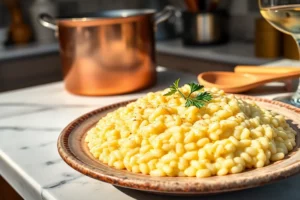
Farro can be prepared risotto-style (farrotto), slowly simmered with broth and finished with butter and Parmigiano-Reggiano. Unlike rice, farro does not release as much starch, so the result is less creamy but more textured. Mushrooms, radicchio, or pumpkin are common additions.
Baking and Pasta
Farro flour is used in artisanal breads, pasta, and crackers. It imparts a rustic flavor and denser crumb. In Tuscany, pane di farro (farro bread) is a traditional loaf often made with a sourdough starter.
“Il farro è il grano dei nostri antenati, e ancora oggi ci nutre con la sua forza.” — Tuscan proverb (Farro is the grain of our ancestors, and still today it nourishes us with its strength.)
How to Choose/Identify Authentic FARRO
When shopping for farro, look for these authenticity cues:
- Check the label for IGP certification – Authentic Farro della Garfagnana IGP will display the EU PGI logo and a certification number. This guarantees origin and traditional processing.
- Examine the grain appearance – Whole farro should have a visible bran layer (brownish streaks). Pearled farro will be more uniform but should still show some bran remnants if semi-pearled. Fully pearled farro (white and smooth) is not traditional and may be lower in nutrients.
- Look for the species – Most Italian farro is emmer (T. dicoccum). If the package says “farro” without qualification, it is likely emmer. Spelt and einkorn are usually labeled specifically.
- Check the origin – Authentic Italian farro should be sourced from Tuscany, Umbria, or other central Italian regions. Imported farro from other countries may be of different quality.
- Read the ingredient list – Pure farro should have no additives. Some pre-cooked or quick-cook farro may contain salt or preservatives.
- Price – Authentic IGP farro is more expensive due to limited production and traditional methods. Extremely cheap farro is likely a different grain or mass-produced.
For professional kitchens, building a relationship with a trusted Italian supplier ensures consistency. Many chefs prefer whole farro for its superior texture and flavor, despite the longer cooking time.
Substitutes
While farro has a unique character, several Italian grains can substitute in recipes, each with its own nuances:
- Spelt (farro grande) – The closest substitute, spelt has a similar nutty flavor but a slightly larger grain and milder taste. It works well in soups and salads, though it may become softer when cooked.
- Einkorn (farro piccolo) – For a more delicate flavor, einkorn is ideal in baking or porridge. It cooks faster and has a sweeter profile, but its smaller size may not hold up as well in hearty soups.
- Barley (orzo) – Italian pearl barley (orzo perlato) offers a chewy texture similar to farro. It is commonly used in soups and salads, though its flavor is less nutty and more neutral. Barley is a good gluten-containing alternative.
- Rye berries – While not Italian, rye berries provide a robust, earthy flavor and chewy texture. They are less common in traditional Italian cooking but can be used in farro-style salads.
For gluten-free diets, none of these substitutes are suitable. Instead, consider sorghum or buckwheat (kasha), though they will significantly alter the dish’s character.
In conclusion, farro is a versatile, nutritious ancient grain that embodies the culinary heritage of Italy. Whether you are making a rustic Tuscan soup or a modern grain salad, choosing authentic farro—preferably with IGP certification—ensures the best flavor and texture. Its resurgence in contemporary kitchens is a testament to its timeless appeal.
FAQ
Is farro gluten-free?
No, farro contains gluten, though in lower amounts than modern wheat. It is not safe for people with celiac disease or gluten sensitivity. Those with gluten intolerance should avoid farro and opt for certified gluten-free grains like buckwheat or sorghum.
How do I cook farro perfectly?
For whole farro, soak it overnight in cold water, then drain and cook in salted water or broth at a simmer for 45–60 minutes until tender but still chewy. Pearled farro requires no soaking and cooks in 20–30 minutes. Drain any excess liquid and fluff with a fork. For salads, rinse with cold water after cooking to stop the cooking process.
What is the difference between farro and spelt?
Farro is a general term for ancient hulled wheats, but in Italy it most often refers to emmer (Triticum dicoccum). Spelt (Triticum spelta) is a different species with larger grains and a milder flavor. Both are nutritious, but farro (emmer) has a more robust, nutty taste and is more traditional in Tuscan cuisine.


Leave a Reply