
Short Answer
What It Is
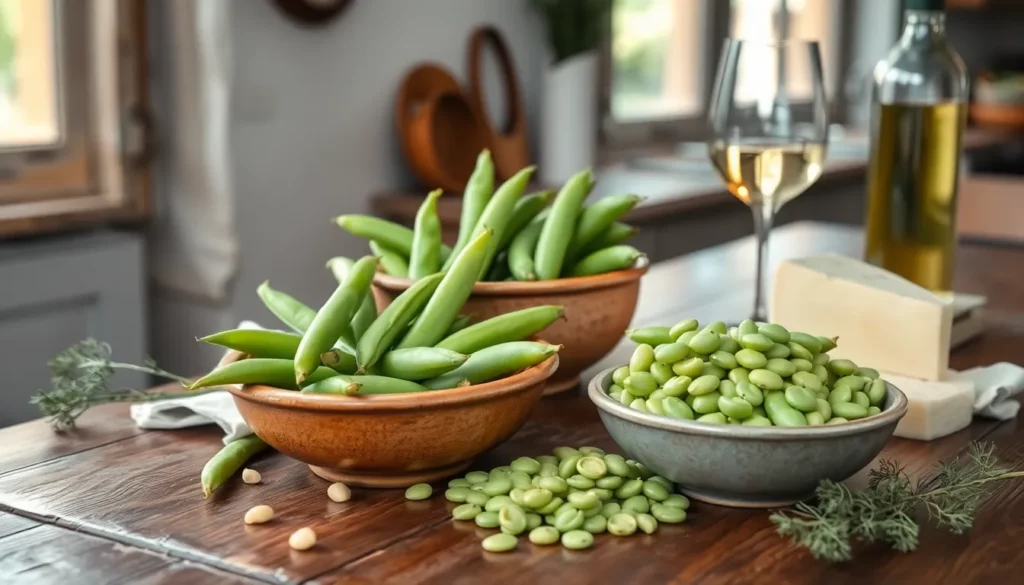
Fava, known internationally as the broad bean (Vicia faba), is one of the oldest cultivated legumes in the Mediterranean basin. In Italy, fava holds a place of honor in both rustic and refined cooking, with a history that stretches back to ancient Roman agriculture. The bean is grown primarily in central and southern regions, with the most celebrated Italian variety being Fava di Carpino, which has earned the Protected Geographical Indication (PGI) status from the European Union. This certification guarantees that the beans are produced, processed, and prepared within the defined geographical area of Carpino, in the province of Foggia, Apulia.
The production method for PGI Fava di Carpino follows strict traditional practices. Sowing occurs in late autumn, and the plants are cultivated without irrigation, relying on the region’s natural rainfall. Harvesting takes place in late spring, when the pods are fully mature. After threshing, the beans are dried naturally in the sun or in well-ventilated structures. The result is a bean with a thin, pale green skin and a delicate, buttery flavor that distinguishes it from common broad beans. The PGI designation also mandates that the beans must be at least 7 mm in size and have a moisture content below 14%.
Beyond Carpino, other Italian regions produce high-quality fava beans, though without official DOP/PGI status. The bean is also a staple in Sicilian cuisine, where it is often used in the classic dish macco di fave (fava bean purée). The versatility of fava—from fresh spring pods to dried, split beans—makes it a fundamental ingredient in the Italian pantry.
Types & Grades
Fava beans are available in several forms, each suited to different culinary applications. The table below summarizes the main types and their characteristics.
| Type | Description | Common Uses | Availability |
|---|---|---|---|
| Fresh Fava (in pod) | Bright green pods containing 3–6 beans; beans are protected by a tough inner skin that is usually removed after blanching. | Salads, sautéed as a side dish, or puréed for crostini. | Late spring to early summer |
| Dried Whole Fava | Mature beans dried with the skin intact; require overnight soaking and long cooking. | Soups, stews, and braised dishes. | Year-round |
| Split Dried Fava | Dried beans that have been hulled and split; cook faster than whole dried beans. | Purées, soups, and as a base for macco. | Year-round |
| Frozen Fava | Blanched and frozen fresh beans, often already skinned. | Quick side dishes, risottos, and pasta. | Year-round |
| Canned Fava | Cooked beans packed in water or brine; convenient but often softer in texture. | Salads, quick soups, or as a topping. | Year-round |
Within the PGI Fava di Carpino category, there are no official aging grades, but the beans are classified by size: Extra (diameter ≥ 9 mm), Prima (7–9 mm), and Seconda (5–7 mm, though rarely sold as PGI). The larger the bean, the more prized it is for its creamy texture and sweet flavor.
How It’s Used in Cooking
Fava beans are a cornerstone of Italian cucina povera (peasant cooking) and appear in dishes from antipasti to desserts. Their mild, slightly sweet flavor and creamy texture make them adaptable to both savory and sweet preparations.
Traditional Italian Applications
- Macco di fave – A thick purée from Sicily, made with dried split fava beans, wild fennel, and olive oil. Often served with grilled bread or as a side to fish.
- Fave e pecorino – A classic spring pairing of fresh fava beans and young pecorino cheese, enjoyed as a simple antipasto.
- Risotto con le fave – A creamy risotto from Veneto and Lombardy, using fresh or frozen fava beans, often with pancetta or mint.
- Pasta con le fave – Short pasta (like ditalini) cooked with fava beans, tomato, and herbs, typical of Puglia.
- Fave al guanciale – Sautéed fresh fava beans with crispy guanciale (cured pork cheek) and a splash of white wine.
- Fave secche in umido – Dried fava beans slowly braised with onion, garlic, and tomato, served as a hearty soup.
“Le fave sono il pane dei poveri, ma il sapore dei ricchi.”
— Traditional Italian saying (Fava beans are the bread of the poor, but the taste of the rich.)
In professional kitchens, fava beans are often blanched and shocked to preserve their vibrant green color, then peeled to remove the tough outer skin. The resulting bright green beans are used in purées, terrines, and as garnishes. Dried fava beans are also ground into flour for gluten-free baking or to thicken soups.
How to Choose/Identify Authentic FAVA
When purchasing fava beans, especially if seeking the PGI Fava di Carpino, look for the following authenticity cues:
- Labeling: Authentic PGI Fava di Carpino will bear the EU PGI logo and the specific name “Fava di Carpino” on the package. The producer’s name and lot number should be clearly indicated.
- Appearance: The beans should be uniformly sized, with a pale green to ivory color. Avoid beans that are discolored, shriveled, or have visible cracks.
- Texture: Dried beans should feel hard and smooth. Fresh beans in the pod should be firm, with no signs of mold or excessive wrinkling.
- Aroma: Fresh fava beans have a grassy, slightly sweet scent. Dried beans should smell earthy but not musty.
- Origin: For the best quality, choose beans from Italy, specifically from Apulia (Puglia) for the Carpino variety. Other Italian regions like Sicily and Lazio also produce excellent fava beans.
- Packaging: For dried beans, opt for vacuum-sealed or opaque packaging to protect from light and moisture. Avoid bulk bins where beans may have been exposed to air for long periods.
For commercial buyers, establishing a direct relationship with a certified producer in the Carpino consortium ensures traceability and consistent quality. The consortium’s website provides a list of authorized packers.
Substitutes
While no substitute perfectly replicates the unique flavor and texture of authentic Italian fava beans, several alternatives can be used in specific dishes:
- Fresh or frozen edamame (soybeans): Their bright green color and firm texture make them a good visual substitute in salads and risottos, though the flavor is more vegetal and less sweet.
- Fresh or frozen peas: Peas offer a similar sweetness and can replace fresh fava in many recipes, but they lack the buttery richness and require no peeling.
- Dried chickpeas or cannellini beans: For soups and purées, these legumes provide a creamy texture, though the flavor is earthier. They are a common substitute in macco di fave when fava beans are unavailable.
- Lima beans (butter beans): Their creamy texture and mild flavor come closest to dried fava beans in stews and braises. However, they are not traditional in Italian cuisine.
When substituting, adjust cooking times and seasoning accordingly. For fresh fava, the labor of peeling is part of the ritual; if using substitutes, consider the texture and color impact on the final dish.
In conclusion, fava beans are a treasured ingredient in Italian gastronomy, offering a unique combination of history, flavor, and versatility. Whether you choose the PGI Fava di Carpino for its guaranteed authenticity or a high-quality dried bean from another Italian region, understanding the types, uses, and selection criteria will elevate your cooking. From the simplicity of fave e pecorino to the complexity of a slow-simmered macco, fava beans connect modern tables to ancient traditions.
FAQ
What is the difference between fava beans and broad beans?
There is no difference – 'fava' is the Italian name for the broad bean (Vicia faba). In English, 'broad bean' is the common term, while 'fava bean' is often used in culinary contexts, especially when referring to Italian varieties.
How do I prepare dried fava beans?
Dried whole fava beans require soaking in cold water for 8–12 hours (or overnight). After soaking, drain and rinse. Cook in fresh water or broth for 1–2 hours until tender. Split dried fava beans cook faster (30–45 minutes) and do not need soaking, though a brief rinse is recommended.
Can I substitute fresh fava beans with frozen ones?
Yes, frozen fava beans are an excellent substitute for fresh, especially when fresh are out of season. They are typically already blanched and skinned, so they can be added directly to dishes. The texture is slightly softer than fresh, but the flavor remains good.
What does PGI Fava di Carpino taste like?
PGI Fava di Carpino has a delicate, buttery flavor with a subtle sweetness and a very thin skin. It is less bitter and more tender than common broad beans, making it highly prized for both fresh and dried preparations.


Leave a Reply