
Short Answer
What Is More? Italian Bean and Blackberry Soup Explained
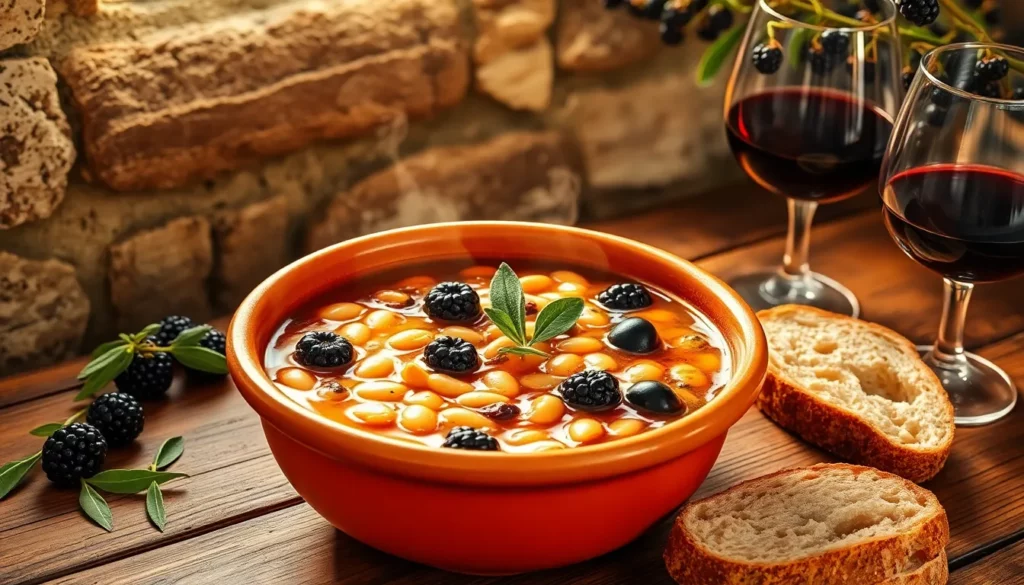
More (often called More e fagioli) is a traditional Tuscan soup that combines beans and blackberries in a savory-sweet broth. Originating in the Garfagnana region of Tuscany, this peasant dish uses simple, foraged ingredients: dried beans (typically cannellini or borlotti), wild blackberries (more in Italian), and aromatic herbs. The result is a deeply earthy, slightly tart soup that defies expectations and showcases the resourcefulness of Italian cucina povera.
Origin & History
More e fagioli hails from the mountainous Garfagnana area of northwestern Tuscany, near Lucca. It emerged during the Middle Ages as a frugal meal for farmers and shepherds who had access to wild blackberries in late summer and autumn. The dish is documented in local oral traditions and early 20th-century cookbooks, though its roots are likely much older. Unlike many Italian soups that rely on tomatoes or meat broth, More e fagioli relies on the natural pectin and acidity of blackberries to thicken and flavor the beans. It is a prime example of cucina povera (poor kitchen) where nothing is wasted and wild ingredients are celebrated.
What’s In It
The core ingredients are dried beans (cannellini or borlotti), fresh or frozen blackberries, garlic, sage, olive oil, and salt. Some versions add a splash of red wine or a pinch of sugar to balance acidity. The beans are soaked overnight, then simmered with aromatics until tender. Blackberries are added near the end of cooking, gently crushed to release their juice. The soup is typically served at room temperature or warm, not piping hot, to preserve the berry flavor. It is distinct from similar dishes like ribollita (which uses leftover bread and vegetables) or pappa al pomodoro (tomato-based) because of its fruit component.
Regional Variations
| Region | Variation | Key Differences |
|---|---|---|
| Garfagnana (Tuscany) | Classic More e fagioli | Uses cannellini beans, wild blackberries, sage, and garlic; often served with crusty bread. |
| Lunigiana (Tuscany/Liguria border) | More con fagioli e castagne | Adds chestnuts for sweetness and a thicker texture; sometimes includes rosemary. |
| Umbria | Zuppa di more e lenticchie | Substitutes lentils for beans; uses blackberries and a touch of balsamic vinegar. |
| Emilia-Romagna | More e borlotti con pancetta | Adds pancetta or guanciale for a smoky, savory depth; blackberries are pureed. |
How It’s Traditionally Eaten
More e fagioli is served as a primo (first course) or a piatto unico (one-dish meal) in autumn, when blackberries are ripe. It is eaten at room temperature or lukewarm, often drizzled with extra-virgin olive oil and accompanied by slices of grilled or stale bread. It is a humble, everyday dish, not reserved for holidays, though it may appear at harvest festivals in Garfagnana. Pair it with a light red wine like a Chianti or a Tuscan Sangiovese.
Common Mistakes / What It’s Not
Many American-Italian adaptations mistakenly treat More e fagioli as a sweet dessert soup or add sugar excessively. In reality, the dish is savory with a subtle tartness from the blackberries. It is not a fruit soup in the modern sense; the berries are used as a vegetable-like ingredient. Another misconception is that it must be served hot; traditional recipes call for serving it at room temperature to let the flavors meld. It is also not a pureed soup—the beans and berries should remain somewhat whole.
Where to Try It / What to Order
To experience authentic More e fagioli, visit the Garfagnana region of Tuscany, especially in the towns of Castelnuovo di Garfagnana or Barga. Look for it on menus at trattorie and agriturismi during late summer and autumn. Ask for zuppa di more e fagioli or simply more e fagioli. If traveling, the annual Sagra della More e Fagioli in the village of San Romano in Garfagnana (usually in September) is a must. In the US, some Italian regional restaurants in New York or San Francisco may offer it seasonally.
Related Dishes
FAQ
What is More e fagioli?
More e fagioli is a traditional Tuscan soup made with beans and blackberries, originating from the Garfagnana region. It is a savory dish with a subtle tartness, served at room temperature.
Is More e fagioli sweet or savory?
It is primarily savory, with the blackberries adding a mild tartness rather than sweetness. Sugar is rarely added; the dish relies on the natural flavors of beans and herbs.
Can I use canned beans for More e fagioli?
Yes, but dried beans are traditional and provide a creamier texture. If using canned, rinse them well and reduce cooking time; add blackberries at the end to avoid overcooking.
What type of blackberries are best?
Wild blackberries (more di bosco) are ideal for their intense flavor. If unavailable, use fresh or frozen cultivated blackberries, but avoid overly sweet varieties.
What wine pairs with More e fagioli?
A light red wine like Chianti or a Tuscan Sangiovese complements the earthy beans and tart berries. A dry rosé also works well.


Leave a Reply