
Short Answer
What It Is
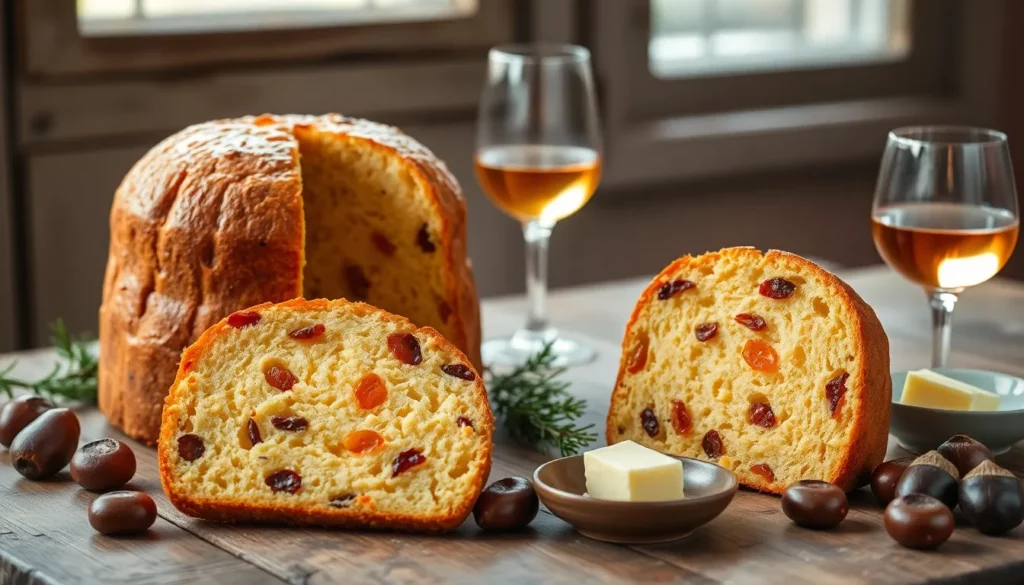
Panettone is a classic Italian sweet bread that originated in Milan, Lombardy, and is traditionally consumed during the Christmas and New Year holidays. Its defining characteristics include a tall, domed shape, a soft, airy crumb, and a rich flavor derived from candied orange and citron peels, raisins, and sometimes vanilla or citrus zest. The dough is leavened using lievito madre (a natural sourdough starter), which gives panettone its distinctive texture and long shelf life.
The production of authentic panettone is a labor-intensive process that spans two to three days. After mixing the first dough (biga) with flour, water, and yeast, it undergoes a long fermentation. Then butter, sugar, egg yolks, and the candied fruits are incorporated, followed by a second slow rise. The dough is then shaped, placed in paper molds, and left to proof for up to 12 hours before baking. The result is a light, fluffy bread with a delicate crumb and a characteristic golden-brown crust.
Panettone is recognized as a Prodotto Agroalimentare Tradizionale (PAT) by the Italian Ministry of Agricultural Policies, which certifies its traditional production methods and regional origin. While it does not hold a DOP or PGI status, voluntary certifications such as Panettone Artigianale from the Istituto di Tutela Panettone Artigianale guarantee that the product is made according to artisanal standards, using natural ingredients and no artificial additives.
Types & Grades
Panettone is available in several varieties, ranging from the classic recipe to modern interpretations. The following table outlines the main types and quality grades:
| Type | Description | Quality Grade |
|---|---|---|
| Classic Panettone | Traditional recipe with candied orange, citron, and raisins. Often includes vanilla and natural butter. | Artisanal (lievito madre, long proofing) or Industrial (commercial yeast, shorter proofing) |
| Chocolate Panettone | Replaces candied fruits with chocolate chips or cocoa. May include hazelnuts or almonds. | Artisanal or Industrial |
| Panettone with Cream or Filling | Filled with pastry cream, chocolate cream, or mascarpone. Often sold as a dessert. | Usually artisanal |
| Gluten-Free Panettone | Made with alternative flours (rice, corn) for celiac consumers. Texture differs. | Artisanal or Industrial |
| Panettone Salato (Savory) | Rare variation with cheese, olives, or herbs. Not traditional but emerging. | Artisanal |
Quality grades are primarily determined by the leavening method and ingredient purity. Artisanal panettone uses lievito madre, real butter, fresh eggs, and natural flavorings, with a proofing time of 24–48 hours. Industrial panettone often relies on commercial yeast, artificial flavors, and preservatives, resulting in a denser crumb and shorter shelf life. The price difference reflects the production cost: artisanal panettone can cost three to five times more than mass-produced versions.
How It’s Used in Cooking
Panettone is most commonly enjoyed as a dessert or breakfast treat, but its versatility extends to many culinary applications. In traditional Italian households, it is sliced and served with sweet wines such as Moscato d’Asti, Spumante, or a glass of Vin Santo. It can also be toasted and buttered for a simple breakfast.
Beyond the table, panettone is a key ingredient in several signature dishes:
- Panettone Tiramisù – Layers of panettone soaked in espresso and liqueur, alternated with mascarpone cream and cocoa powder.
- Panettone Bread Pudding – Cubes of panettone baked in a custard of eggs, milk, and sugar, often with a drizzle of caramel or chocolate.
- Panettone French Toast – Thick slices dipped in egg batter and pan-fried, served with maple syrup or fresh berries.
- Panettone Trifle – Layered with custard, fruit compote, and whipped cream in a glass bowl.
- Panettone Croutons – Cubed and toasted for use in salads or as a crunchy topping for soups.
Chefs also incorporate panettone into ice cream, gelato, and even savory stuffings for poultry, though the latter is less common. The bread’s natural sweetness and tender crumb make it an excellent base for both sweet and savory experiments.
How to Choose/Identify Authentic Panettone
When selecting a panettone, especially for gifting or special occasions, look for these authenticity cues:
- Check the ingredients list: Authentic panettone should list lievito madre (natural yeast) as the leavening agent, not baker’s yeast. The first ingredient should be wheat flour, followed by butter, sugar, egg yolks, and candied fruits. Avoid products with hydrogenated fats, artificial flavors, or preservatives.
- Look for certifications: The Panettone Artigianale label from the Istituto di Tutela Panettone Artigianale indicates compliance with traditional methods. Also, the PAT (Traditional Agri-food Product) mark from the Italian Ministry of Agricultural Policies confirms regional origin.
- Examine the weight and size: A standard 1 kg panettone should be tall (about 15–20 cm) and wide (about 20–25 cm). The dome should be well-risen and golden. A flat or sunken top suggests poor fermentation.
- Feel the texture: The crumb should be soft, airy, and slightly moist, not dry or dense. When sliced, it should hold together without crumbling excessively.
- Smell and taste: Authentic panettone has a rich, buttery aroma with notes of citrus and vanilla. The taste is balanced – sweet but not cloying, with a slight tang from the natural yeast.
- Price: Artisanal panettone typically costs €20–€40 per kg, while industrial versions are under €10. If the price seems too good to be true, it likely is.
“Panettone is not just a cake; it is a testament to patience and craftsmanship. The long fermentation with lievito madre is what gives it soul.” – Pastry Chef Iginio Massari
Substitutes
While panettone is unique, several Italian sweet breads can serve as substitutes in recipes or at the table:
- Pandoro – A star-shaped sweet bread from Verona, made with similar ingredients but without candied fruits. It is often dusted with powdered sugar. Use pandoro when you want a plainer, fruit-free base for desserts like tiramisù or trifle.
- Colomba Pasquale – An Easter dove-shaped cake with candied fruit and an almond glaze. It is denser and more cake-like than panettone. Substitute in recipes that require a firmer crumb, such as bread pudding.
- Brioche – A French enriched bread that can replace panettone in French toast or bread pudding, though it lacks the candied fruit and citrus flavor. Add dried fruit and zest to mimic panettone.
- Ciambella – A simple Italian ring cake, less rich and without yeast fermentation. Use only in recipes where panettone is not the star, such as a base for trifle.
For those avoiding gluten, gluten-free panettone is now widely available, but homemade alternatives using gluten-free flour blends and natural yeast can also be attempted.
Conclusion
Panettone is far more than a holiday treat; it is a symbol of Italian culinary heritage, requiring skill, time, and quality ingredients. Whether enjoyed in its classic form or used as a versatile ingredient in desserts, authentic panettone offers a unique taste of Milanese tradition. When purchasing, prioritize artisanal products with natural yeast and simple ingredients to experience the true depth of flavor. As the saying goes, “A tavola non si invecchia” – at the table, one does not grow old – and panettone is a perfect companion for those cherished moments.
FAQ
What is the difference between panettone and pandoro?
Panettone originates from Milan and contains candied fruits and raisins, while pandoro comes from Verona and is a plain, star-shaped sweet bread dusted with powdered sugar. Pandoro has a softer, more buttery crumb and no fruit, making it a neutral base for creams and fillings.
How should I store panettone to keep it fresh?
Store panettone in its original paper bag or wrapped in a clean cloth at room temperature, away from direct sunlight and heat. Do not refrigerate, as it will dry out. Once cut, wrap the exposed surface tightly in plastic wrap or foil. Artisanal panettone can last up to 6 months if stored properly.
Can I make panettone at home?
Yes, but it requires patience and precision. You need to maintain a lievito madre starter, follow a multi-day process, and control temperature during proofing. Many home bakers use a simplified version with commercial yeast, but the authentic texture and flavor come from the natural yeast and long fermentation.


Leave a Reply