
Short Answer
What It Is
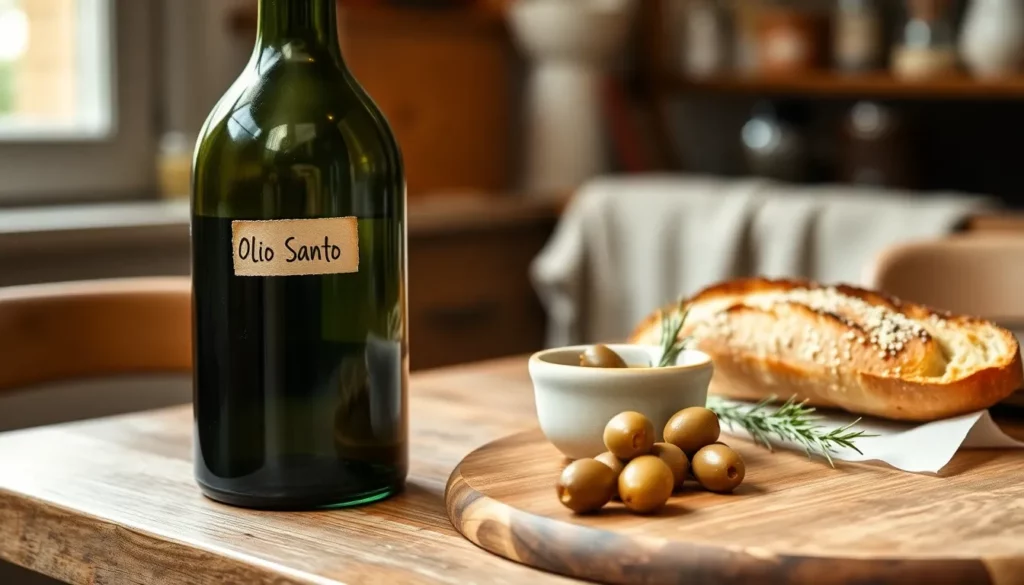
Olio Santo (literally “Holy Oil”) is a traditional extra virgin olive oil originating from the Puglia region of southern Italy, particularly the provinces of Bari and Foggia. It is made exclusively from the Coratina olive variety, known for its high polyphenol content and intense, peppery finish. Unlike many commercial olive oils, Olio Santo is often produced using a cold-press method and is typically unfiltered, retaining its natural sediment and robust character. While it does not hold a formal DOP (Denominazione di Origine Protetta) or IGP (Indicazione Geografica Protetta) status as a specific product, many producers adhere to traditional methods and may carry regional certifications such as “Olio Extra Vergine di Oliva Puglia IGP.” The term “Olio Santo” itself is a colloquial name that reflects its historical use in religious ceremonies and as a preservative for vegetables (sott’olio).
Types & Grades
Olio Santo is not a standardized classification but rather a descriptor for high-quality, robust extra virgin olive oils. However, within the category, variations exist based on harvest time, filtration, and aging. The table below outlines common grades:
| Grade | Description | Typical Use |
|---|---|---|
| Novello (New Harvest) | Unfiltered, green, intensely peppery, harvested early (October–November). High polyphenols. | Dipping bread, finishing drizzles, short-term use. |
| Filtrato (Filtered) | Filtered to remove sediment, milder but still robust. Harvested later (November–December). | Cooking, sautéing, longer shelf life. |
| Vecchio (Aged) | Aged for 12–18 months in stainless steel or glass, smoother, less pungent. | Drizzling over cooked dishes, salads. |
| Olio Santo per Sott’olio | Specifically produced for preserving vegetables; often unfiltered, very high acidity (but still extra virgin). | Preserving artichokes, mushrooms, peppers. |
How It’s Used in Cooking
Olio Santo is a cornerstone of Pugliese cuisine. Its robust, peppery character makes it ideal for:

- Preserving vegetables (sott’olio): The oil’s high polyphenol content acts as a natural preservative for artichokes, eggplants, mushrooms, and sun-dried tomatoes.
- Bread dipping: A simple mixture of Olio Santo, salt, and sometimes herbs is a classic antipasto.
- Finishing dishes: Drizzled over grilled meats, fish, or roasted vegetables to add a peppery kick.
- Pasta dishes: Used in aglio e olio or as a base for pesto alla trapanese.
- Bruschetta: Rubbed on toasted bread with garlic and tomatoes.
“Olio Santo is not just an oil; it is the soul of Pugliese cooking, a liquid that carries the sun and the earth of our land.” – Traditional Pugliese saying.
How to Choose/Identify Authentic OLIO SANTO
To ensure you are purchasing authentic Olio Santo, look for the following cues:
- Origin: Look for bottles labeled “Prodotto in Puglia” or “Prodotto in Italia.” The Coratina olive is native to Puglia.
- Variety: The label should specify “Coratina” or “100% Coratina.” Blends may not deliver the characteristic peppery finish.
- Harvest date: Authentic Olio Santo will display a harvest year (e.g., “Raccolto 2023”) rather than a generic expiration date.
- Unfiltered: Many traditional producers leave the oil unfiltered, resulting in a cloudy appearance and sediment at the bottom.
- Acidity: Extra virgin olive oil must have acidity ≤0.8%. Olio Santo often has even lower acidity (0.2–0.4%) due to the Coratina variety.
- Certifications: While not mandatory, look for IGP Puglia or organic certifications as signs of quality.
- Packaging: Dark glass bottles or tin cans protect the oil from light. Avoid clear plastic.
Substitutes
If Olio Santo is unavailable, consider these genuine Italian substitutes:
- Olio Extra Vergine di Oliva Coratina: The same olive variety, often labeled simply as Coratina EVOO. It offers a similar peppery profile.
- Olio di Oliva Toscano IGP: Tuscan oils, especially from the Frantoio or Moraiolo varieties, have a robust, grassy, and peppery character that can mimic Olio Santo.
- Olio di Oliva Siciliano: Oils from Sicily, particularly those made from Nocellara del Belice olives, provide a fruity and slightly spicy alternative.
- Olio di Oliva del Garda: From Lombardy, these oils are more delicate but can be used in cooking where a strong peppery note is not essential.
When substituting, consider the intended use: for preserving vegetables, a high-polyphenol oil is crucial; for finishing, any robust EVOO will work.
Conclusion
Olio Santo is more than a condiment; it is a cultural artifact of Pugliese culinary tradition. Its intense, peppery flavor and high polyphenol content make it indispensable for preserving vegetables and adding depth to rustic dishes. When selecting Olio Santo, prioritize origin, olive variety, and harvest date to ensure authenticity. While substitutes exist, none fully replicate the unique character of this holy oil.
FAQ
Is Olio Santo a DOP product?
No, Olio Santo is not a formal DOP (Denominazione di Origine Protetta) product. However, many producers in Puglia use the term to describe a traditional, robust extra virgin olive oil made from Coratina olives. Some of these oils may carry the Puglia IGP certification.
What makes Olio Santo different from regular extra virgin olive oil?
Olio Santo is distinguished by its exclusive use of Coratina olives, which give it a very high polyphenol content and an intense, peppery finish. It is often unfiltered and produced using traditional methods, making it ideal for preserving vegetables and adding a bold flavor to dishes.
Can I use Olio Santo for frying?
Yes, Olio Santo can be used for frying due to its high smoke point (around 200°C/392°F) and robust flavor. However, its peppery character is best appreciated in raw applications like dipping or drizzling. For deep frying, a more neutral oil may be preferred to avoid overpowering the food.
Leave a Reply