
Short Answer
What It Is
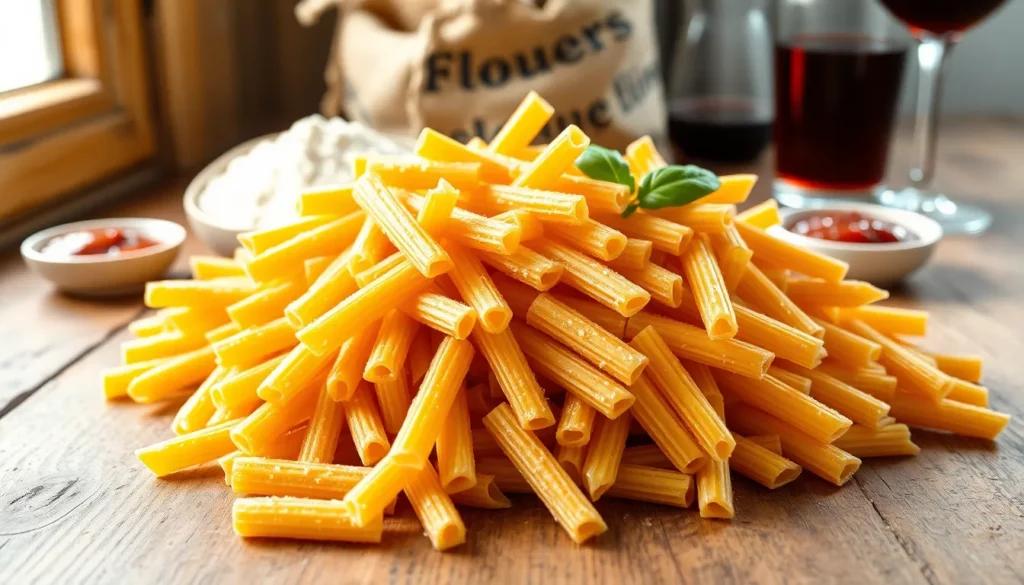
Penne (Italian: penne, meaning “quills” or “pens”) is a short, cylindrical pasta shape with ends cut diagonally, resembling the nib of a fountain pen. It is one of the most widely recognized and consumed pasta shapes in Italy and around the world. Penne is a dry pasta (pasta secca), traditionally made from durum wheat semolina and water, then extruded through bronze dies to create a rough, porous surface that helps sauces cling.
The shape originated in the Campania region of southern Italy, particularly in the area around Gragnano, a town renowned for its pasta-making tradition. Gragnano’s pasta, including penne, benefits from a unique microclimate of warm sun and sea breezes that allow for slow, natural drying. While penne itself does not hold a DOP (Denominazione di Origine Protetta) status, pasta produced in Gragnano can carry the IGP (Indicazione Geografica Protetta) label, “Pasta di Gragnano,” which guarantees the product is made locally using traditional methods.
Production involves mixing semolina with water to form a dough, which is then extruded through a die. The die’s shape determines the ridges (rigate) or smooth surface (lisce). After extrusion, the pasta is cut to length and dried slowly at low temperatures (below 50°C) to preserve flavor and texture. Authentic penne is characterized by its rough, matte appearance and a firm bite (al dente) when cooked.
Types & Grades
Penne comes in several variations, primarily distinguished by surface texture and size. The table below outlines the main types:
| Type | Surface | Typical Length | Common Uses |
|---|---|---|---|
| Penne Rigate | Ridged (grooved) | ~35 mm | Hearty sauces, baked dishes |
| Penne Lisce | Smooth | ~35 mm | Lighter sauces, oil-based dressings |
| Penne Ziti | Smooth or ridged, slightly longer | ~40–50 mm | Baked pasta (pasta al forno) |
| Penne Mezzane | Ridged, medium size | ~30 mm | Versatile, similar to rigate |
| Penne Piccole | Ridged or smooth, mini | ~20 mm | Soups, salads |
In terms of grades, the most important distinction is between industrial penne (mass-produced, often Teflon-die extruded, smooth and shiny) and artisanal penne (bronze-die extruded, rough and porous). Artisanal penne is considered superior for sauce adhesion and texture. Some premium brands also indicate slow-dried (essiccazione lenta) on the label, which enhances flavor and cooking performance.
How It’s Used in Cooking
Penne’s hollow center and angled ends make it ideal for capturing both chunky and smooth sauces. It is a staple in many classic Italian dishes:
- Penne all’Arrabbiata – A spicy tomato sauce from Lazio, with garlic, chili flakes, and olive oil.
- Penne alla Vodka – A creamy tomato sauce enriched with vodka and cream (popular in Italian-American cuisine).
- Penne al Pesto – Ligurian basil pesto, often with potatoes and green beans.
- Penne al Forno – Baked pasta with ragù, béchamel, and melted cheese (e.g., mozzarella, Parmesan).
- Penne con le Sarde – Sicilian dish with sardines, fennel, pine nuts, and raisins.
- Penne con Verdure – Grilled or roasted vegetables (zucchini, eggplant, peppers) tossed with olive oil and herbs.
Because of its sturdy shape, penne holds up well in pasta salads and soups (e.g., minestrone). It is also commonly used in one-pot meals and casseroles. The key to cooking penne is to boil it in generously salted water until al dente (firm to the bite), then toss immediately with sauce to allow absorption.
“Penne rigate is the perfect marriage of form and function: the ridges trap sauce, the hollow center holds it, and the angled cut ensures every bite is balanced.” – Italian pasta master, Giorgio Locatelli
How to Choose/Identify Authentic Penne
For chefs and home cooks seeking the best quality, look for these authenticity cues when purchasing penne:
- Bronze-die extrusion – The pasta surface should be rough and matte, not shiny and smooth. This indicates traditional bronze dies, which create micro-crevices for sauce adherence.
- Slow drying – Check the label for “essiccazione lenta” (slow drying) or drying temperatures below 50°C. Slow-dried pasta retains more flavor and cooks more evenly.
- 100% durum wheat semolina – Authentic Italian penne uses only semola di grano duro. Avoid blends with soft wheat or added ingredients.
- Italian origin – Look for “Prodotto in Italia” or specific regional indications like “Pasta di Gragnano IGP.” The IGP label guarantees production in the Gragnano area using traditional methods.
- Color – High-quality penne has a warm amber-yellow color, not pale or overly bright. Uniformity in shape and size indicates careful manufacturing.
- Packaging – Transparent bags allow inspection; avoid packages with broken pieces or excessive dust at the bottom.
For commercial buyers, consider brands like De Cecco, Rummo, La Molisana, and Garofalo (all bronze-die, slow-dried). Artisanal producers such as Pastificio dei Campi or Mancini offer premium options.
Substitutes
If penne is unavailable, several Italian pasta shapes can serve as substitutes, depending on the dish:
- Rigatoni – Larger, ridged tubes; excellent for baked dishes and chunky sauces. The ridges mimic penne rigate’s sauce-holding ability.
- Ziti – Long, thin tubes (often cut); ideal for pasta al forno and hearty ragùs. Ziti is closer to penne in texture but longer.
- Fusilli – Spiral-shaped; works well with pesto and thick sauces, though the shape is different.
- Maccheroni (short, curved tubes) – A classic substitute for penne in mac and cheese or simple tomato sauces.
- Penne Lisce – If you have only smooth penne, it can replace rigate in lighter sauces, but expect less sauce adhesion.
When substituting, consider the sauce consistency: chunky sauces pair best with ridged, wide tubes (rigatoni, ziti), while smooth sauces work with any short pasta. For baked dishes, choose shapes that hold their structure under heat.
In conclusion, penne is a versatile and iconic pasta shape that embodies the best of Italian pasta-making tradition. Its unique design, combined with proper production methods, makes it a favorite for countless recipes. By understanding its types, authentic characteristics, and ideal uses, you can elevate your cooking and appreciate the craftsmanship behind every bite.
FAQ
What is the difference between penne lisce and penne rigate?
Penne lisce have a smooth surface, while penne rigate have ridges (grooves) that run lengthwise. The ridges help thick sauces cling better, making rigate the preferred choice for hearty ragùs and baked dishes. Lisce are better suited for lighter, oil-based sauces or delicate dressings.
Is penne a healthy pasta option?
Penne made from 100% durum wheat semolina is a good source of complex carbohydrates and protein. It has a moderate glycemic index, especially when cooked al dente. Whole-wheat versions offer more fiber. Authentic Italian penne contains no added sugars or preservatives, making it a wholesome choice as part of a balanced diet.
Can penne be used in baked pasta dishes?
Yes, penne is excellent for baked pasta (pasta al forno). Its sturdy shape holds up well during baking, and the ridges or hollow center trap sauce and cheese. Popular baked dishes include penne with ragù and béchamel, or penne with vegetables and mozzarella. For best results, slightly undercook the pasta before assembling and baking.
How can I tell if penne is authentic Italian?
Look for 'Prodotto in Italia' on the package, and check for the 'Pasta di Gragnano IGP' label if you want guaranteed traditional production. Authentic penne should be made from 100% durum wheat semolina, extruded through bronze dies (rough surface), and slow-dried. Avoid brands that list soft wheat or have a shiny, smooth surface.



Leave a Reply