
Short Answer
What It Is
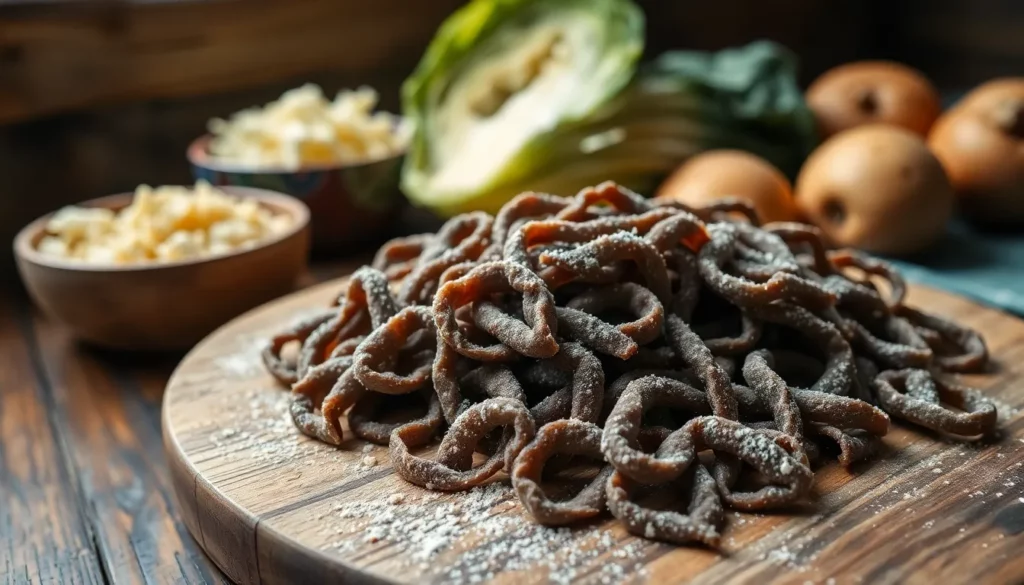
Pizzoccheri (pronounced pit-SOH-keh-ree) is a short, flat pasta originating from the Valtellina valley in the Lombardy region of northern Italy. Its defining characteristic is the use of buckwheat flour (grano saraceno) blended with wheat flour, which gives the pasta a distinctive earthy, nutty flavor and a dark, speckled appearance. The dough is rolled out and cut into irregular rectangles or rhomboids, typically about 4–5 cm long and 1–2 cm wide.
Since 2007, Pizzoccheri della Valtellina has been protected under the European Union’s Protected Geographical Indication (PGI) status. This certification ensures that the pasta is produced within the designated area of the Valtellina valley (provinces of Sondrio and parts of Bergamo, Brescia, Como, Lecco) and follows a traditional recipe: at least 60% buckwheat flour, up to 40% soft wheat flour, water, and optionally eggs (though the PGI recipe typically omits eggs). The dough is kneaded, rolled, and cut by hand or with bronze dies, then dried slowly at low temperatures.
Historically, pizzoccheri emerged as a peasant dish in the Alpine region, where buckwheat thrived in poor soils and cool climates. It was a staple for shepherds and farmers, often served as a hearty one-pot meal with potatoes, cabbage, and local cheeses like casera or bitto. Today, it remains a symbol of Valtellina’s culinary heritage and is celebrated in annual festivals such as the Sagra dei Pizzoccheri in Teglio.

Types & Grades
While the PGI designation standardizes the core product, variations exist based on production methods and ingredient ratios. The table below outlines the main types:
| Type | Description | Common Use |
|---|---|---|
| Traditional PGI Pizzoccheri | Made with ≥60% buckwheat flour, soft wheat flour, water; no eggs. Hand-cut or bronze-die cut. Dried slowly. | Authentic Valtellina recipes: with potatoes, cabbage, and cheese. |
| Fresh Pizzoccheri | Same flour blend but sold fresh (refrigerated). Often includes eggs for a softer texture. | Quick cooking; used in soups or with lighter sauces. |
| Whole-Grain Pizzoccheri | Uses whole-grain buckwheat flour for a more robust flavor and higher fiber content. | Health-conscious preparations; pairs well with robust vegetables. |
| Gluten-Free Pizzoccheri | Made with 100% buckwheat flour or alternative binders (e.g., rice flour). Not PGI-compliant. | For gluten-intolerant individuals; texture is more delicate. |
Grades are not officially classified by age, but the quality of buckwheat flour (stone-ground vs. industrial) and the drying process (low-temperature vs. high-heat) significantly affect the final product. Artisanal producers often use stone-ground flour from local buckwheat varieties, yielding a more aromatic pasta.
How It’s Used in Cooking
Pizzoccheri is most famously prepared in the traditional Valtellina dish Pizzoccheri della Valtellina, a baked casserole that combines the pasta with boiled potatoes, savoy cabbage, and a generous layering of local cheeses—typically casera (a semi-hard cow’s milk cheese) and bitto (a hard, aged cheese). The dish is finished with melted butter infused with garlic and sage, then baked until golden and bubbly.
Traditional Recipe Steps
- Cook the pizzoccheri in salted boiling water along with diced potatoes and shredded cabbage until al dente.
- Drain and layer in a baking dish with slices of casera and grated bitto.
- Pour over a hot butter sauce with garlic and sage leaves.
- Bake at 180°C (350°F) for 15–20 minutes until the cheese melts and the top is lightly browned.
Beyond the classic, pizzoccheri can be used in soups (e.g., minestra di pizzoccheri), salads (tossed with roasted vegetables and a vinaigrette), or simply dressed with brown butter and sage. Its robust flavor stands up to hearty ingredients like mushrooms, sausage, or kale. In professional kitchens, pizzoccheri is valued for its ability to absorb flavors while maintaining a firm, chewy texture.
“Pizzoccheri are not just pasta; they are the taste of the Alps, a memory of stone and snow, of shepherds’ fires and the generosity of the earth.” – Traditional Valtellina saying
How to Choose/Identify Authentic Pizzoccheri
When purchasing pizzoccheri, look for the following authenticity cues:
- PGI Label: The official Pizzoccheri della Valtellina IGP logo guarantees origin and traditional method. Check for the EU PGI symbol on the packaging.
- Ingredient List: Authentic PGI pizzoccheri lists buckwheat flour as the first ingredient (≥60%), followed by soft wheat flour and water. Eggs are optional but not typical in the PGI version.
- Appearance: The pasta should be irregularly shaped, with a rough, matte surface (from bronze dies) and a dark brownish-grey color with visible bran specks.
- Texture: When cooked, authentic pizzoccheri remains firm and slightly chewy, not mushy. It should release a nutty, earthy aroma.
- Producer: Reputable brands include Pasta di Teglio, Pastificio Artigianale Valtellinese, and Fratelli Pasta. Avoid products with added colorings or preservatives.
- Price: Artisanal PGI pizzoccheri is typically more expensive than generic buckwheat pasta. Very low prices may indicate non-authentic blends.
For commercial buyers, sourcing directly from producers in the Valtellina region or from specialized Italian food importers ensures authenticity.
Substitutes
While no substitute perfectly replicates pizzoccheri, several Italian alternatives can be used in similar dishes:
- Sciatt – Buckwheat fritters from Valtellina, often served as a starter. Not a pasta, but shares the buckwheat flavor profile.
- Tagliatelle di Grano Saraceno – Long, flat noodles made with buckwheat flour. They can replace pizzoccheri in soups or with butter and sage, though the texture is more delicate.
- Bigoli – Thick, whole-wheat spaghetti from Veneto. When made with buckwheat flour (bigoli di grano saraceno), they offer a similar earthy taste and chewy bite.
- Gnocchi di Patate – Potato gnocchi can be used in the classic baked dish, but the flavor will be milder. Add buckwheat flour to the gnocchi dough for a closer match.
For gluten-free needs, 100% buckwheat pasta (e.g., soba-style) can work, but it lacks the wheat binder and may be more fragile. Always adjust cooking times accordingly.
Conclusion
Pizzoccheri is a unique expression of Alpine Italian cuisine, rooted in the traditions of Valtellina and protected by PGI status. Its buckwheat base, irregular shape, and affinity for hearty vegetables and cheeses make it a versatile ingredient for both rustic and refined dishes. When selecting pizzoccheri, prioritize authentic PGI products to experience the true character of this historic pasta. Whether prepared in the classic baked casserole or adapted to modern recipes, pizzoccheri offers a taste of the Italian Alps that is both nourishing and memorable.
FAQ
What is the difference between Pizzoccheri and other buckwheat pastas?
Pizzoccheri is a short, flat pasta from Valtellina with a specific PGI recipe requiring at least 60% buckwheat flour and soft wheat flour. Other buckwheat pastas, like tagliatelle di grano saraceno, are often long and may have different flour ratios or include eggs. Pizzoccheri's irregular shape and traditional pairing with potatoes, cabbage, and local cheeses set it apart.
Can I make Pizzoccheri at home?
Yes, homemade pizzoccheri can be made by mixing 60–70% buckwheat flour with 30–40% all-purpose flour, water, and a pinch of salt. Knead into a firm dough, roll out to 2–3 mm thickness, and cut into rectangles. Fresh pizzoccheri cooks in about 8–10 minutes. For authentic flavor, use stone-ground buckwheat flour.
Is Pizzoccheri gluten-free?
Traditional PGI pizzoccheri contains wheat flour and therefore gluten. However, some producers offer gluten-free versions made entirely from buckwheat flour or with gluten-free binders. These are not PGI-certified and have a different texture. Always check the label if you have celiac disease.
What cheese is best for Pizzoccheri?
The classic combination is Casera (for melting) and Bitto (for grating). If unavailable, substitute with Fontina (for creaminess) and Parmigiano-Reggiano or Grana Padano (for sharpness). The key is a semi-soft melting cheese and a hard, aged cheese.

Leave a Reply