
Short Answer
What It Is
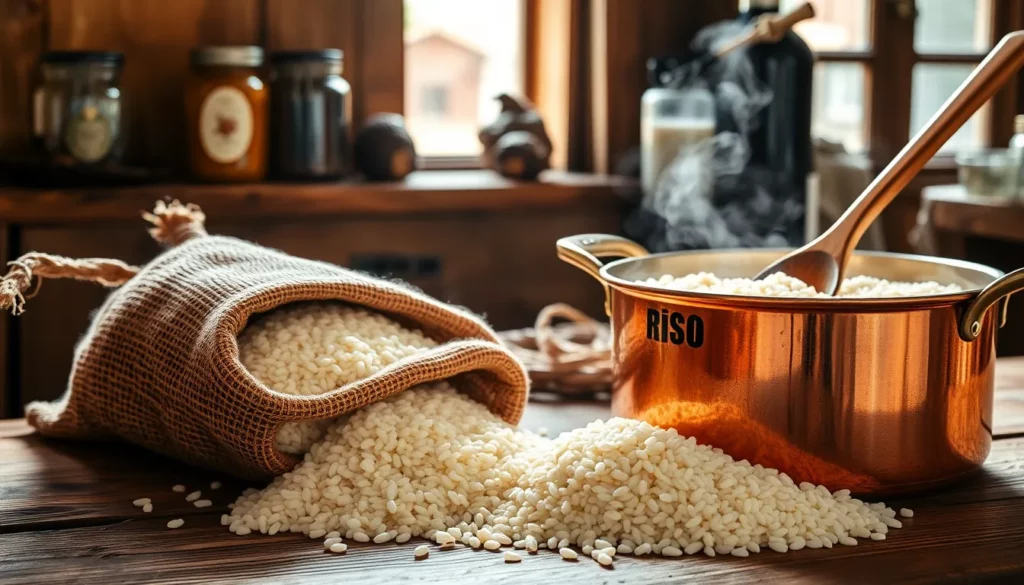
RISO is the Italian word for rice, but in culinary and gastronomic contexts it refers specifically to the high-quality rice varieties cultivated in Italy, many of which carry prestigious DOP (Denominazione di Origine Protetta) or IGP (Indicazione Geografica Protetta) certifications. Italian rice production is concentrated in the northern regions—Piedmont, Lombardy, Veneto, and Emilia-Romagna—where the unique microclimate, abundant water from Alpine rivers, and centuries-old farming traditions create grains with exceptional starch content, firmness, and flavor.
The history of RISO in Italy dates back to the 15th century, when rice was first introduced via the Venetian Republic. Over the centuries, Italian farmers perfected the cultivation of japonica varieties, developing grains that can absorb up to four times their weight in liquid while maintaining an al dente core—a quality essential for the iconic dish risotto. Today, Italy is the leading rice producer in Europe, with over 200,000 hectares dedicated to rice paddies and more than 140 registered varieties.
Two key protected designations highlight the excellence of Italian RISO:
- Riso di Baraggia DOP – Grown exclusively in the Baraggia area of Piedmont (provinces of Biella and Vercelli), this rice is produced from traditional varieties like Carnaroli, Arborio, and Baldo. The DOP status, granted in 2007, ensures strict production protocols, including cultivation in flooded paddies, manual harvesting, and aging for at least 12 months. The result is a grain with exceptional firmness and a high amylose content, ideal for risotto.
- Riso Nano Vialone Veronese IGP – Cultivated in the Verona province of Veneto, this semi-fine rice (known as nano for its short, round grains) has been protected since 1996. It is prized for its ability to absorb flavors while remaining separate, making it perfect for risotti and soups. The IGP status requires the use of traditional Vialone Nano seeds and cultivation in the specific alluvial soils of the region.
Beyond these, other notable Italian rice varieties include Carnaroli (often called the “king of risotto rice”), Arborio (the most widely exported), and Baldo (a robust grain for long-cooking dishes). Each variety’s starch composition—specifically the ratio of amylose to amylopectin—determines its cooking behavior and final texture.
Types & Grades
Italian rice is classified by grain size and shape into four main categories, each suited to different culinary applications. The table below summarizes the primary types and their characteristics.
| Type | Grain Shape | Key Varieties | Best Use | Starch Content |
|---|---|---|---|---|
| Comune (Common) | Short, round | Originario, Balilla | Desserts, soups, rice salads | Low amylose, high amylopectin (sticky) |
| Semifino (Semi-fine) | Medium, oval | Vialone Nano, Padano | Risotto, soups, timbales | Moderate amylose, good creaminess |
| Fino (Fine) | Long, slender | Arborio, Baldo | Risotto, paella, salads | High amylose, firm core |
| Superfino (Superfine) | Large, pearly | Carnaroli, Roma, Sant’Andrea | Premium risotto, gourmet dishes | Very high amylose, excellent absorption |
Within these categories, aging grades further refine quality:
- Riso Vecchio (Aged rice) – Stored for 12–18 months after harvest, this rice loses moisture and develops a harder grain, allowing it to absorb more liquid without turning mushy. It is the preferred choice for risotto.
- Riso Nuovo (New rice) – Sold within months of harvest, it has higher moisture content and cooks faster, but yields a softer texture. Best for soups or dishes where creaminess is desired quickly.
- Riso Parboiled – Treated with steam and pressure before milling to gelatinize the starch, making it resistant to overcooking. Common in quick-cook products but not traditional for risotto.
For DOP and IGP rices, aging is mandatory: Riso di Baraggia DOP requires a minimum of 12 months, while Riso Nano Vialone Veronese IGP is typically aged for 6–12 months.
How It’s Used in Cooking
RISO is the backbone of countless Italian dishes, from the creamy risotti of the north to the arancini of Sicily. Its versatility stems from the unique starch profile that allows the grains to release amylopectin gradually, creating a velvety sauce while retaining a firm bite (al dente).
Traditional Risotto
The most iconic use of RISO is risotto, a slow-cooked dish where rice is toasted in butter or oil, then gradually bathed with hot broth while stirring. The technique coaxes out the starch, resulting in a creamy, emulsified texture. Classic risotti include:
- Risotto alla Milanese – Saffron-infused, from Lombardy, traditionally served with ossobuco.
- Risotto al Barolo – Piedmontese, made with Barolo wine and often topped with Castelmagno cheese.
- Risotto ai Funghi – With porcini mushrooms, a fall favorite across northern Italy.
- Risotto alla Pescatora – Seafood risotto, common in coastal regions.
For these dishes, Superfino varieties like Carnaroli or Arborio are preferred because they maintain structure through the long cooking process.
Other Culinary Applications
- Minestrone and Soups – Semifino rices like Vialone Nano add body without disintegrating.
- Insalata di Riso – Cold rice salads with vegetables, tuna, or herbs, popular in summer.
- Arancini – Sicilian fried rice balls stuffed with ragù, mozzarella, or peas, typically made with leftover risotto.
- Riso al Forno – Baked rice casseroles with cheese, béchamel, and vegetables.
- Dolci di Riso – Rice desserts like budino di riso (rice pudding) or torta di riso (rice cake), often flavored with lemon, cinnamon, or raisins.
“Il riso nasce nell’acqua e muore nel vino.” – Italian proverb (Rice is born in water and dies in wine), reflecting the traditional pairing of risotto with wine.
How to Choose/Identify Authentic RISO
For chefs and home cooks seeking genuine Italian RISO, especially for risotto, authenticity is paramount. Here is a practical buying guide:
Look for Certification Labels
- DOP or IGP seals – On packages of Riso di Baraggia DOP or Riso Nano Vialone Veronese IGP. These guarantee origin, variety, and production methods.
- “100% Italiano” or “Prodotto in Italia” – Indicates the rice was grown and processed in Italy. Be wary of blends with foreign rice.
- Variety name – Authentic packages will clearly state the variety (e.g., Carnaroli, Arborio, Vialone Nano). Avoid generic “risotto rice” without a named variety.
Examine the Grain
- Color – High-quality Italian rice is pearly white with a translucent core. Yellowish or chalky grains may indicate poor storage or old stock.
- Shape – Superfino grains are large, oval, and uniform. Broken or irregular grains suggest lower grade.
- Aroma – Fresh rice has a clean, slightly nutty scent. Any mustiness or rancidity signals spoilage.
Check the Harvest and Aging Date
For risotto, seek “Riso Vecchio” (aged) with a harvest year at least 12 months prior. Many premium brands print the harvest year on the package. New rice (within 6 months of harvest) is better for soups or desserts.
Trusted Producers
Reputable Italian rice mills include Acquerello (Carnaroli aged for 12+ months), Riso Gallo, Riso Scotti, Colle del Sole, and La Riseria. For DOP/IGP, look for consortium seals like Consorzio di Tutela del Riso di Baraggia or Consorzio di Tutela del Riso Nano Vialone Veronese.
Substitutes
While no substitute perfectly replicates the texture of authentic Italian RISO, several alternatives can be used in specific dishes. The choice depends on the desired outcome:
- Other Italian rice varieties – If a specific variety is unavailable, another Italian type can be used. For example, substitute Carnaroli with Arborio (slightly less creamy) or Vialone Nano (more absorbent). Baldo is a good alternative for long-cooking dishes.
- Spanish Bomba rice – Used for paella, Bomba has high starch content and absorbs liquid well, making it a decent substitute for risotto, though the texture is firmer and less creamy.
- Japanese sushi rice – Short-grain and sticky, it can work in rice puddings or arancini, but lacks the amylose needed for risotto’s al dente core.
- Pearl barley or farro – For a whole-grain alternative in soups or salads, these ancient grains offer nutty flavor and chewy texture, but they are not rice.
In traditional Italian cooking, substitutions are rarely made; the variety is chosen to match the dish. For authentic risotto, always use a Superfino Italian rice. If unavailable, Arborio is the most accessible compromise.
Conclusion
RISO is far more than a staple grain—it is a testament to Italy’s agricultural heritage and culinary precision. From the protected paddies of Baraggia to the Veronese plains, each grain carries centuries of tradition. Understanding the types, grades, and proper uses of Italian rice empowers cooks to create dishes that honor this legacy. Whether you are crafting a saffron risotto or a simple rice salad, choosing authentic RISO ensures the best possible result: a perfect balance of creaminess, flavor, and texture that defines Italian cuisine.
FAQ
What is the best rice for risotto?
The best rice for risotto is a Superfino variety, particularly Carnaroli or Arborio. Carnaroli is often called the 'king of risotto rice' because of its high amylose content, which allows it to absorb liquid while maintaining a firm al dente core. Arborio is more widely available and also produces a creamy risotto, though it can become slightly stickier. For traditional recipes, aged rice (Riso Vecchio) is preferred.
What does DOP mean for Italian rice?
DOP (Denominazione di Origine Protetta) is a European certification that guarantees the rice was produced, processed, and prepared entirely within a specific geographical region using traditional methods. For example, Riso di Baraggia DOP must be grown in the Baraggia area of Piedmont, from approved varieties like Carnaroli, Arborio, or Baldo, and aged for at least 12 months. This ensures superior quality and authenticity.
Can I use regular long-grain rice for risotto?
No, regular long-grain rice (such as American white rice) is not suitable for risotto. It has a low amylose content and high amylopectin, which causes it to become mushy and sticky when stirred with broth. Risotto requires a high-amylose, short- or medium-grain rice like Carnaroli or Arborio that can release starch gradually while keeping a firm core.


Leave a Reply