
Short Answer
Sicily stands as a cultural crossroads in the Mediterranean, offering travelers a dense concentration of history, natural beauty, and culinary tradition. As an autonomous region of Italy, it operates with distinct logistical considerations compared to the mainland. This guide provides the structural framework necessary for planning a successful trip, focusing on transport networks, seasonal variations, and regional highlights.
Getting There
Most international travelers arrive via air into one of Sicily’s three main airports: Falcone-Borsellino in Palermo (PMO), Catania-Fontanarossa (CTA), or Vincenzo Florio in Trapani (TPS). Catania is often the busiest hub due to its proximity to Mount Etna and the eastern coast, while Palermo serves the northwest. Direct flights operate from major European hubs and Italian cities like Rome and Milan. For those already in mainland Italy, ferries provide a viable alternative. Car ferries depart regularly from Villa San Giovanni in Calabria to Messina, offering a crossing time of approximately 30 minutes. Train ferries also operate, allowing passengers to remain on board while the train is loaded onto the vessel. Travelers should verify current schedules with operators such as Caronte & Tourist or Trenitalia, as frequency varies by season.
Getting Around
Public transport exists but is often optimized for residents rather than tourists. Trenitalia operates regional trains connecting major cities like Palermo, Catania, Messina, and Syracuse, though services to smaller interior towns can be infrequent. Intercity buses operated by companies such as Interbus or AST fill many gaps, particularly for reaching hill towns. However, renting a car is highly recommended for visitors wishing to explore beyond the main urban centers. A vehicle provides the flexibility to visit archaeological sites, beaches, and rural villages at your own pace. Be aware of ZTL (Zona a Traffico Limitato) zones in historic city centers like Palermo and Taormina; unauthorized entry results in heavy fines. Parking can be challenging in dense urban areas, so verify hotel parking availability beforehand. Roads are generally well-maintained on highways but can be narrow and winding in the interior.

Best Time to Visit
The optimal windows for visiting Sicily are late spring (April to June) and early autumn (September to October). During these periods, temperatures are mild, ranging from 20°C to 25°C, making outdoor exploration comfortable. Summer (July and August) brings intense heat, often exceeding 30°C, and significant crowds, particularly in coastal resorts. While summer is suitable for beach-focused trips, cultural sightseeing can be strenuous. Winter (November to March) is mild compared to northern Europe, with temperatures rarely dropping below 10°C, but some rural attractions and boat services may operate on reduced schedules. Religious festivals occur year-round, with Holy Week processions being particularly notable in Trapani and Enna. Always check specific event dates as they follow the lunar calendar.
Top Things to Do
Valley of the Temples
Located near Agrigento, this archaeological park contains some of the best-preserved Ancient Greek temples in the world. The site is expansive, requiring several hours to explore properly. It suits history enthusiasts and photographers, especially during sunset when the stone glows golden. Wear sturdy shoes as the terrain is uneven.
Mount Etna
Europe’s highest active volcano dominates the eastern landscape. Visitors can take guided tours to the summit craters or explore lower altitude lava flows and vineyards. Accessibility varies based on volcanic activity, so check official park notices before planning a summit ascent. It is a primary draw for nature lovers and hikers.
Palermo Street Markets
Markets like Vucciria, Ballarò, and Capo offer an immersive sensory experience. They are central to Palermitan culture, featuring fresh produce, seafood, and street food stalls. Visit in the morning for the liveliest atmosphere. This is essential for travelers interested in local cuisine and daily life.
Taormina and the Greek Theatre
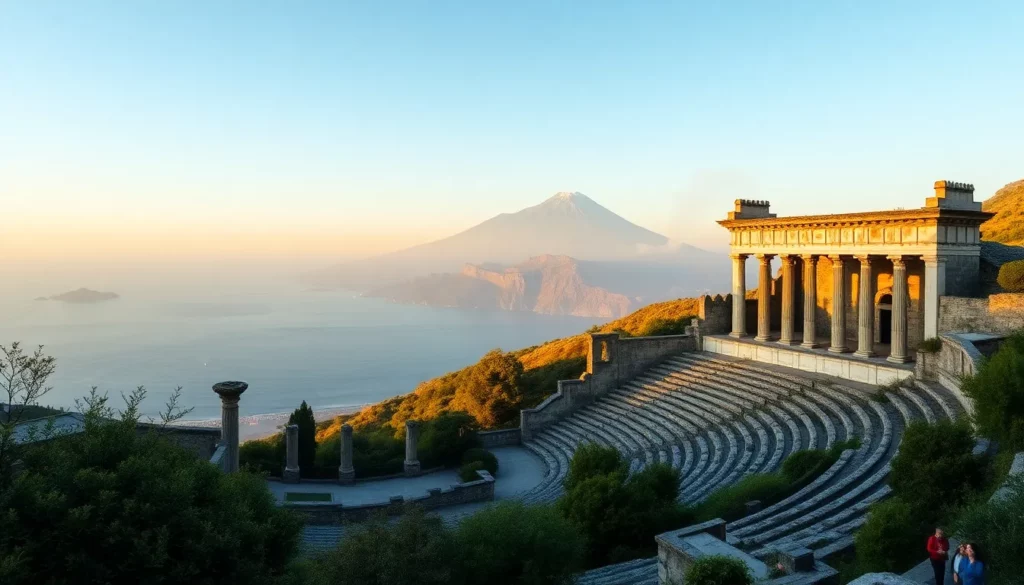
Perched on a hillside overlooking the Ionian Sea, Taormina combines medieval charm with ancient history. The Greek Theatre offers iconic views of Mount Etna framed by ancient ruins. The town is upscale and can be crowded, but the vistas justify the visit. Suitable for couples and culture seekers.
Syracuse and Ortigia
The historic center of Syracuse is located on the island of Ortigia, connected by bridges to the mainland. It features a mix of Greek, Roman, and Baroque architecture. The Cathedral incorporates columns from an ancient Temple of Athena. Explore on foot to appreciate the narrow streets and seafront promenades.
Cefalù
This coastal town north of Palermo is known for its Norman Cathedral and sandy beach. It offers a relaxed atmosphere compared to larger cities. The Rocca di Cefalù provides a hiking opportunity with panoramic views. Ideal for families and those seeking a mix of culture and relaxation.
Scala dei Turchi
Located on the southern coast near Realmonte, these striking white marl cliffs contrast sharply with the blue sea. Access regulations change frequently to prevent erosion, so verify if climbing is permitted before visiting. It is a top spot for landscape photography and swimming.
Necropolis of Pantalica
A UNESCO site featuring thousands of ancient rock-cut tombs carved into limestone cliffs. It is less crowded than other archaeological sites and offers excellent hiking trails along the Anapo River. Best for active travelers interested in prehistoric history and nature.
Where to Eat
Sicilian cuisine is distinct from mainland Italian food, characterized by Arab, Greek, and Spanish influences. Seafood is ubiquitous, with swordfish and sardines appearing frequently. Street food is a major component of the culture; look for arancini (fried rice balls), panelle (chickpea fritters), and cannoli (sweet ricotta pastries). Pasta alla Norma, featuring eggplant and ricotta salata, is a signature dish from Catania. Wine production is significant, particularly Etna DOC wines made from Nerello Mascalese grapes. Meal times follow Italian norms, with lunch around 1:30 PM and dinner rarely before 8:00 PM. A “coperto” or cover charge is commonly added to bills in sit-down restaurants. Tipping is not mandatory but leaving small change is appreciated for good service.
Where to Stay
Accommodation choices depend heavily on your itinerary. Palermo is best for first-time visitors interested in history, markets, and nightlife, though it can be noisy. Taormina suits travelers seeking luxury, views, and a romantic atmosphere, but it is pricier. Catania serves as a practical hub for exploring Mount Etna and the east coast, offering a gritty urban vibe with lower costs. Syracuse Ortigia is ideal for a picturesque, walkable stay focused on history and sea views. Cefalù is recommended for families wanting beach access alongside cultural sites. Rural agriturismos (farm stays) are excellent for those with a car seeking tranquility and local food experiences. Always check if air conditioning is included if visiting in summer, as heat can be intense.
Suggested Itinerary
2-Day Highlights
Day 1: Arrive in Palermo. Explore the Norman Palace and Cappella Palatina. Walk through the Quattro Canti and visit Palermo Cathedral. Evening street food tour in the Vucciria market.
Day 2: Day trip to Monreale to see the Cathedral mosaics. Return to Palermo for shopping or museum visits before departure. This pace is fast but covers the capital’s essentials.
4-Day Regional Overview
Day 1: Palermo arrival and historic center exploration. Overnight in Palermo.
Day 2: Drive or train to Cefalù. Visit the Cathedral and beach. Continue to Taormina. Overnight in Taormina.
Day 3: Morning visit to the Greek Theatre in Taormina. Afternoon excursion to Mount Etna. Overnight in Catania or Taormina.
Day 4: Travel to Syracuse. Explore Ortigia island. Depart from Catania airport. This route covers the north and east coasts efficiently.
Local Etiquette & Practical Tips
Dress modestly when entering churches; shoulders and knees should be covered. Greetings are important; a simple “Buongiorno” (Good day) or “Buonasera” (Good evening) upon entering shops is expected. While English is spoken in tourist areas, learning basic Italian phrases is appreciated. Credit cards are widely accepted, but carry cash for small vendors, markets, and rural establishments. Pickpocketing can occur in crowded markets and train stations, so maintain awareness of belongings. Water is generally safe to drink from public fountains marked “acqua potabile.” Many shops close during “riposo” (siesta) in the early afternoon, particularly in smaller towns. Accessibility varies; historic centers often have cobblestones and steps that challenge mobility devices.
Day Trips from Sicily
Given the island’s size, many “day trips” are actually inter-city travel. From Palermo, Agrigento’s Valley of the Temples is a feasible full-day trip by train or car. From Catania, Mount Etna is a half-day excursion, while Syracuse is a full-day trip. The Aeolian Islands (Lipari, Stromboli, Panarea) are accessible via ferry from Milazzo or Messina but often warrant an overnight stay to avoid rushing. Erice, a medieval hill town near Trapani, is a manageable half-day trip from western Sicily. Verify ferry timetables in advance as they reduce frequency outside peak summer months. For distant locations like the southern coast from Palermo, consider an overnight stop to minimize driving time.
FAQ
Is Sicily worth visiting?
Yes, for travelers interested in history, food, and diverse landscapes. It offers a unique cultural blend distinct from mainland Italy.
How many days do you need in Sicily?
A minimum of 5 days is recommended for a highlights trip, while 10 days allows for a comprehensive exploration of both coasts.
Is Sicily safe for tourists?
Generally yes, but standard precautions against pickpocketing in crowded areas and careful driving on narrow roads are advised.



Leave a Reply