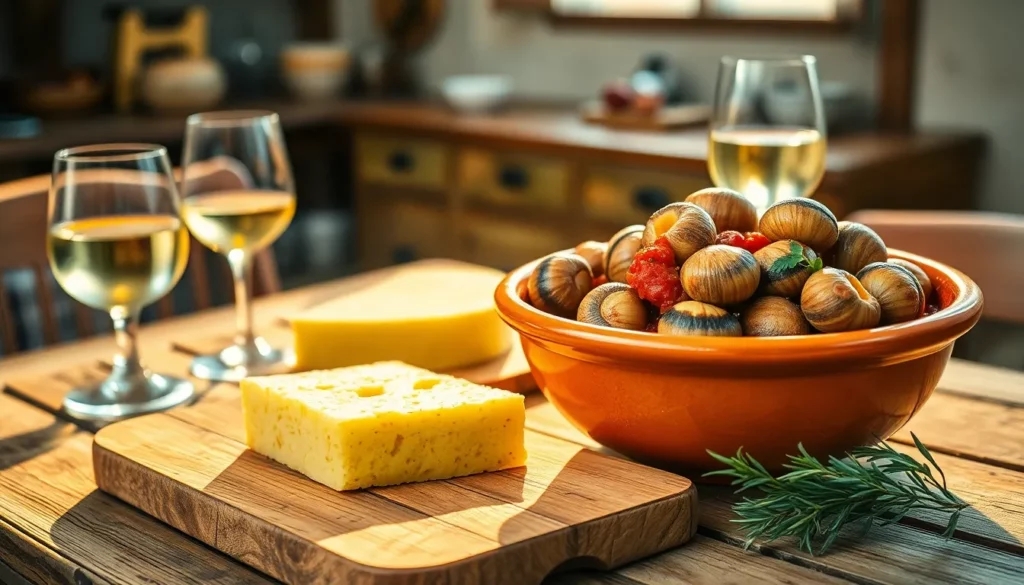
AI-generated illustration for Bovoleto: The Traditional Italian Snail Dish from Veneto
Short Answer
Bovoleto is a rustic Italian dish from the Veneto region, featuring small land snails (bovoli) slowly simmered in a savory tomato and herb sauce. Often served with polenta or crusty bread, this delicacy reflects centuries of peasant culinary tradition and remains a cherished specialty in Verona and surrounding areas.
What Is Bovoleto? Italian Snail Dish Explained
Bovoleto is a traditional Italian dish consisting of small land snails—known locally as bovoli or bovoletti—cooked in a rich tomato-based sauce with garlic, parsley, white wine, and sometimes anchovies or chili. Originating in the Veneto region, particularly around Verona and the Lessinia plateau, this dish is a classic example of cucina povera (peasant cooking), transforming humble foraged ingredients into a flavorful and satisfying meal. Bovoleto is typically served as a secondo (main course) or as a hearty appetizer, accompanied by soft polenta or slices of grilled bread.
Origin & History
The consumption of snails in Italy dates back to ancient Roman times, when cochleae were fattened in special enclosures (cochlearia) and considered a delicacy. However, the specific preparation known as Bovoleto emerged in the Veneto region during the Middle Ages, when snails became a vital protein source for rural communities, especially during Lent when meat was forbidden. The Lessinia area, with its limestone soils and abundant snail populations, became a center for snail gathering. Historical records from the 16th century mention bovoli being sold in Verona’s markets. Unlike the French escargots de Bourgogne, which are typically baked with garlic butter, Bovoleto reflects Italian simplicity: snails are purged, boiled, then simmered in a sauce that highlights local ingredients. The dish was traditionally prepared during autumn and spring, when snails were most active, and often accompanied by polenta—a staple of the Veneto diet.
What’s In It
The core ingredients of Bovoleto are:
Snails: Small land snails of the species Helix pomatia or Helix aspersa, locally called bovoli. They are purged for several days on a diet of flour or herbs to clean their digestive tract.
Tomatoes: Fresh or canned San Marzano tomatoes form the base of the sauce.
Aromatics: Garlic, onion, parsley, and sometimes sage or rosemary.
White wine: A dry wine like Soave or Pinot Grigio deglazes the pan and adds acidity.
Anchovies: A few fillets (optional) provide umami depth without a fishy taste.
Chili flakes: For a gentle heat, common in some family recipes.
Olive oil: Extra virgin for sautéing.
Preparation involves first purging the snails, then boiling them in salted water with bay leaves. The sauce is made by sautéing garlic and onion in olive oil, adding tomatoes, wine, and herbs, then simmering the snails for 30–40 minutes until tender. The dish is distinct from lumache alla romana (Roman-style snails with mint and pecorino) or lumache alla bolognese (with meat sauce). Bovoleto’s defining feature is its tomato-forward, herbaceous sauce and the use of small, local snails.
Regional Variations
While Bovoleto is most associated with Veneto, similar snail dishes exist across Italy. The table below compares three major regional interpretations:
Region
Dish Name
Key Differences
Veneto
Bovoleto
Tomato sauce, garlic, parsley, white wine; served with polenta or bread.
Lazio (Rome)
Lumache alla romana
Mint, pecorino cheese, no tomato; snails sautéed in olive oil and white wine.
Sicily
Lumache alla siciliana
Tomato sauce with capers, olives, and oregano; often served with pasta.
In Lombardy, snails are sometimes cooked with risotto (risotto con le lumache), while in Piedmont they appear in bagna cauda as a dipping ingredient. The Veneto version remains the most rustic, emphasizing the natural flavor of the snails.
How It’s Traditionally Eaten
Bovoleto is typically served as a secondo piatto (main course) after a light pasta or soup. It is often accompanied by polenta—either soft (polenta morbida) or grilled slices (polenta grigliata)—which soaks up the sauce. Crusty bread is also common for scarpetta (wiping the plate clean). The dish is considered a family-style meal, enjoyed on weekends or during festivals like the Sagra del Bovoleto in the town of Bosco Chiesanuova (Verona). It is not typically a holiday dish but rather a celebration of local foraging traditions. Diners use toothpicks or small forks to extract the snail meat from the shell, and the sauce is savored with polenta.
Common Mistakes / What It’s Not
Many American-Italian misconceptions surround snail dishes. Bovoleto is not the same as French escargot: the latter uses larger snails (often Helix pomatia) baked with garlic butter and parsley, while Bovoleto is simmered in a tomato sauce. It is also not a pasta dish, though some tourists mistakenly order it expecting a type of pasta shape (confusing bovole with bavette or fettuccine). Another common error is serving snails that have not been properly purged, resulting in a gritty texture. Authentic Bovoleto requires a 3–5 day purging period. Additionally, canned snails should be avoided; fresh or frozen local snails are preferred. Finally, Bovoleto is not a fast food; it demands slow cooking to achieve tenderness.
Where to Try It / What to Order
To experience authentic Bovoleto, visit the Veneto region, especially the province of Verona. The town of Bosco Chiesanuova in the Lessinia mountains hosts an annual Sagra del Bovoleto in September, where local families serve their recipes. In Verona city, try Trattoria Al Pompiere or Osteria La Baita for a traditional version. When ordering, ask for Bovoleto con polenta and specify fresco (fresh snails) if available. Pair with a glass of Soave or Valpolicella. For travelers unable to visit Veneto, some specialty Italian restaurants in major cities may offer the dish, but always confirm the preparation style.
Bovoleto is made from small land snails (bovoli) cooked in a tomato sauce with garlic, parsley, white wine, and sometimes anchovies or chili. It is typically served with polenta.
Where does Bovoleto originate?
Bovoleto originates from the Veneto region of Italy, particularly the area around Verona and the Lessinia plateau.
How is Bovoleto different from French escargot?
French escargot uses larger snails baked with garlic butter and parsley, while Bovoleto is simmered in a tomato-based sauce and served with polenta or bread.
Is Bovoleto a pasta dish?
No, Bovoleto is a snail dish, not a pasta. The name may be confused with pasta shapes like bavette, but it is entirely different.
When is the best time to eat Bovoleto?
Traditionally, Bovoleto is eaten in autumn and spring when snails are harvested. It is also featured at the Sagra del Bovoleto festival in September.
References
Riley, Gillian. The Oxford Companion to Italian Food. Oxford University Press, 2007.
Capatti, Alberto, and Massimo Montanari. Italian Cuisine: A Cultural History. Columbia University Press, 2003.
Zanini De Vita, Oretta. Encyclopedia of Pasta. University of California Press, 2009.
‘Bovoleto: The Snail Dish of Verona.’ La Cucina Italiana, 2021, www.lacucinaitaliana.com.
‘Sagra del Bovoleto.’ Comune di Bosco Chiesanuova, www.boscochiesanuova.it.
Related Terms
Bovoli
Local Veneto dialect term for small land snails, the primary ingredient in Bovoleto.
Cucina Povera
Italian 'poor kitchen' tradition that emphasizes simple, inexpensive ingredients and resourceful cooking methods.
Polenta
A porridge-like dish made from cornmeal, a staple of northern Italian cuisine often served with stews and snails.




Leave a Reply