
Short Answer
What Is Capellini? Italian Pasta Explained
Capellini is a type of long, thin pasta, often referred to as “angel hair” in English due to its fine, delicate strands. It is one of the thinnest pasta shapes, typically measuring between 0.8 and 1.0 millimeters in diameter. Originating from the Campania region of southern Italy, particularly the area around Naples, capellini is made from a simple dough of durum wheat semolina and water, though some artisanal versions include eggs. Its delicate texture and quick cooking time (usually 2–4 minutes) make it ideal for light sauces, seafood, or broths. Unlike thicker pastas, capellini is not meant to be heavily sauced; instead, it shines with simple, fresh ingredients that cling to its fine strands.
Origin & History
The exact origins of capellini are difficult to pinpoint, but it is widely believed to have emerged in the Campania region during the Renaissance period. The name “capellini” translates to “little hairs” in Italian, a reference to its thin, hair-like appearance. Historical records suggest that pasta makers in Naples began producing extremely thin strands as a luxury item for the aristocracy, who prized its refined texture. Unlike the myth that Marco Polo introduced pasta to Italy, capellini is a purely Italian invention, with documented references to thin pasta in 14th-century cookbooks such as Liber de Coquina. By the 19th century, capellini had become a staple in Neapolitan cuisine, often served in brodo (broth) or with simple tomato sauces. Its popularity spread to other regions, but it remains most closely associated with Campania.
What’s In It
Traditional capellini is made from just two ingredients: durum wheat semolina and water. The semolina is mixed with water to form a stiff dough, which is then extruded through bronze dies to create the thin strands. Some modern recipes add eggs for a richer flavor and slightly firmer texture, but this is not traditional. The key to authentic capellini is the quality of the semolina, which should be finely ground to ensure a smooth, silky surface. Unlike fresh pasta, capellini is typically dried to preserve it, and the drying process is carefully controlled to prevent breakage. The pasta is often sold in nests or straight strands. It is important to differentiate capellini from capellini d’angelo (angel hair), which is even thinner (0.6–0.8 mm) and more fragile. Capellini is also distinct from spaghetti (1.8–2.0 mm) and vermicelli (1.2–1.5 mm), though all are long, thin pastas.

Regional Variations
While capellini is most strongly associated with Campania, it has been adopted and adapted across Italy. The following table highlights key regional differences:
| Region | Typical Sauce | Preparation Style | Notes |
|---|---|---|---|
| Campania | Light tomato sauce with basil, olive oil, and garlic; or seafood (vongole, gamberi) | Often served as a primo (first course) with minimal sauce, allowing the pasta to shine | Traditional use of San Marzano tomatoes and extra-virgin olive oil |
| Liguria | Pesto alla Genovese (basil, pine nuts, Parmesan, garlic, olive oil) | Capellini is sometimes used instead of trofie or trenette for a lighter pesto dish | Pesto coats the thin strands delicately; often garnished with green beans and potatoes |
| Sicily | Pesce spada (swordfish) or sardine-based sauces with pine nuts, raisins, and saffron | Capellini is used in both savory and sweet preparations (e.g., pasta con le sarde) | Sweet-savory combinations reflect Arab influence; sometimes baked in a timballo |
| Lazio | Carbonara or cacio e pepe (but less common due to thinness) | Capellini is rarely used for heavy Roman sauces; more often in brodo | In Rome, capellini is preferred for pastina in brodo (small pasta in broth) |
How It’s Traditionally Eaten
In Italian cuisine, capellini is almost always served as a primo piatto (first course), never as a main dish or side. It is typically paired with light, delicate sauces that complement its fine texture without overwhelming it. Common pairings include olio e aglio (olive oil and garlic), pomodoro fresco (fresh tomato sauce), or frutti di mare (seafood). Capellini is also frequently served in brodo (in broth), especially in winter or as a comforting dish for children. It is not traditionally eaten as a secondo (main course) or contorno (side dish). On special occasions, such as Christmas Eve or Easter, capellini may be served with more elaborate sauces, but it remains an everyday pasta for most Italians. The key is to cook it al dente and to toss it with sauce immediately after draining to prevent clumping.
Common Mistakes / What It’s Not
Many American-Italian adaptations have led to misconceptions about capellini. Here are the most frequent errors:
- Over-saucing: Capellini is not meant to be drowned in heavy cream or meat sauces. Its thin strands cannot support thick, chunky sauces; instead, use light, oil-based or thin tomato sauces.
- Overcooking: Because capellini cooks in 2–4 minutes, it is easy to turn it into mush. Always set a timer and taste frequently.
- Rinsing after cooking: Never rinse capellini unless you are using it for a cold pasta salad. Rinsing removes the starch that helps sauce adhere.
- Using it as a substitute for spaghetti: Capellini is not a thinner version of spaghetti; it has a different mouthfeel and requires different sauce pairings. Spaghetti is better for heavier sauces.
- Believing it is always fresh: While fresh capellini exists, most capellini is dried. Dried capellini is more common and holds its shape better during cooking.
Capellini is also not the same as angel hair pasta (capellini d’angelo), which is even thinner and more fragile. Angel hair is often used in soups or as a garnish, while capellini can stand alone as a pasta dish.
Where to Try It / What to Order
For an authentic experience, visit the Campania region, especially Naples and the Amalfi Coast. Look for trattorie that specialize in seafood pasta. Recommended dishes to order:
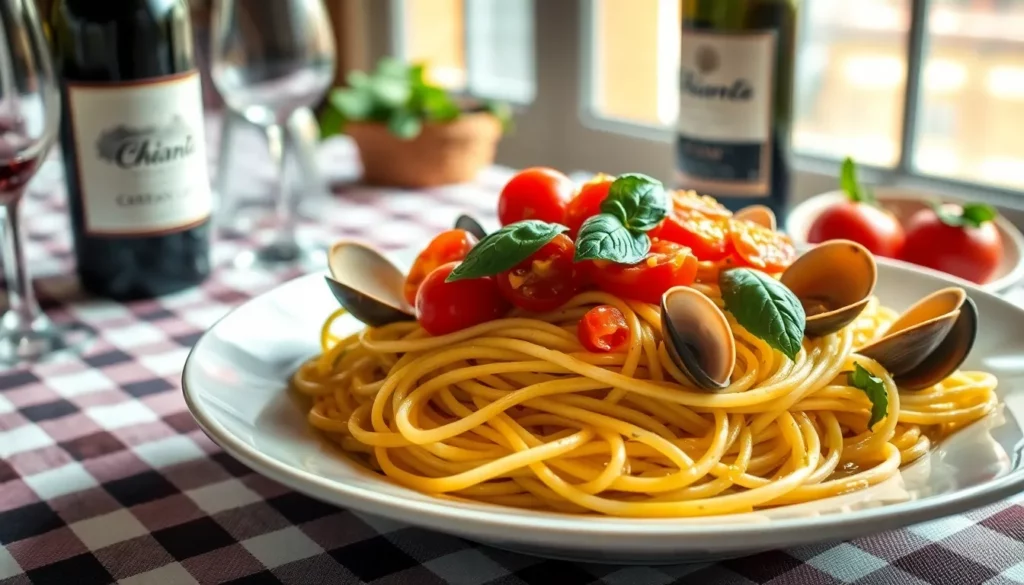
- Capellini alle vongole veraci – with fresh clams, garlic, white wine, and parsley.
- Capellini con pomodoro e basilico – simple tomato and basil sauce using San Marzano tomatoes.
- Capellini in brodo di pesce – in a light fish broth, often served as a starter.
Outside Italy, seek out Italian restaurants that emphasize regional authenticity. In the United States, restaurants in New York’s Little Italy or San Francisco’s North Beach may offer capellini prepared in the Neapolitan style. When ordering, ask if the pasta is al dente and if the sauce is light. Avoid dishes that list capellini with heavy cream or meat ragù.
Related Dishes
FAQ
What is the difference between capellini and angel hair pasta?
Capellini is slightly thicker (0.8–1.0 mm) than angel hair pasta (capellini d'angelo, 0.6–0.8 mm). Angel hair is more delicate and often used in soups or as a garnish, while capellini can be served as a main pasta dish with light sauces.
Can capellini be used in place of spaghetti?
Not ideally. Capellini is thinner and cooks faster, so it requires lighter sauces. Spaghetti is better for heavier, chunkier sauces. Substituting capellini for spaghetti may result in a mushy texture or unbalanced flavor.
What is the best sauce for capellini?
Light, oil-based sauces such as aglio e olio (garlic and oil), fresh tomato basil, or seafood sauces like vongole (clams) are ideal. Avoid heavy cream or meat ragù.
How long should I cook capellini?
Typically 2–4 minutes for dried capellini. Always check the package instructions and taste for al dente texture. Fresh capellini cooks in 1–2 minutes.
Is capellini gluten-free?
Traditional capellini is made from durum wheat semolina, which contains gluten. Gluten-free versions using rice or corn flour are available but are not traditional.

Leave a Reply