
Short Answer
What Is Baccalà mantecato? Italian Antipasto Explained
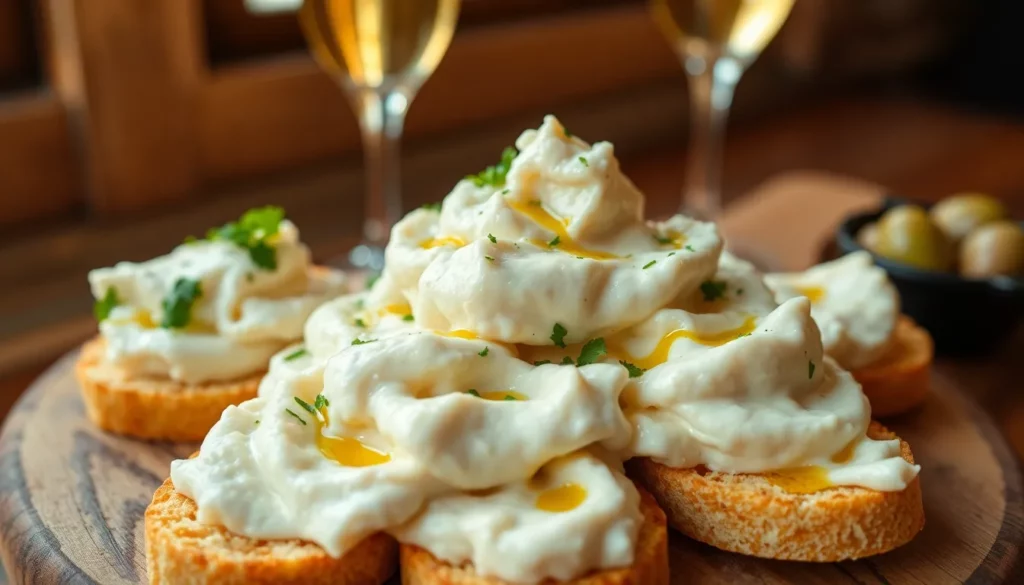
Baccalà mantecato is a traditional Venetian antipasto consisting of salt cod (baccalà) that has been poached, deboned, and then whipped with extra-virgin olive oil until it forms a light, airy, and creamy spread. The dish originates from the Veneto region, particularly the city of Venice, and relies on just a few key ingredients: desalted baccalà, high-quality olive oil, and sometimes a touch of garlic, lemon juice, or parsley. The result is a delicate, savory mousse that exemplifies the Venetian talent for transforming humble preserved fish into an elegant preparation.
Origin & History
The history of baccalà mantecato is deeply intertwined with Venice’s role as a maritime republic and its trade networks. Salt cod became a staple in Venice from the 15th century onward, when the city dominated the Adriatic and imported dried, salted fish from Scandinavia and the Atlantic. The technique of mantecare (to cream or whip) likely emerged in the kitchens of Venetian noble families and later spread to the city’s bacari (wine bars). Unlike many myths that attribute the dish to a single chef, baccalà mantecato evolved organically as a way to make the tough, salty fish palatable and luxurious. By the 19th century, it was firmly established as a signature antipasto of Venetian cuisine, often served during the Festa del Redentore and other local celebrations.
What’s In It
The core ingredients of baccalà mantecato are remarkably simple: baccalà (salt cod, not to be confused with stoccafisso, which is air-dried unsalted cod), extra-virgin olive oil, and water (or milk) for poaching. Some modern versions add a clove of garlic, a squeeze of lemon juice, or a sprinkle of chopped parsley, but purists insist on only cod and oil. The preparation requires careful desalting: the cod is soaked in cold water for 24–48 hours, changing the water several times. After poaching gently until tender, the fish is flaked, deboned, and then beaten by hand or with a mixer while slowly drizzling in olive oil until the mixture becomes pale, fluffy, and emulsified. This dish is distinct from baccalà alla vicentina, which is a slow-cooked stew with onions and milk, and from baccalà fritto, which is battered and fried.
Regional Variations
While baccalà mantecato is quintessentially Venetian, similar preparations exist across Italy, each with local twists. The table below highlights key differences:
| Region | Variation | Key Differences |
|---|---|---|
| Veneto (Venice) | Baccalà mantecato classico | Only cod and olive oil; served on polenta or crostini; no garlic or herbs. |
| Liguria | Brandacujun | Includes potatoes, garlic, and parsley; creamier and more substantial. |
| Friuli-Venezia Giulia | Baccalà in salsa | Similar whipped cod but often with anchovies and capers; served with polenta. |
| Lazio (Rome) | Baccalà fritto | Battered and deep-fried; a street food, not a spread. |
In Venice itself, baccalà mantecato is sometimes enriched with a splash of milk or cream, though traditionalists frown upon this. The dish is always served at room temperature, never hot.
How It’s Traditionally Eaten
Baccalà mantecato is almost exclusively an antipasto (starter) in Venetian cuisine. It is typically spread on crostini (small toasted bread slices) or served alongside soft polenta. In bacari, it is one of the most popular cicchetti (small snacks) and is often paired with a glass of prosecco or a light white wine like Soave. On festive occasions, such as Christmas Eve or the Feast of the Redeemer, it may appear as part of a larger seafood antipasto platter. It is not a main course (secondo) nor a pasta dish; its light, mousse-like texture makes it ideal for spreading and sharing.
Common Mistakes / What It’s Not
A frequent misconception among non-Italians is confusing baccalà (salt cod) with stoccafisso (stockfish, air-dried unsalted cod). Baccalà mantecato must be made with salt cod; using stockfish yields a different texture and flavor. Another mistake is treating it as a main course—it is a spread, not a fillet. Some American-Italian restaurants serve baccalà mantecato as a chunky salad, but the authentic version is whipped until completely smooth and airy. Additionally, it is not a hot dish; serving it warm or reheating it will break the emulsion. Finally, do not confuse it with baccalà alla vicentina, which is a braised dish, or with baccalà in umido, a tomato-based stew.
Where to Try It / What to Order
The best place to experience authentic baccalà mantecato is in Venice, particularly at traditional bacari (wine bars) such as Cantina Do Spade, Osteria Al Squero, or Bacaro Jazz. Look for it displayed under glass on the counter, often alongside other cicchetti. When ordering, simply say “Un crostino di baccalà mantecato, per favore.” Outside Venice, seek out Venetian-style restaurants in major cities like Milan or Rome. For travelers, the annual Festa del Baccalà in Sandrigo (Vicenza) offers a chance to taste many variations. If you are making it at home, source high-quality baccalà from an Italian deli and be patient with the desalting process.
Related Dishes
- Baccalà alla Vicentina
- Brandacujun (Ligurian Salt Cod Spread)
- Baccalà Fritto
- Stoccafisso alla Veneziana
- Cicchetti: Venetian Small Plates
FAQ
What is the difference between baccalà and stoccafisso?
Baccalà is salt cod (salted and dried), while stoccafisso is air-dried unsalted cod (stockfish). Baccalà mantecato must be made with baccalà; stoccafisso has a different texture and requires different preparation.
Can I make baccalà mantecato with fresh cod?
No, fresh cod lacks the necessary salt-cured texture and flavor. The desalting and whipping process relies on the structural changes that occur during salting. Using fresh cod will result in a watery, unemulsified mixture.
How long does baccalà mantecato last in the fridge?
Properly stored in an airtight container, baccalà mantecato can be refrigerated for up to 3–4 days. However, it is best consumed within 24 hours as the emulsion may begin to separate. Do not freeze.
Is baccalà mantecato gluten-free?
Yes, the spread itself is naturally gluten-free. However, when served on crostini, the bread contains gluten. For a gluten-free option, serve on polenta or gluten-free crackers.
What wine pairs best with baccalà mantecato?
A crisp, light white wine such as Prosecco, Soave, or Pinot Grigio complements the creamy, savory spread without overpowering it. A dry Vermentino also works well.


Leave a Reply