
Short Answer
What Is Cacio? Italian Pasta Explained
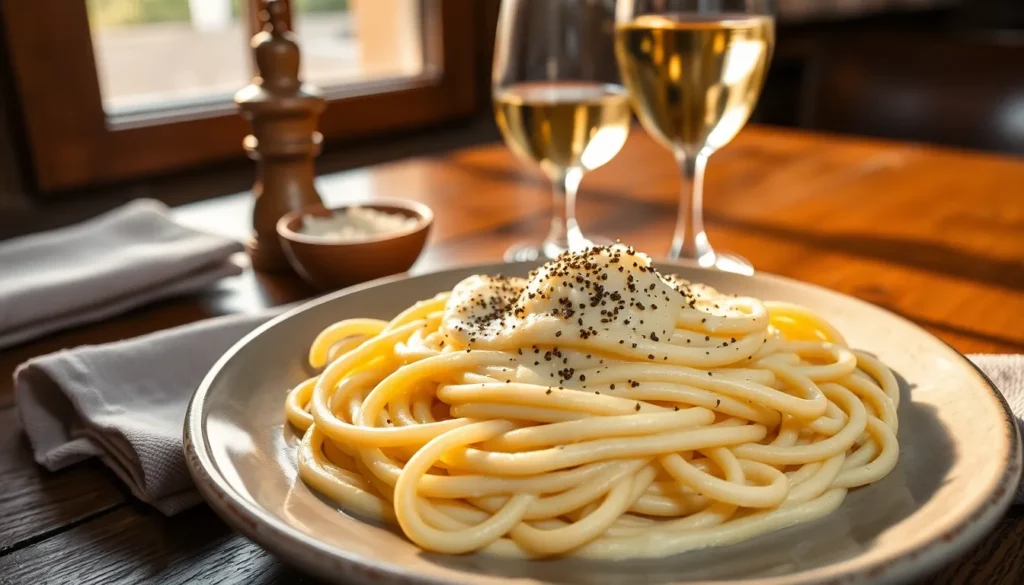
Cacio e Pepe (pronounced KAH-choh eh PEH-peh) is a traditional Roman pasta dish that exemplifies the Italian philosophy of cucina povera—making extraordinary food from ordinary ingredients. The name itself is a clue: cacio is the Romanesco dialect word for cheese, and pepe means pepper. The dish consists of only three main components: pasta (typically spaghetti or tonnarelli), finely grated Pecorino Romano cheese, and freshly cracked black pepper. The magic lies in the technique: the starchy pasta water is emulsified with the cheese and pepper to create a creamy, clingy sauce without any butter, cream, or oil. Originating in the Lazio region, particularly in Rome and its surrounding countryside, Cacio e Pepe is a cornerstone of Roman cuisine and a benchmark for pasta purists.
Origin & History
The roots of Cacio e Pepe are deeply embedded in the pastoral traditions of the Lazio region, especially the Monti della Laga and the Sabina hills. Shepherds and farmers, who spent long days in the fields, needed a portable, non-perishable meal. Hard Pecorino Romano cheese, dried pasta, and black pepper—all shelf-stable—were ideal. The dish likely emerged in the 18th or 19th century, though its exact origin is undocumented, as it was a humble peasant creation rather than a courtly recipe. The first written mention appears in Ada Boni’s 1930 cookbook La Cucina Romana, which codified many Roman classics. However, oral tradition suggests it was made long before. A popular anecdote tells of Roman shepherds who would carry a block of pecorino, a bag of peppercorns, and a bundle of dried pasta; when hungry, they would boil the pasta in a stream, grate the cheese, and crush the pepper with a stone, creating the first Cacio e Pepe. While romantic, this story underscores the dish’s rustic, resourceful origins. Unlike many Italian dishes that evolved in royal courts, Cacio e Pepe remained a staple of the working class until the mid-20th century, when it gained fame in Roman trattorias.
What’s In It
The ingredient list for authentic Cacio e Pepe is deceptively short, but each component must be of the highest quality:
- Pasta: Traditionally spaghetti or tonnarelli (a thicker, square-cut spaghetti). Some Romans prefer bucatini or fettuccine. The pasta must be bronze-drawn to create a rough surface that helps the sauce adhere.
- Pecorino Romano DOP: A hard, salty sheep’s milk cheese aged at least five months. It is the only cheese used; Parmigiano-Reggiano is never substituted in the authentic version. The cheese must be finely grated (almost powdery) to melt smoothly.
- Black Pepper: Whole peppercorns, freshly cracked or coarsely ground. The pepper provides heat and aroma, and its texture is integral to the dish.
- Pasta Water: The starchy, salted water is the secret to the emulsion. It binds the cheese and pepper into a creamy sauce without separating.
The preparation is a delicate balancing act. The pasta is cooked al dente in generously salted water. Meanwhile, the grated pecorino is mixed with a small amount of cold water to form a paste, which prevents clumping. In a hot pan, the cooked pasta is tossed with the cheese paste and a ladleful of hot pasta water, stirring vigorously to create an emulsion. The cracked pepper is added at the end. The result is a silky, peppery sauce that coats each strand. This dish is often confused with Carbonara (which uses egg and guanciale) or Alfredo (which uses butter and Parmigiano), but Cacio e Pepe contains no eggs, no meat, and no butter.
Regional Variations
While Cacio e Pepe is quintessentially Roman, variations exist across Italy, reflecting local cheese traditions and pasta shapes. The table below highlights key differences:
| Region | Cheese Used | Pasta Shape | Notable Twist |
|---|---|---|---|
| Rome (Lazio) | Pecorino Romano DOP (aged 5–8 months) | Spaghetti or tonnarelli | Classic; no additions; pepper is coarsely ground. |
| Sicily | Pecorino Siciliano (often younger, milder) | Bucatini or maccheroni | Sometimes includes a pinch of saffron or breadcrumbs for texture. |
| Campania (Naples) | Pecorino di Laticauda or a mix with Parmigiano | Spaghetti or vermicelli | May add a drizzle of extra-virgin olive oil for richness. |
| Abruzzo | Pecorino di Farindola (sheep’s milk) | Spaghetti alla chitarra (square-cut) | Often served with a side of arrosticini (lamb skewers). |
Outside Italy, especially in the United States, the dish is sometimes bastardized with cream, butter, or garlic. Purists consider these additions a travesty. The beauty of Cacio e Pepe lies in its simplicity; any extra ingredient masks the pure flavor of the pecorino and pepper.
How It’s Traditionally Eaten
Cacio e Pepe is served as a primo piatto (first course) in a traditional Italian meal, followed by a second course of meat or fish and contorni (side vegetables). It is rarely eaten as a main dish in Italy, though tourists often do. The portion size is modest—about 100–120 grams of dry pasta per person. It is typically enjoyed for lunch or dinner in Roman trattorias, and it is a staple of Sunday family meals. Because of its richness, it is not usually served as a midnight snack or breakfast food. On special occasions, such as Carnevale or Ferragosto, Romans might prepare a larger batch for gatherings. The dish is best eaten immediately after preparation, as the sauce can become clumpy if left to sit. A glass of Frascati (a white wine from the Castelli Romani) or a light Cesanese red wine pairs beautifully.
Common Mistakes / What It’s Not
Many misconceptions surround Cacio e Pepe, especially in American-Italian contexts. Here are the most frequent errors:
- Using Parmigiano-Reggiano instead of Pecorino Romano. While both are hard cheeses, Pecorino Romano is saltier and sharper, with a crumbly texture that emulsifies differently. Parmigiano is sweeter and less salty, resulting in a bland sauce.
- Adding cream or butter. The emulsion is achieved solely with pasta water and cheese. Cream makes the dish heavy and masks the pepper’s heat.
- Using pre-ground pepper. Freshly cracked pepper is essential for aroma and texture. Pre-ground pepper is dusty and lacks the floral notes.
- Overcooking the pasta. The pasta must be al dente to provide a firm bite and to release enough starch for the emulsion.
- Letting the cheese clump. The cheese must be finely grated and tempered with cold water before mixing with hot pasta water. Adding cheese directly to boiling water causes it to seize into a rubbery mass.
Cacio e Pepe is not a creamy Alfredo sauce, nor is it a carbonara without eggs. It is a distinct dish with its own technique. It is also not a vegan dish, as pecorino is an animal product. However, it is naturally gluten-free if made with gluten-free pasta, though traditionalists would balk at the substitution.
Where to Try It / What to Order
For the most authentic experience, visit Rome and seek out trattorias in the Trastevere or Testaccio neighborhoods. Renowned spots include Da Enzo al 29, Roscioli, and Felice a Testaccio. When ordering, ask for “Cacio e Pepe con tonnarelli” if you want the thicker pasta. Avoid restaurants that offer it with cream or that serve it as a main course. If you cannot travel to Italy, look for Italian-run restaurants that specialize in Roman cuisine. When making it at home, source Pecorino Romano DOP from a reputable Italian grocer and use high-quality bronze-drawn pasta. A key tip: reserve extra pasta water and keep the heat low when tossing to prevent the cheese from separating.
Related Dishes
FAQ
What is Cacio e Pepe?
Cacio e Pepe is a traditional Roman pasta dish made with only pasta, Pecorino Romano cheese, black pepper, and starchy pasta water. The name means 'cheese and pepper' in Romanesco dialect.
What cheese is used in Cacio e Pepe?
Authentic Cacio e Pepe uses Pecorino Romano DOP, a hard sheep's milk cheese. Parmigiano-Reggiano is not a substitute, as it has a different saltiness and melting behavior.
Is Cacio e Pepe gluten-free?
Traditional Cacio e Pepe is made with wheat pasta and is not gluten-free. However, it can be made gluten-free by using certified gluten-free pasta, though purists may not consider it authentic.
Can I use pre-grated cheese for Cacio e Pepe?
It is not recommended. Pre-grated cheese often contains anti-caking agents that prevent proper melting and emulsification. Always grate Pecorino Romano fresh from a block.
Why does my Cacio e Pepe turn out clumpy?
Clumping usually occurs if the cheese is added directly to boiling water or if the heat is too high. To avoid this, mix the grated cheese with a little cold water to form a paste, then toss with hot pasta and pasta water off the heat.
What pasta shape is best for Cacio e Pepe?
Spaghetti or tonnarelli (a thicker, square-cut spaghetti) are traditional. The shape should be long and thin to allow the sauce to coat evenly. Bucatini is also common in Rome.


Leave a Reply