
Short Answer
What Is Granoturco? Italian Grain Explained
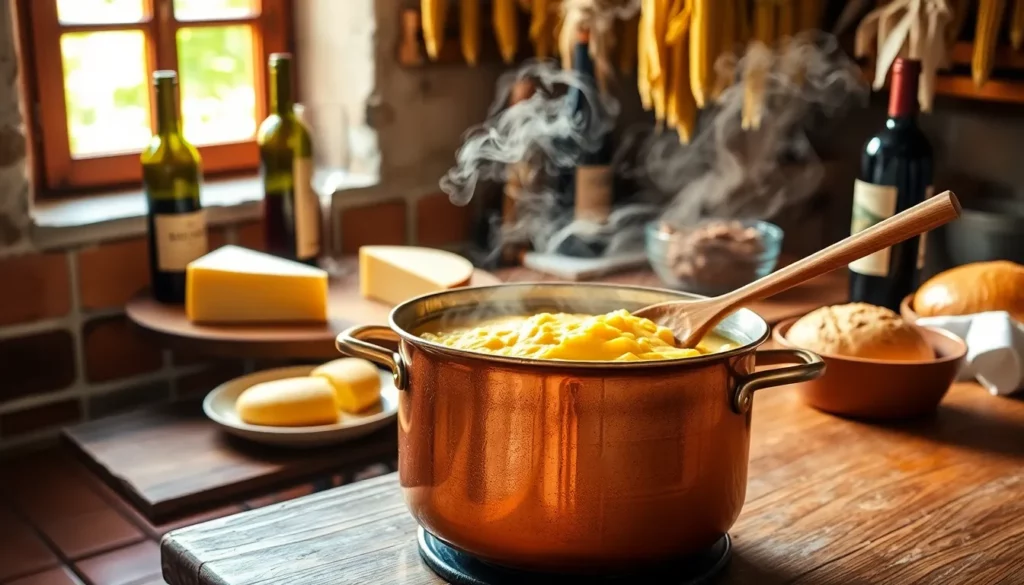
Granoturco is the Italian term for maize (Zea mays), commonly known as corn. Introduced to Europe from the Americas in the 16th century, it quickly became a staple grain in many Italian regions, particularly in the north. The word itself combines grano (grain) and turco (Turkish), reflecting the early belief that the crop originated in the Ottoman Empire. Today, granoturco is most famously associated with polenta, a slow-cooked porridge that forms the backbone of countless traditional dishes. However, its uses extend far beyond polenta, including breads, desserts, and even distilled spirits. The key ingredients are simply dried corn kernels, water, and salt, but regional variations introduce butter, cheese, herbs, or sweeteners.
Origin & History
Maize was first brought to Europe by Christopher Columbus after his voyages to the Caribbean. It reached Italy via Spanish and Portuguese trade routes in the early 1500s. The Venetian Republic, with its extensive commercial networks, was among the first to cultivate granoturco in the Po Valley. By the 17th century, it had become a dietary mainstay for the rural poor in regions such as Veneto, Lombardy, and Friuli, where it replaced more expensive grains like wheat and rye. The crop thrived in the humid, fertile plains, and its high caloric yield helped sustain a growing population. However, reliance on a single grain also led to pellagra, a niacin deficiency disease, until modern processing methods improved nutritional value. Despite this dark chapter, granoturco remains a symbol of resilience and ingenuity in Italian culinary history. Anecdotes tell of Venetian merchants disguising the grain as “Turkish wheat” to avoid import restrictions, a story that may explain the name granoturco.
What’s In It
At its core, granoturco is simply dried corn kernels. The type of corn matters: flint corn (e.g., Nostrano dell’Isola) is preferred for polenta because it yields a firm, creamy texture, while dent corn is used for flour. The kernels are ground into various consistencies: coarse (for polenta), medium (for breads), or fine (for desserts). Preparation nuances include toasting the dry meal before cooking to enhance nuttiness, or using a copper pot (paiolo) for even heat distribution. Unlike American grits, which are made from hominy (treated with alkali), Italian polenta is made from untreated cornmeal. The dish is also distinct from farina di mais (corn flour) used in baking. Key differentiators: granoturco dishes are typically savory, slow-cooked, and served as a primo or contorno, not a breakfast item.
Regional Variations
Granoturco preparations vary dramatically across Italy, reflecting local tastes and available ingredients. Below is a comparison of three major regions:
| Region | Typical Dish | Key Characteristics |
|---|---|---|
| Veneto | Polenta e Schie | Soft polenta served with tiny shrimp from the Venetian lagoon; often yellow cornmeal, butter, and parsley. |
| Lombardy | Polenta Taragna | Mixed with buckwheat flour for a darker, earthier flavor; often enriched with cheese (Bitto or Taleggio) and butter. |
| Sicily | Pane di Mais | Dense, sweet corn bread made with raisins, pine nuts, and sometimes anise; served as a snack or with ricotta. |
Other notable variations include Polenta Pasticciata (baked layered polenta with ragù and cheese) in Emilia-Romagna, and Granoturco Dolce (sweet corn pudding) in Tuscany. In the south, granoturco is more often used in breads and desserts, while the north favors savory polenta.
How It’s Traditionally Eaten
Granoturco dishes are most commonly served as a primo (first course) or contorno (side dish). Polenta, for example, is often paired with slow-cooked meat sauces, sausages, or fish. It can be served soft and creamy (polenta morbida) or allowed to cool and solidify, then sliced and grilled or fried (polenta grigliata). In the Veneto, it is a traditional accompaniment to baccalà alla vicentina (salted cod). On holidays, polenta may be enriched with butter and cheese, or turned into polenta e osei (with small birds, now often replaced by meatballs). Sweet versions, like polenta dolce with milk and sugar, are eaten for breakfast or as a dessert in some areas. Granoturco breads are typically enjoyed as a snack or with cheese and cured meats.
Common Mistakes / What It’s Not
Many American-Italian misconceptions surround granoturco. First, it is not the same as American cornbread or grits. Italian polenta is made from coarsely ground cornmeal, not hominy, and is cooked much longer (45–60 minutes) to achieve a creamy texture. Second, granoturco is not just a side dish; it can be a main course when combined with hearty toppings. Third, the term “polenta” does not refer to a specific brand or instant product; authentic polenta requires patience and constant stirring. Finally, granoturco is not limited to savory uses – sweet preparations exist, but they are less common outside Italy. Avoid using pre-cooked or instant polenta if seeking traditional results.
Where to Try It / What to Order
To experience authentic granoturco dishes, head to northern Italy. In Bergamo (Lombardy), order Polenta Taragna at a traditional trattoria. In Venice, seek out Polenta e Schie at a bacaro (wine bar). For a sweet version, visit Sicily during the Festa di San Giuseppe when Pane di Mais is traditionally baked. Travelers should look for the De.Co. (Denominazione Comunale) label, which certifies local food traditions. When ordering, specify polenta morbida (soft) or polenta grigliata (grilled) and ask about the type of corn used. Many agriturismi offer farm-to-table polenta made from heirloom varieties.
Related Dishes
FAQ
What is granoturco?
Granoturco is the Italian word for maize (corn). It refers both to the grain itself and to dishes made from it, most famously polenta.
Is polenta the same as granoturco?
Polenta is a specific dish made from granoturco (cornmeal). Granoturco is the raw ingredient; polenta is the cooked preparation.
How is granoturco used in Italian cooking?
It is primarily used for polenta (savory or sweet), but also for breads (pane di mais), desserts (granoturco dolce), and even distilled into spirits like grappa di mais.
What is the difference between Italian polenta and American grits?
Polenta is made from untreated cornmeal, while grits are made from hominy (corn treated with alkali). Polenta is also cooked longer for a creamier texture.
Where did granoturco originate?
Maize is native to the Americas and was introduced to Italy in the 16th century via Spanish and Venetian trade.
Leave a Reply