
Short Answer
What It Is
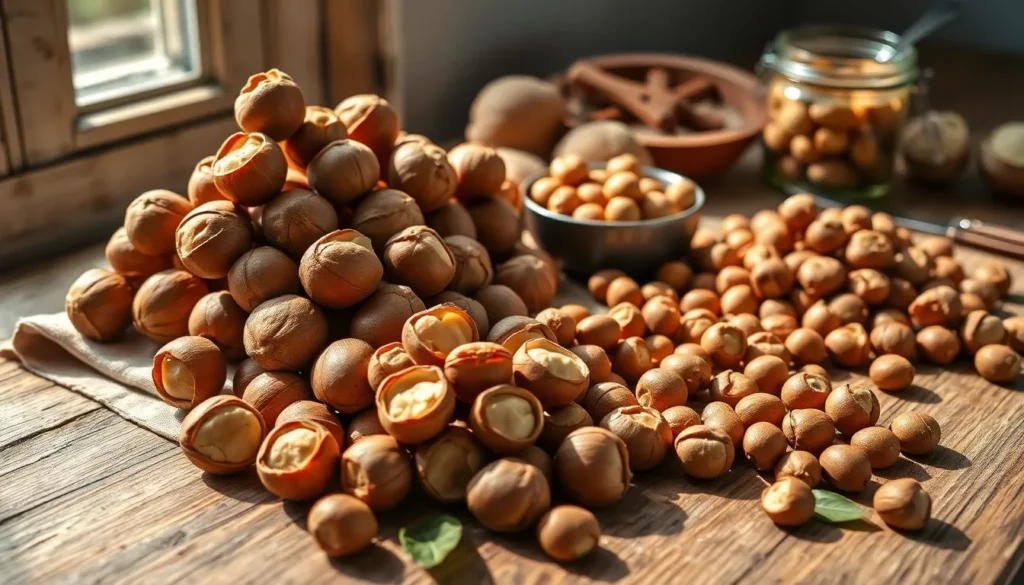
Hazelnuts (Corylus avellana) are the fruit of the hazel tree, a shrub native to Europe and Asia Minor. In Italy, hazelnut cultivation has ancient roots, with evidence of use by the Etruscans and Romans. Today, Italy is one of the world’s leading producers, renowned for the quality and flavor of its hazelnuts, which are protected under European Union quality schemes.
The primary production regions are Piedmont, Campania, Lazio, and Sicily. The most prestigious designation is Nocciola del Piemonte IGP (Indicazione Geografica Protetta), which covers the Tonda Gentile delle Langhe variety grown in the Langhe, Roero, and Monferrato areas. This hazelnut is prized for its round shape, thin shell, and sweet, aromatic flavor. Another important IGP is Nocciola di Giffoni IGP from Campania, known for its large size and intense taste. The Nocciola Romana DOP (Denominazione di Origine Protetta) from Lazio is also highly regarded, with a slightly more elongated shape and a buttery texture.
Production involves harvesting from late August to October, followed by drying to reduce moisture content (ideally below 6%). The nuts are then sorted, graded, and often roasted to develop their characteristic flavor. Roasting can be done at low temperatures (120–140°C) for a gentle toast or higher for a deeper, more intense profile. The DOP/IGP certifications guarantee the origin, variety, and production methods, ensuring authenticity and traceability.
Types & Grades
Italian hazelnuts are classified by variety, origin, and processing. The table below summarizes the main types and their characteristics.
| Variety / Designation | Region | Characteristics | Typical Use |
|---|---|---|---|
| Tonda Gentile delle Langhe (Nocciola del Piemonte IGP) | Piedmont | Round, small to medium, thin shell, sweet, aromatic, low oil content | Gianduia, pralines, pastries, gelato |
| Tonda di Giffoni (Nocciola di Giffoni IGP) | Campania | Large, round, thick shell, intense flavor, high oil content | Snacking, baking, confectionery |
| Nocciola Romana DOP | Lazio | Elongated, medium size, buttery texture, sweet | Torrone, cakes, spreads |
| Nocciola di Sicilia | Sicily | Small, round, very aromatic, high oil | Pesto, granita, traditional sweets |
Grades are based on size (caliber) and processing:
- Whole raw – in shell or shelled, for roasting or snacking.
- Blanched – skins removed, used in fine pastry and confectionery.
- Chopped or slivered – for toppings, crusts, and baking.
- Hazelnut meal/flour – finely ground, used in gluten-free baking and as a base for pastes.
- Hazelnut paste – pureed nuts, the foundation of gianduia and praline.
How It’s Used in Cooking
Hazelnuts are a cornerstone of Italian cuisine, bridging sweet and savory applications. Their rich, buttery flavor enhances both traditional and modern dishes.
Sweet Applications
The most iconic use is in gianduia, a chocolate-hazelnut paste invented in Turin in the 19th century. This is the base for Gianduiotti (chocolates) and the famous Nutella spread. Hazelnuts are also essential in torrone (nougat), baci di dama (lady’s kisses – hazelnut cookies sandwiched with chocolate), and torta di nocciole (hazelnut cake). In gelato, hazelnut (gelato alla nocciola) is a classic flavor, made with a paste of roasted nuts.
Savory Applications
In Piedmont, hazelnuts are used in pesto alla modenese (with basil, garlic, and Parmesan) or as a crust for meats like lamb or veal. They add crunch to salads, such as insalata di radicchio e nocciole. In Campania, hazelnuts are ground into a coarse powder and used to coat fish or vegetables before frying. A traditional sauce from the Langhe, salsa di nocciole, pairs with boiled meats or roasted vegetables.
“The hazelnut is the soul of Piedmontese pastry – without it, gianduia would not exist.” – Traditional saying from Turin
How to Choose/Identify Authentic Hazelnuts
For chefs and home cooks seeking authentic Italian hazelnuts, the following cues are essential:
- Look for the DOP/IGP label – Nocciola del Piemonte IGP, Nocciola di Giffoni IGP, or Nocciola Romana DOP. These guarantee origin and quality.
- Check the harvest year – Freshness is critical. Hazelnuts should be from the most recent harvest (autumn). Older nuts may be rancid.
- Visual inspection – Whole nuts should be uniform in size, with no cracks or holes. Shelled nuts should be plump and not shriveled. Color should be light brown; dark spots may indicate mold.
- Aroma – Fresh hazelnuts have a sweet, nutty scent. Any off-odors (musty, sour) indicate spoilage.
- Storage – Buy from reputable suppliers who store nuts in cool, dry conditions. Vacuum-packed or nitrogen-flushed packaging extends shelf life.
- Roasting – If buying roasted, ensure the roast date is recent. Over-roasting can cause bitterness.
For professionals, sourcing directly from Italian consortia (e.g., Consorzio di Tutela della Nocciola del Piemonte) ensures traceability and consistent quality.
Substitutes
While hazelnuts are unique, other Italian nuts can substitute in specific contexts:
- Almonds – The closest substitute in texture and fat content. Use blanched almonds for gianduia-style preparations, though the flavor will be less aromatic. Ideal for pesto or crusts.
- Pine nuts – Best in pesto or sauces where a delicate, resinous note is desired. Not suitable for baking due to high price and different texture.
- Walnuts – Provide earthy bitterness, good in savory dishes like salads or pasta. Not recommended for sweet confections where hazelnut’s sweetness is key.
- Pistachios – Offer vibrant color and a distinct flavor. Use in pastries or as a crust, but note the higher cost and different taste profile.
When substituting, consider the role: for texture, almonds or walnuts; for flavor intensity, pistachios; for traditional recipes, avoid substitutes if authenticity is paramount.
Conclusion
Italian hazelnuts, especially those with DOP/IGP designations, are a treasure of the country’s gastronomic heritage. From the gentle hills of Piedmont to the volcanic soils of Campania, each variety brings unique characteristics that define classic dishes. Understanding their production, grades, and culinary applications allows chefs and food lovers to appreciate and use them authentically. Whether in a silky gianduia or a crunchy crust, hazelnuts remain an indispensable ingredient in Italian cuisine.
FAQ
What is the difference between Nocciola del Piemonte IGP and Nocciola di Giffoni IGP?
Nocciola del Piemonte IGP comes from Piedmont and features the Tonda Gentile delle Langhe variety, known for its round shape, thin shell, and sweet, aromatic flavor. Nocciola di Giffoni IGP is from Campania, with larger nuts, a thicker shell, and a more intense, oily taste. Both are protected by EU geographical indications.
How should I store hazelnuts to maintain freshness?
Store hazelnuts in a cool, dry place away from sunlight. Shelled nuts are best kept in an airtight container in the refrigerator (up to 6 months) or freezer (up to 1 year). Raw nuts in the shell can be kept in a pantry for several months. Always check for rancidity by smelling before use.
Can I substitute hazelnuts with almonds in gianduia recipes?
Almonds can be used as a substitute, but the resulting paste will have a different flavor profile—less aromatic and more neutral. For authentic gianduia, hazelnuts are essential. If substituting, use blanched almonds and consider adding a touch of hazelnut extract to mimic the aroma.



Leave a Reply