
Short Answer
What Is Rabarbaro? Italian Liqueur Explained
Rabarbaro is a traditional Italian amaro (bitter liqueur) produced by macerating the root of the rhubarb plant (Rheum palmatum or Rheum officinale) in alcohol, often along with a blend of herbs, spices, and sweeteners. Unlike the sweet, pink stalks used in desserts, the root is woody and intensely bitter, giving Rabarbaro its characteristic earthy, medicinal flavor. The liqueur typically contains 30–40% alcohol by volume and is consumed as a digestivo after meals. Its production is concentrated in the Alpine regions of northern Italy, particularly in Piedmont, Lombardy, and Trentino-Alto Adige, where rhubarb has been cultivated since the 18th century.
Origin & History
The use of rhubarb root in European herbal medicine dates back to ancient times, but its transformation into a liqueur is a distinctly Italian innovation. Rhubarb was introduced to Europe from Asia via the Silk Road, and by the 1700s, it was being grown in the botanical gardens of northern Italy. The first documented Rabarbaro liqueur appeared in the early 19th century in the Valtellina valley of Lombardy, where local distillers began macerating the root in grappa to create a medicinal tonic. The liqueur gained popularity as a digestif, and by the late 1800s, commercial brands like Rabarbaro Zucca (founded in 1845 in Milan) and Rabarbaro Bergia (from Turin) had established the category. A popular myth claims that Rabarbaro was originally formulated for monks in Alpine monasteries, but historical records point to secular apothecaries and distillers as its true creators.
What’s In It
The core ingredient is dried rhubarb root, which provides the liqueur’s signature bitterness and astringency. The root is chopped and steeped in a neutral spirit (often grape-based) for several weeks. Additional botanicals vary by producer but commonly include:

- Gentian root – adds further bitterness
- Angelica – contributes earthy, herbal notes
- Cinnamon and clove – warm spices
- Orange peel – bright citrus balance
- Saffron – used in some premium versions for color and complexity
- Sugar or honey – to offset the bitterness
Unlike Fernet, which relies heavily on myrrh and saffron, Rabarbaro is defined by the prominence of rhubarb. It is also distinct from Rabarber (a Scandinavian rhubarb cordial) because it is alcoholic and bitter rather than sweet and non-alcoholic.
Regional Variations
Rabarbaro is produced across northern Italy, with each region imparting its own character. The table below highlights key differences:
| Region | Character | Notable Brands |
|---|---|---|
| Piedmont | Full-bodied, spicy, with notes of cinnamon and clove; often aged in oak | Rabarbaro Bergia, Rabarbaro San Simone |
| Lombardy | Lighter, more herbaceous, with a pronounced gentian bitterness | Rabarbaro Zucca, Rabarbaro Valtellina |
| Trentino-Alto Adige | Alpine style: floral, with hints of pine and mountain herbs; lower sweetness | Rabarbaro Alpino, Rabarbaro Dolomiti |
In Veneto, some producers add local honey and juniper, while in Friuli-Venezia Giulia, Rabarbaro is sometimes blended with grappa for a stronger kick. The differences reflect local botanical availability and distilling traditions.
How It’s Traditionally Eaten
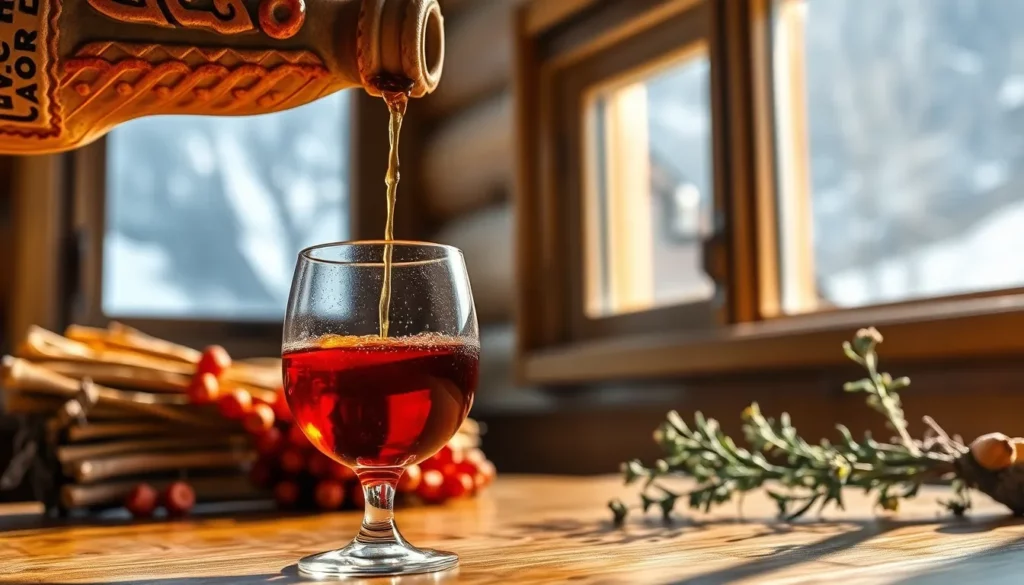
Rabarbaro is almost exclusively consumed as a digestivo – served after a meal to aid digestion. It is typically poured into a small tulip-shaped glass and sipped neat at room temperature. In colder months, it may be served slightly chilled or on the rocks. It is rarely paired with food, though some Italians enjoy it with dark chocolate or a slice of panettone during the holidays. Rabarbaro is not a cooking ingredient; unlike rhubarb stalks, the root is too bitter and fibrous for culinary use. It is an everyday digestif, not reserved for special occasions, though artisanal bottles are often given as gifts.
Common Mistakes / What It’s Not
A frequent misconception is that Rabarbaro is the same as rhubarb wine or rhubarb cordial. In fact, it is a distilled liqueur, not a fermented beverage. Another error is assuming it tastes like the sweet, pink rhubarb used in pies – Rabarbaro is intensely bitter and herbal, with only a faint hint of the stalk’s tartness. Some American-Italian restaurants mistakenly serve it as a cocktail mixer, but purists insist it should be enjoyed alone. Finally, Rabarbaro is not a type of Fernet; while both are amari, Fernet has a higher proportion of myrrh and saffron, giving it a more medicinal profile.
Where to Try It / What to Order
To experience authentic Rabarbaro, visit traditional osterie or enoteche in northern Italy. In Milan, try Bar Basso or Camparino for a classic pour. In Turin, the historic Caffè Al Bicerin offers Rabarbaro Bergia. For a distillery tour, head to Valtellina and visit the Distilleria Valtellina in Morbegno. When ordering, ask for “un Rabarbaro liscio” (neat) or “con ghiaccio” (on the rocks). Avoid sweetened versions labeled “Rabarbaro dolce” – these are less traditional. The annual Festa del Rabarbaro in Bormio (August) celebrates the liqueur with tastings and pairings.
Related Dishes
FAQ
Is Rabarbaro the same as rhubarb wine?
No. Rabarbaro is a distilled liqueur made from rhubarb root, while rhubarb wine is a fermented beverage made from the stalks. They differ in production method, alcohol content, and flavor profile.
Does Rabarbaro taste like rhubarb pie?
Not at all. Rabarbaro is intensely bitter and herbal, with only a faint hint of the tartness found in rhubarb stalks. It is much closer to a medicinal amaro than a sweet dessert.
How should I drink Rabarbaro?
Traditionally, Rabarbaro is served neat at room temperature in a small glass as a digestivo. It can also be enjoyed on the rocks or slightly chilled. Avoid mixing it into cocktails unless the recipe specifically calls for it.
Where is Rabarbaro produced?
Rabarbaro is primarily produced in the Alpine regions of northern Italy, including Piedmont, Lombardy, and Trentino-Alto Adige. Each region has its own style and local brands.
Can I cook with Rabarbaro?
Rabarbaro is not typically used in cooking due to its intense bitterness and high alcohol content. It is best enjoyed as a beverage. However, a few drops can be added to desserts for a bitter accent.
Leave a Reply