
Short Answer
What Is Rosticciana? Italian Pork Ribs Explained
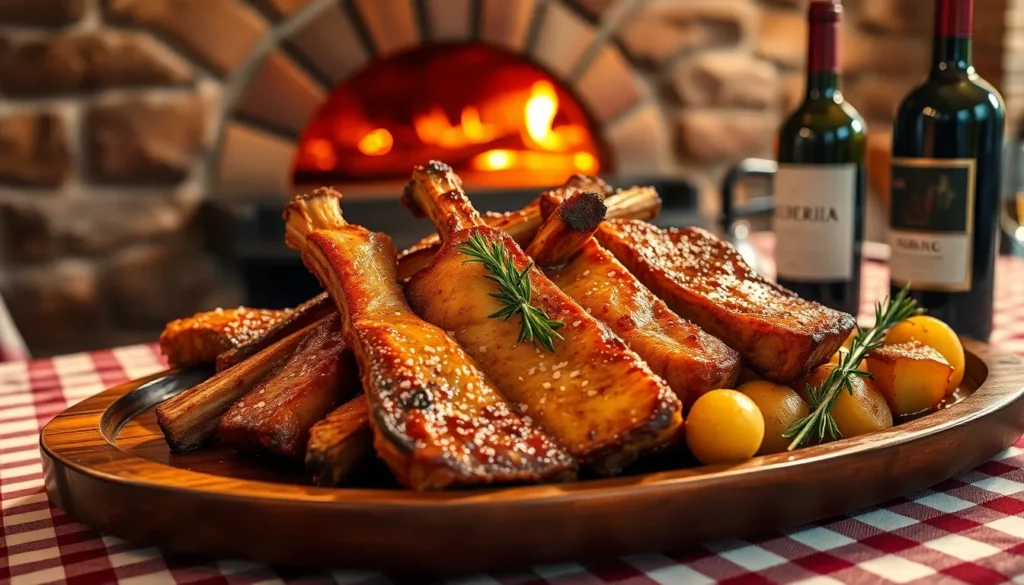
Rosticciana (pronounced roh-stee-CHAH-nah) is a traditional Tuscan dish of roasted pork ribs, typically from the suino pesante (heavy pig) breed. The ribs are seasoned with a simple marinade of olive oil, salt, black pepper, fresh rosemary, and garlic, then slow-cooked over a wood fire or in a hot oven until the meat is tender and the exterior is crispy. Unlike American-style ribs, Rosticciana is not slathered in sweet barbecue sauce; its flavor comes from the quality of the pork and the aromatic herbs. It is a quintessential secondo (main course) in Tuscan trattorias, especially in the Chianti region, and is often paired with roasted potatoes or grilled vegetables.
Origin & History
Rosticciana has deep roots in the peasant cooking of Tuscany, particularly in the provinces of Florence, Siena, and Arezzo. The dish emerged during the Middle Ages when farmers would roast the less desirable cuts of pork—such as ribs—over open fires after the annual pig slaughter (maialata). The word rosticciana itself derives from the Italian rosticciare, meaning “to roast over embers.” Historical records from the 15th century mention similar preparations in the Florentine countryside, where butchers would sell roasted ribs at markets. Unlike the myth that Rosticciana was a noble dish, it was actually a frugal meal for contadini (peasants), who used every part of the pig. Today, it is celebrated as a symbol of Tuscan culinary identity, often featured during the Festa del Cinghiale (wild boar festival) and other local sagre.
What’s In It
The core ingredients are simple and few: pork ribs (preferably from the belly or back), extra-virgin olive oil, coarse salt, freshly ground black pepper, fresh rosemary, and garlic. Some variations add a splash of white wine or a pinch of chili flakes. The preparation is straightforward: the ribs are marinated for at least 2 hours (or overnight) to allow the flavors to penetrate, then roasted at a high temperature (200°C/400°F) for about 45 minutes, turning once, until the fat renders and the meat is juicy. Unlike porchetta (which is deboned and rolled with herbs) or costine (which are often braised), Rosticciana is always roasted and served as individual ribs.
Regional Variations
While Rosticciana is quintessentially Tuscan, similar preparations exist across Italy. The table below highlights key differences:
| Region | Dish Name | Key Differences |
|---|---|---|
| Tuscany (Chianti) | Rosticciana | Pork ribs, rosemary, garlic, olive oil; wood-fire roasted; served as secondo. |
| Lazio (Rome) | Costine di maiale alla romana | Ribs braised with tomato sauce, white wine, and herbs; softer texture. |
| Campania (Naples) | Costine di maiale al forno | Ribs marinated with lemon, oregano, and garlic; baked with potatoes. |
| Emilia-Romagna | Costine di maiale alla griglia | Grilled over charcoal, often served with balsamic vinegar reduction. |
In Tuscany itself, variations exist: in the Maremma area, wild boar ribs (rosticciana di cinghiale) are used, while in Florence, the ribs are sometimes coated with a light dusting of breadcrumbs before roasting.
How It’s Traditionally Eaten
Rosticciana is served as a secondo piatto (main course) in a traditional Italian meal, following the primo (pasta or soup) and contorno (side dish). It is typically accompanied by roasted potatoes (patate arrosto), grilled vegetables, or a simple salad. The dish is often enjoyed with a glass of Chianti Classico or a bold Sangiovese wine. On special occasions, such as the Festa della Rosticciana in Greve in Chianti, it is cooked in large quantities over open fires and served with crusty bread. It is not a daily dish due to the time required for marinating and roasting, but it is a staple of Sunday family lunches and festive gatherings.
Common Mistakes / What It’s Not
Many American-Italian adaptations mistakenly slather Rosticciana with sweet barbecue sauce or cook it low and slow like pulled pork. Authentic Rosticciana is not sticky, sweet, or fall-off-the-bone tender; it should have a slight chew and a crispy, salty crust. It is also not the same as porchetta (which is a boneless, rolled roast) or costine di maiale in umido (braised ribs). Another common error is using baby back ribs; traditional Rosticciana uses spare ribs or belly ribs with more fat and flavor. Finally, do not skip the rosemary—it is the defining herb.
Where to Try It / What to Order
To experience authentic Rosticciana, head to the Chianti region of Tuscany. Look for trattorias in Greve in Chianti, Radda in Chianti, or Castellina in Chianti. Notable restaurants include Osteria di Passignano (Badia a Passignano) and Trattoria La Torre (Castellina). During the Sagra della Rosticciana in Greve (usually in September), you can taste it cooked over wood fires. When ordering, ask for “rosticciana di maiale” and specify “alla griglia” if you prefer grilled. Pair it with a local Chianti Classico and finish with a slice of cantucci and Vin Santo.
Related Dishes
FAQ
What is Rosticciana?
Rosticciana is a traditional Tuscan dish of roasted pork ribs, seasoned with rosemary, garlic, olive oil, salt, and pepper, and cooked over a wood fire or in the oven. It is a rustic main course from the Chianti region.
How is Rosticciana different from American barbecue ribs?
Rosticciana is not slathered in sweet barbecue sauce. It relies on a simple herb marinade and high-heat roasting to create a crispy, salty crust. The meat is not fall-off-the-bone tender but has a pleasant chew.
Where can I try authentic Rosticciana?
The best place is in the Chianti region of Tuscany, especially at trattorias in Greve in Chianti, Radda in Chianti, or during the Sagra della Rosticciana festival in September. Look for restaurants that cook over wood fires.
What wine pairs well with Rosticciana?
A Chianti Classico or any Sangiovese-based red wine from Tuscany complements the rich, savory flavors of the roasted pork.
Can I make Rosticciana at home?
Yes, use pork spare ribs, marinate with olive oil, crushed garlic, fresh rosemary, salt, and pepper for at least 2 hours. Roast at 200°C (400°F) for about 45 minutes, turning once, until golden and crispy.


Leave a Reply