
Short Answer
What Is Lumache? Italian Pasta Shape Explained
Lumache (pronounced loo-MAH-keh) are a type of pasta shaped like small snail shells. The name derives from the Italian word for snail, lumaca (plural lumache). These pasta pieces are typically about 2–3 centimeters long, with a ridged, curved form that narrows at one end and opens at the other, resembling a miniature conch. They are most commonly associated with the cuisines of Campania and Sicily, where they are used in both simple and elaborate dishes. The key ingredients are durum wheat semolina and water, following the traditional pasta-making process of Southern Italy. Lumache are often confused with conchiglie (shells) or lumaconi (large snails), but their specific shape and texture set them apart.
Origin & History
The exact origins of lumache pasta are not documented in a single historical record, but their development is closely tied to the pasta-making traditions of Southern Italy, particularly in the regions of Campania and Sicily. Pasta shapes that mimic natural forms—such as shells, snails, and tubes—have been part of Italian cuisine since at least the 16th century, when pasta-making became more sophisticated. The first known mention of snail-shaped pasta appears in 19th-century Neapolitan cookbooks, where lumache are listed among the paste corte (short pasta) used in minestre (soups) and pastasciutte (dried pasta dishes).
One popular anecdote links lumache to the snail-eating traditions of Southern Italy, where snails (lumache di terra) were a common peasant food. The pasta shape may have been created as a playful homage to this ingredient, though no direct evidence supports this. What is certain is that lumache became a staple in the cucina povera (poor kitchen) of the Mezzogiorno, valued for their ability to hold onto thin sauces and their satisfying chewiness. Today, they are still produced by artisanal pasta makers in Gragnano and other historic pasta towns.
What’s In It
Lumache pasta is made from just two ingredients: durum wheat semolina and water. The dough is extruded through bronze dies to create a rough, porous surface that helps sauces adhere. The shape is formed by a combination of extrusion and cutting, resulting in a hollow, curved tube with ridges. Unlike some other short pastas, lumache are not stuffed; they are designed to be sauced.
Key preparation nuances include cooking lumache al dente—firm to the bite—to preserve their texture. Because of their shape, they require careful stirring during boiling to prevent sticking. The ridges and cavity are ideal for trapping chunky sauces, such as a Neapolitan ragù with meat, or a simple tomato and basil sauce. Lumache are also commonly used in baked pasta dishes (pasta al forno), where they hold their shape well.
Lumache should not be confused with conchiglie (shell pasta), which are smaller and have a more open, scallop-like shape. Lumaconi are a larger version, sometimes stuffed, while lumache remain medium-sized and un-stuffed. Another similar shape is chiocciole (snails), which are more tightly coiled.
Regional Variations
Lumache are prepared differently across Southern Italy, reflecting local ingredients and traditions. Below is a comparison of three major regions:
| Region | Typical Sauce | Additional Ingredients | Occasion |
|---|---|---|---|
| Campania (Naples) | Ragù napoletano (slow-cooked meat sauce) | Pork ribs, beef, tomato passata, red wine | Sunday family lunch |
| Sicily | Pesto alla trapanese (tomato, almonds, basil) | Fresh cherry tomatoes, garlic, pecorino | Summer weekday meal |
| Calabria | Spicy ’nduja or sausage sauce | Calabrian chili, fennel seeds, tomato | Winter comfort dish |
In Campania, lumache are often paired with a hearty ragù that includes multiple meats, reflecting the region’s love for slow-cooked sauces. In Sicily, lighter, vegetable-based sauces are common, such as pesto alla trapanese or a simple sugo di pomodoro with eggplant. Calabrian versions incorporate the region’s famous spicy pork spread, ’nduja, for a fiery kick. Some coastal areas also serve lumache with seafood, such as clams or mussels, though this is less traditional.
How It’s Traditionally Eaten
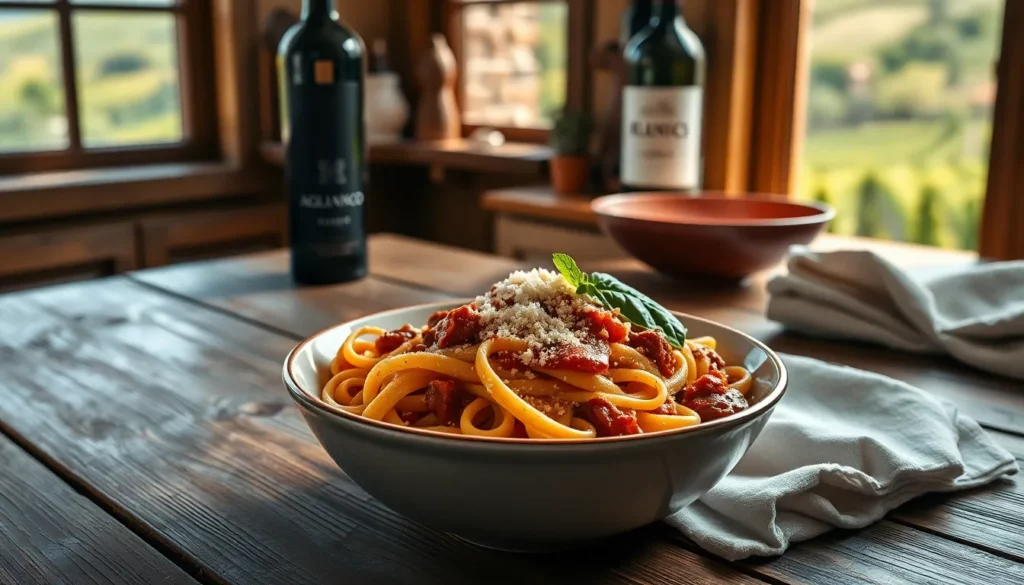
Lumache are typically served as a primo piatto (first course) in a traditional Italian meal, followed by a secondo (meat or fish) and contorno (side dish). They are rarely eaten as a main course on their own. The pasta is dressed with the sauce and often topped with grated pecorino or parmesan cheese. In Campania, a generous sprinkle of caciocavallo or ricotta salata is common.
Lumache are considered an everyday pasta, suitable for both weekday lunches and festive Sunday dinners. Baked lumache (lumache al forno) are a popular holiday dish, especially during Christmas and Easter, when they are layered with béchamel, ragù, and mozzarella. In Sicily, lumache are sometimes served as part of a pasta con le sarde variation, though that dish traditionally uses bucatini.
Wine pairings depend on the sauce: a robust Aglianico for meat ragùs, a crisp Grillo for seafood versions, or a light Frappato for vegetable-based sauces.
Common Mistakes / What It’s Not
One frequent misconception, especially in American-Italian contexts, is that lumache are interchangeable with conchiglie or shell pasta. While both are shell-shaped, lumache have a more elongated, snail-like form with a tighter curl and a ridged surface. Conchiglie are smaller and smoother, better suited for creamy sauces or salads. Using conchiglie in a recipe that calls for lumache will result in a different texture and sauce-holding capacity.
Another mistake is overcooking lumache. Because of their dense semolina composition, they can become mushy if boiled beyond al dente. Chefs recommend cooking them 1–2 minutes less than the package instructions and finishing them in the sauce.
Lumache are not stuffed pasta like lumaconi or conchiglioni. They are meant to be sauced, not filled. Some recipes erroneously suggest stuffing them, but this is a modern innovation, not traditional.
Finally, lumache are not the same as escargot (the French snail dish). The pasta shape is named after snails, but it contains no animal products beyond eggs (if fresh) and is entirely vegetarian in its basic form.
Where to Try It / What to Order
To experience authentic lumache, visit the pasta-producing towns of Campania, such as Gragnano or Torre Annunziata, where artisanal pasta makers still produce bronze-die lumache. In Naples, seek out trattorias in the historic center, like Trattoria da Nennella or Osteria della Mattonella, which often feature lumache in their Sunday ragù. In Sicily, head to Palermo’s Antica Focacceria San Francesco for a version with pesto alla trapanese.
For travelers, ordering lumache al ragù or lumache al forno is a safe bet. Ask for them al dente and specify if you want pecorino or parmesan. Many restaurants also offer a primo del giorno that may include lumache with seasonal ingredients.
If you cannot travel, high-quality dried lumache can be purchased online from Italian specialty stores like Gustiamo or Eataly. Look for pasta made in Gragnano IGP (Indicazione Geografica Protetta) for the most authentic product.
Related Dishes
FAQ
What is lumache pasta?
Lumache are a short, snail-shaped pasta from Southern Italy, made from durum wheat semolina and water. Their ridged, curved shape is designed to hold onto sauces, making them ideal for ragùs and baked dishes.
How do you cook lumache pasta?
Cook lumache in a large pot of salted boiling water for 8–10 minutes, stirring occasionally. Drain when al dente, reserving some pasta water. Toss immediately with your chosen sauce, adding a splash of pasta water if needed to adjust consistency.
What sauce goes best with lumache?
Traditional pairings include Neapolitan ragù (slow-cooked meat sauce), Sicilian pesto alla trapanese (tomato, almonds, basil), or a simple tomato and basil sauce. Baked versions often use béchamel and mozzarella.
Are lumache the same as conchiglie?
No. While both are shell-shaped, lumache are more elongated, tightly curled, and ridged, whereas conchiglie are smaller, smoother, and more open. They are not interchangeable in recipes.
Can lumache be stuffed?
Traditionally, lumache are not stuffed. The larger lumaconi are used for stuffing. However, some modern recipes may stuff lumache, but this is not authentic.


Leave a Reply