
Short Answer
What Is Carre‘? Italian Meat Dishes Explained
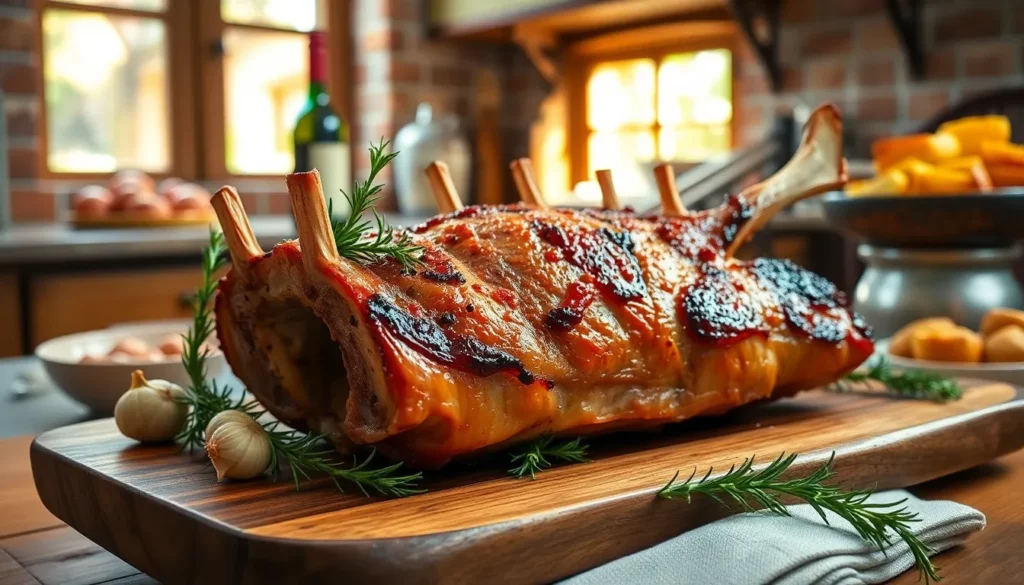
Carre‘ (pronounced kah-REH) is an Italian second course (secondo piatto) consisting of a bone-in roast, typically from pork loin (carre‘ di maiale) or rack of lamb (carre‘ d’agnello). The term derives from the French carré meaning “square,” referring to the squared shape of the cut after trimming. The meat is seasoned with a blend of fresh herbs, garlic, and olive oil, then slow-roasted until tender and golden. Carre‘ is especially popular in central Italy, particularly in the regions of Lazio, Umbria, and Marche, where it is often served at Sunday lunches and holiday feasts.
Origin & History
The roots of Carre‘ lie in the rustic cooking traditions of central Italy, where whole-animal butchery and slow roasting were essential to peasant and noble kitchens alike. Historical records from the 16th-century cookbook Opera by Bartolomeo Scappi mention similar bone-in roasts prepared for papal banquets. However, the specific term carre‘ became widespread in the 19th century, influenced by French culinary terminology during the period of Italian unification. In the Marche region, shepherds would season lamb racks with wild fennel and rosemary before roasting them over open fires, a practice that evolved into the modern Carre‘ d’Agnello. Unlike many Italian dishes that have mythical origin stories, Carre‘ is a straightforward adaptation of European roasting techniques, refined by Italian butchers to emphasize the natural flavor of the meat.
What’s In It
The core ingredients of Carre‘ are simple and high-quality: a bone-in pork loin or lamb rack (usually 6–8 ribs), extra-virgin olive oil, garlic, fresh rosemary, sage, salt, and black pepper. Some variations include a marinade of white wine, lemon juice, or balsamic vinegar. The preparation requires careful trimming of the fat cap and “frenching” the bones (scraping them clean) for an elegant presentation. The meat is seared on the stovetop to develop a crust, then roasted at a moderate temperature (180°C/350°F) until the internal temperature reaches 63°C (145°F) for pork or 55°C (130°F) for lamb. Unlike similar dishes such as arista (Tuscan roasted pork loin, which is boneless and heavily spiced with fennel), Carre‘ retains the bone for flavor and moisture, and its seasoning is more restrained.
Regional Variations
Carre‘ varies across Italy, reflecting local herbs, cooking methods, and accompaniments. The table below highlights three major regional styles:
| Region | Meat | Herbs & Seasonings | Cooking Method | Typical Accompaniment |
|---|---|---|---|---|
| Lazio (Rome) | Pork loin | Rosemary, garlic, black pepper, white wine | Roasted in a wood-fired oven | Roasted potatoes and sautéed chicory |
| Umbria | Lamb rack | Wild fennel, sage, juniper berries, olive oil | Slow-roasted over embers or in a clay pot | Lentils stewed with garlic and bay leaf |
| Marche | Pork loin or lamb | Rosemary, lemon zest, garlic, pecorino cheese crust | Seared then roasted with a crust of breadcrumbs and cheese | Grilled vegetables and vincisgrassi (local lasagna) |
In Sicily, a less common variant uses pork loin marinated with orange juice and fennel seeds, reflecting the island’s Arab influences. In the north, especially Piedmont, Carre‘ may be prepared with a reduction of Barolo wine.
How It’s Traditionally Eaten
Carre‘ is always served as a secondo piatto (main course) after a primo (pasta or soup) and before dolce (dessert). It is typically accompanied by a contorno (side dish) such as roasted potatoes, sautéed greens, or a simple salad. The meat is carved into individual chops, each with a bone, and presented on a warm platter. Carre‘ is considered a festive dish, often reserved for Sunday lunches, Christmas, Easter, or family celebrations. It pairs well with medium-bodied red wines like Chianti, Montepulciano d’Abruzzo, or Rosso di Montalcino. In everyday cooking, Italians might prepare a simpler version using a smaller cut, but the bone-in roast remains a symbol of conviviality.
Common Mistakes / What It’s Not
Many American-Italian adaptations confuse Carre‘ with braciole (rolled stuffed meat) or osso buco (braised veal shanks). Carre‘ is not a braised dish; it is roasted dry with minimal liquid. It is also not a breaded or fried cutlet like cotoletta. Another misconception is that Carre‘ must be cooked well-done; in Italy, pork and lamb are often served medium to medium-rare for optimal tenderness. Additionally, the term “carre‘” is sometimes misused to describe any bone-in chop, but true Carre‘ requires a full rack with at least four ribs, frenched and tied. Avoid over-marinating, which can mask the meat’s natural flavor, and never skip the resting period after roasting—at least 10 minutes under foil.
Where to Try It / What to Order
For an authentic Carre‘ experience, visit traditional trattorie and osterie in central Italy. In Rome, try La Carbonara in Campo de’ Fiori or Armando al Pantheon for their Carre‘ di Maiale. In Umbria, Osteria del Bartolo in Perugia serves a memorable Carre‘ d’Agnello with wild fennel. In the Marche region, Ristorante La Madonnina del Pescatore in Senigallia offers a refined version with a pecorino crust. When ordering, specify carre‘ di maiale or carre‘ d’agnello and ask for the cooking point (cotto al sangue for rare, ben cotto for well-done). Many butchers in Italy also sell pre-trimmed racks ready for home roasting.
Related Dishes
- Arista (Tuscan Roasted Pork Loin)
- Osso Buco (Braised Veal Shanks)
- Cotoletta alla Milanese (Breaded Veal Cutlet)
- Porchetta (Roasted Stuffed Pork)
- Abbacchio (Roman Easter Lamb)
FAQ
What is Carre‘ in Italian cuisine?
Carre‘ is a bone-in roast, typically pork loin or rack of lamb, seasoned with herbs and slow-roasted. It is a traditional second course from central Italy.
How is Carre‘ different from Arista?
Arista is a boneless Tuscan pork loin heavily spiced with fennel, while Carre‘ retains the bone and uses a more restrained herb seasoning.
Can Carre‘ be made with other meats?
Yes, although pork and lamb are most common, some variations use veal or even wild boar, especially in game-rich regions of central Italy.
What is the best wine to pair with Carre‘?
Medium-bodied red wines like Chianti, Montepulciano d'Abruzzo, or Rosso di Montalcino complement the richness of the meat.
Is Carre‘ a holiday dish?
Yes, it is often served at festive occasions such as Christmas, Easter, and Sunday family lunches.

Leave a Reply