

Short Answer
What Is Prezzemolo? Italian Herb Explained
Prezzemolo is the Italian term for parsley (Petroselinum crispum), a biennial herb native to the central Mediterranean region. In Italian cuisine, prezzemolo is not merely a decorative garnish but a fundamental aromatic ingredient that imparts a fresh, slightly peppery, and herbaceous note to countless dishes. Its use spans from the northern regions of Lombardy to the southern islands of Sicily, appearing in everything from broths and sauces to salads and meat preparations. The two main varieties used in Italy are the flat-leaf (Italian) parsley, prized for its robust flavor, and the curly-leaf parsley, often reserved for garnishing. Prezzemolo is a key component of the classic Italian soffritto (along with onion and celery) and forms the base of many traditional recipes.
Origin & History
Parsley has been cultivated in the Mediterranean for over 2,000 years. The ancient Greeks and Romans used it extensively, both as a culinary herb and for medicinal purposes. The Romans, in particular, introduced parsley to the rest of Europe, and it became a staple in Italian gardens. In medieval Italy, prezzemolo was associated with death and rebirth—it was often planted on graves—but its culinary use persisted. By the Renaissance, Italian cookbooks such as Bartolomeo Scappi’s Opera (1570) included parsley in numerous recipes, from sauces to stuffings. The herb’s popularity grew steadily, and by the 19th century, prezzemolo was an indispensable element of regional Italian cooking. Unlike some myths, prezzemolo was never considered a magical herb in Italy, but its role in everyday cooking is deeply rooted in the country’s agricultural traditions.
What’s In It
Prezzemolo is a nutrient-dense herb rich in vitamins A, C, and K, as well as iron and folate. The essential oils in parsley—including myristicin, apiol, and limonene—give it its characteristic aroma and flavor. In Italian cooking, the whole leaf and stem are used, though the stems are often reserved for stocks and broths due to their stronger flavor. The herb is typically added fresh at the end of cooking to preserve its delicate taste; dried parsley is rarely used in authentic Italian cuisine. Prezzemolo should not be confused with coriandolo (cilantro), which has a completely different flavor profile. While both belong to the Apiaceae family, Italian parsley has a clean, green taste, whereas cilantro has a soapy, citrusy note that is not typical in Italian dishes.

Regional Variations
The use of prezzemolo varies across Italy, reflecting local traditions and available ingredients. Below is a comparison of how different regions incorporate this herb:
| Region | Typical Use | Notable Dish |
|---|---|---|
| Liguria | Finely chopped in pesto and vegetable soups | Pesto alla Genovese (with basil, but parsley sometimes added) |
| Lombardy | Key ingredient in gremolata (parsley, garlic, lemon zest) for ossobuco | Ossobuco alla Milanese |
| Campania | Used in salsa verde and as a garnish for seafood | Insalata di Mare |
| Sicily | Added to caponata, pasta con le sarde, and as a finishing herb | Pasta con le Sarde |
| Lazio | Essential in coda alla vaccinara (oxtail stew) and pajata | Coda alla Vaccinara |
In the north, prezzemolo is often used in butter-based sauces and risottos, while in the south it appears more frequently in olive oil-based preparations and tomato sauces. The herb’s versatility allows it to bridge the gap between different culinary styles.
How It’s Traditionally Eaten
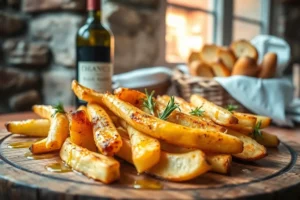
Prezzemolo is rarely eaten on its own; instead, it is used as a flavor enhancer. In Italian meals, it appears in all courses: as part of a soffritto for soups and sauces (primo), as a garnish for secondi (meat or fish), and even in contorni (side dishes) like roasted potatoes with parsley. The most iconic use is in gremolata, a mixture of chopped parsley, garlic, and lemon zest that is sprinkled over ossobuco just before serving. Another classic is salsa verde, a piquant green sauce made with parsley, capers, anchovies, and vinegar, served with boiled meats or fish. Prezzemolo is also a common addition to frittate (Italian omelets) and ripieni (stuffings) for vegetables or poultry. On holidays, parsley may be used more sparingly as a garnish, but its presence is still expected in many traditional dishes.
Common Mistakes / What It’s Not
One of the most frequent misconceptions among non-Italian cooks is that prezzemolo can be substituted with dried parsley or cilantro. Dried parsley lacks the vibrant flavor and aroma of fresh, and cilantro has a completely different taste that can ruin a dish. Another mistake is adding parsley too early in the cooking process; it should be added at the end to retain its freshness. Additionally, prezzemolo is not a primary ingredient in Italian-American “parsley sauce” (which is not a traditional Italian preparation). In Italy, parsley is never used as a standalone sauce base; it is always part of a blend. Finally, prezzemolo is not the same as cerfoglio (chervil) or erba cipollina (chives), though they may look similar. Each herb has a distinct role in Italian cuisine.
Where to Try It / What to Order
To experience prezzemolo in its authentic context, travelers should seek out regional specialties. In Milan, order ossobuco alla milanese and look for the bright green gremolata on top. In Genoa, try pesto alla genovese (though basil dominates, some versions include parsley). In Rome, coda alla vaccinara is a must, with parsley adding freshness to the rich stew. In Sicily, pasta con le sarde features parsley alongside wild fennel and sardines. For a simple yet perfect example, visit a trattoria in Campania and order insalata di mare—the parsley garnish is integral. When dining, ask for prezzemolo fresco if you want extra on the side. Many Italian markets also sell bunches of fresh parsley, and you can often find it used in banchi di frutta e verdura.
Related Dishes
FAQ
Is prezzemolo the same as cilantro?
No. Prezzemolo (parsley) and cilantro (coriandolo) are different herbs. Italian parsley has a fresh, green flavor, while cilantro has a soapy, citrusy taste. They are not interchangeable in Italian cuisine.
How should I store fresh prezzemolo?
Wrap the bunch in a damp paper towel, place it in a plastic bag, and refrigerate. It will stay fresh for up to a week. Alternatively, you can trim the stems and place the bunch in a glass of water, covering the leaves loosely with a plastic bag.
What dishes commonly use prezzemolo?
Prezzemolo is used in gremolata (for ossobuco), salsa verde, soffritto, minestrone, pasta con le sarde, insalata di mare, and as a garnish for many meat and fish dishes.
Can I use dried parsley instead of fresh?
Authentic Italian cooking almost always calls for fresh parsley. Dried parsley lacks the vibrant flavor and aroma and is not recommended as a substitute.
Is prezzemolo used in Italian desserts?
No, prezzemolo is strictly a savory herb in Italian cuisine. It is not used in desserts or sweet preparations.




Leave a Reply