
Short Answer
What It Is
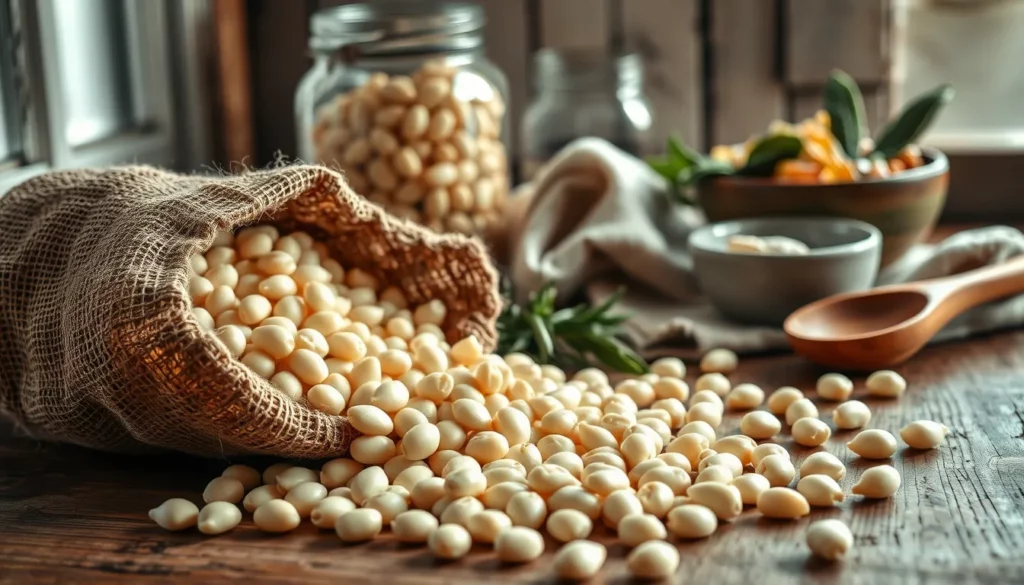
Cannellini beans (Phaseolus vulgaris) are a variety of white kidney bean native to Italy, particularly associated with the regions of Tuscany, Lazio, and Campania. They are characterized by their elongated, kidney-like shape, thin skin, and creamy, buttery interior when cooked. The name “cannellini” derives from the Italian word cannella (cinnamon), referencing the bean’s pale, warm hue.
In Italy, the most prestigious designation is the DOP (Denominazione di Origine Protetta) status granted to Fagiolo Cannellino di Atina, produced in the Valle di Comino in Lazio. This certification ensures the beans are grown in a specific terroir, harvested by hand, and dried naturally. While many cannellini beans are commercially grown worldwide, authentic Italian DOP beans are prized for their superior flavor and texture.
Production follows traditional methods: beans are planted in late spring, harvested in late summer, and sun-dried for several weeks. The drying process concentrates flavors and allows the beans to be stored for months. Unlike some legumes, cannellini beans are not typically aged for extended periods; they are consumed within a year of harvest for optimal quality.
Types & Grades
Cannellini beans are available in several forms, each suited to different culinary needs. The table below outlines the primary types and their characteristics.
| Type | Description | Common Uses |
|---|---|---|
| Dried Cannellini | Whole, dried beans; require soaking and long cooking. Available in DOP and non-DOP grades. | Minestrone, stews, soups, and slow-cooked dishes. |
| Canned Cannellini | Pre-cooked beans in brine or water; convenient but often softer and less flavorful. | Quick salads, pasta e fagioli, and purees. |
| Fresh Cannellini | Seasonal, shelled beans; tender and sweet, but rarely exported. | Spring salads, light sautés, and rustic bruschetta. |
| DOP Cannellino di Atina | Protected designation; smaller, more uniform beans with a delicate skin and creamy texture. | Traditional Tuscan and Lazio recipes where bean quality is paramount. |
Grades are primarily based on size, uniformity, and absence of defects. Premium dried beans are sorted by hand, with minimal broken skins. DOP beans are subject to strict quality controls, including a maximum moisture content of 14% and a minimum weight per 100 beans.
How It’s Used in Cooking
Cannellini beans are a cornerstone of Italian cucina povera (peasant cooking), valued for their ability to absorb flavors and add body to dishes. Their mild, nutty taste pairs well with aromatic herbs, garlic, olive oil, and tomatoes.
Traditional Italian Dishes
- Minestrone – A hearty vegetable soup where cannellini beans provide protein and creaminess.
- Pasta e Fagioli – A thick soup of pasta and beans, often finished with a drizzle of extra-virgin olive oil and black pepper.
- Fagioli all’Uccelletto – Tuscan-style beans simmered with sage, garlic, and tomatoes, served as a side dish or on crostini.
- Insalata di Fagioli – Cold bean salad with red onion, parsley, and lemon vinaigrette.
- Ribollita – A Tuscan bread and vegetable soup that relies on cannellini beans for substance.
“In Tuscany, the cannellino is not just a bean; it is a symbol of the land. A proper fagiolo all’uccelletto should be so creamy that it almost melts on the tongue.” – Traditional Tuscan saying
Professional chefs often use dried cannellini beans for better texture control. They are soaked overnight, then simmered gently with aromatics (bay leaf, garlic, rosemary) until tender. The cooking liquid, rich in starch, is used to thicken soups and stews. Canned beans are acceptable for quick preparations but lack the al dente bite of properly cooked dried beans.
How to Choose/Identify Authentic Cannellini Beans
For commercial buyers and home cooks seeking authenticity, the following cues are essential:
- Look for DOP or IGP labels – The Fagiolo Cannellino di Atina DOP seal guarantees origin and quality. IGP (Indicazione Geografica Protetta) beans, such as Fagiolo di Sorana, are also reliable.
- Check the appearance – Authentic dried cannellini beans are uniformly cream-colored, with a smooth, unblemished skin. They should be roughly 1–1.5 cm long, kidney-shaped, and free of cracks or discoloration.
- Smell and feel – Fresh dried beans have a faint, earthy aroma. Avoid beans that smell musty or have visible dust. They should feel hard and dry, not brittle or shriveled.
- Source from reputable Italian producers – Brands like La Selva, Fagiolo di Sorana, or Cooperativa Agricola di Atina are trusted. For bulk purchases, request a certificate of origin.
- Beware of mislabeling – Some white beans (e.g., navy beans, great northern beans) are sold as “cannellini.” True cannellini are larger and more kidney-shaped. Compare with a reference image if unsure.
For canned beans, choose those packed in water with no added salt or preservatives. The beans should be intact, not mushy, and the liquid clear.
Substitutes
When authentic cannellini beans are unavailable, several Italian bean varieties can serve as substitutes, each with distinct characteristics:
- Borlotti Beans – Also known as cranberry beans, they have a similar creamy texture but a speckled pink skin that fades to beige when cooked. They are slightly sweeter and work well in minestrone and pasta e fagioli.
- Navy Beans – Smaller and more oval, navy beans are a common substitute in non-Italian recipes. They cook faster and have a milder flavor, but lack the buttery richness of cannellini.
- Great Northern Beans – Slightly larger than navy beans, with a nutty taste. They hold their shape better than cannellini, making them suitable for salads and soups where a firmer bean is desired.
- Fagiolo di Sorana – A PGI-protected bean from Tuscany, similar in size and flavor to cannellini but with a thinner skin. It is an excellent premium substitute, though equally hard to find outside Italy.
When substituting, adjust cooking times: smaller beans require less soaking and simmering. For dishes where the bean’s creaminess is key (e.g., fagioli all’uccelletto), borlotti or fagiolo di Sorana are the best choices.
In conclusion, cannellini beans are a versatile and essential ingredient in Italian cuisine, valued for their creamy texture and ability to elevate simple dishes. Authenticity matters: seek DOP-certified beans for the finest quality, and understand the nuances of different types and substitutes to make informed culinary decisions. Whether in a rustic soup or a refined salad, these white kidney beans embody the soul of Italian cooking.
FAQ
What is the difference between cannellini beans and navy beans?
Cannellini beans are larger, kidney-shaped, and have a creamier texture with a nuttier flavor. Navy beans are smaller, oval, and milder. Cannellini are preferred in Italian dishes for their ability to absorb flavors and create a velvety consistency.
Do I need to soak dried cannellini beans before cooking?
Yes, soaking dried cannellini beans overnight (8–12 hours) in cold water reduces cooking time and improves digestibility. For best results, discard the soaking water and rinse before cooking.
Are canned cannellini beans a good substitute for dried?
Canned cannellini beans are convenient but often softer and less flavorful. They work well in quick salads and soups, but for dishes where bean texture is key (e.g., fagioli all’uccelletto), dried beans are recommended.
Leave a Reply