
Short Answer
What It Is
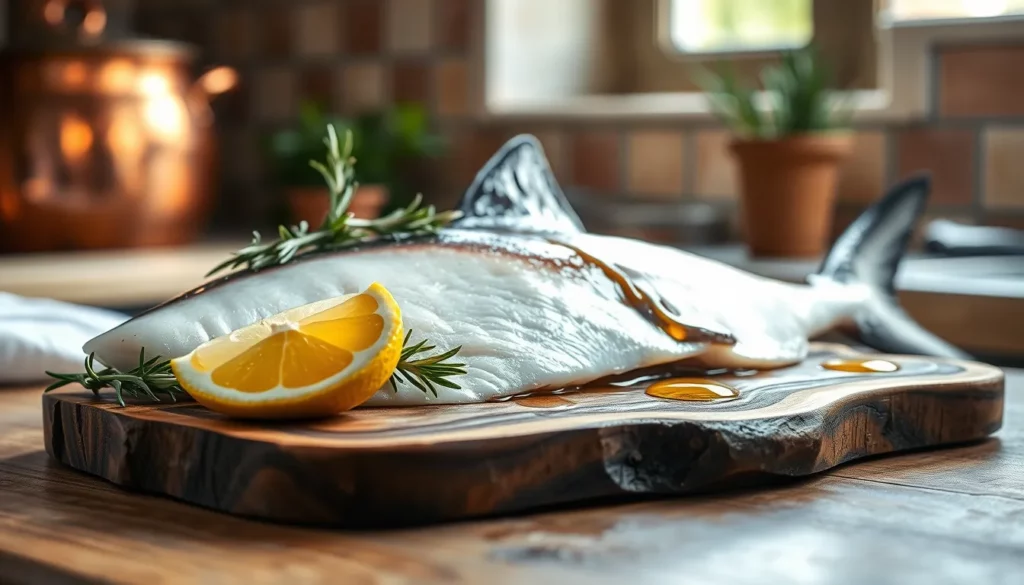
Palombo is the Italian name for several species of smoothhound shark, primarily Mustelus mustelus (common smoothhound) and Mustelus asterias (starry smoothhound). These demersal sharks inhabit the Mediterranean Sea, particularly the Tyrrhenian and Adriatic coasts, and have been a staple of Italian coastal cuisine for centuries. Unlike larger, more predatory sharks, palombo has a mild, delicate flavor and firm, white flesh that flakes beautifully when cooked. It is not a DOP or PGI product, but it is recognized as a Traditional Italian Food Product (PAT) by the Italian Ministry of Agricultural Policies, reflecting its deep cultural and culinary roots in regions such as Tuscany, Liguria, and Sicily.
Historically, palombo was a fish of the common people, abundant and affordable. Its firm texture made it ideal for stews, frying, and baking. Today, it remains a beloved ingredient in cucina povera (peasant cooking) and is celebrated in dishes like palombo alla livornese and palombo in umido. The fish is typically caught by small-scale artisanal fisheries using bottom trawls or longlines, and its sustainability is a growing concern due to overfishing. Responsible sourcing is encouraged, with some fisheries seeking Marine Stewardship Council (MSC) certification.
Types & Grades
Palombo is not a single species but a group of closely related sharks. The main types found in Italian markets are:

| Type | Scientific Name | Description | Typical Use |
|---|---|---|---|
| Palombo comune | Mustelus mustelus | Most common; light brown to grey back, white belly; grows up to 1.5 m. Flesh is firm and mild. | Stews, frying, baking |
| Palombo stellato | Mustelus asterias | Distinctive star-like spots on back; slightly smaller; flesh is tender and sweet. | Fritto misto, grilled |
| Palombo liscio | Mustelus punctulatus | Black-spotted smoothhound; rare; fine-grained flesh. | Raw preparations (if very fresh), delicate sauces |
Grades are based on freshness and cut:
- Fresh whole – best for quality; look for clear eyes, bright red gills, and a clean sea scent.
- Fillets – skinless or skin-on; convenient for quick cooking.
- Frozen – often blast-frozen at sea; acceptable if thawed properly.
- Prepared – marinated or breaded; common in supermarkets but less authentic.
How It’s Used in Cooking
Palombo’s firm, lean flesh holds up well to a variety of cooking methods. Traditional Italian preparations highlight its mild flavor without overpowering it.
Signature Dishes
- Palombo alla livornese – A Tuscan classic: fillets simmered in a sauce of tomatoes, capers, olives, garlic, and white wine. Served with crusty bread or polenta.
- Palombo in umido – Stewed with onions, white wine, parsley, and sometimes pine nuts or raisins for a sweet-savory balance.
- Palombo fritto – Lightly floured and fried until golden; a staple of fritto misto (mixed fried seafood).
- Palombo al forno – Baked with potatoes, cherry tomatoes, and oregano; a simple one-pan meal.
- Brodetto di palombo – A fish stew from the Adriatic, featuring palombo in a rich tomato and saffron broth.
“Il palombo è il pesce dei poveri, ma il suo sapore è da re.” – Traditional Ligurian saying (Palombo is the fish of the poor, but its flavor is fit for a king.)
Because palombo is a shark, it contains small amounts of urea, which can give an ammonia-like smell if not fresh. Proper handling – immediate gutting and chilling – eliminates this. Cooking also neutralizes any residual odor.
How to Choose/Identify Authentic Palombo
When buying palombo, freshness is paramount. Follow these guidelines:
- Smell: Fresh palombo should smell like the sea, not ammonia or fishiness. A strong ammonia odor indicates spoilage.
- Appearance: Flesh should be pearly white, firm, and moist. Avoid any yellowing or dry edges.
- Eyes and gills: If whole, eyes should be clear and bulging; gills bright red.
- Skin: Smooth, without excessive slime. The skin is edible but often removed for fillets.
- Labeling: In Italy, look for “Palombo” or “Smeriglio” (a local name). Avoid generic “squalo” (shark) which may be a different species. Ask your fishmonger for the scientific name or origin.
- Sustainability: Choose palombo from MSC-certified fisheries or from local, small-scale boats. The Mediterranean population is vulnerable; avoid imported frozen fillets from unregulated sources.
Authentic palombo is not farmed; it is always wild-caught. If a label claims “allevato” (farmed), it is not true palombo.
Substitutes
If palombo is unavailable, several Italian substitutes offer similar texture and flavor:
- Gattuccio (catshark, Scyliorhinus spp.) – Smaller, with a slightly stronger flavor; excellent in stews and frying.
- Spinarolo (spiny dogfish, Squalus acanthias) – Very similar firmness; often sold as “palombo” in some markets. It has a mild taste but a tougher skin.
- Rana pescatrice (monkfish, Lophius piscatorius) – Not a shark, but its dense, sweet flesh mimics palombo’s texture in baked or stewed dishes.
- Nasello (hake, Merluccius merluccius) – A white fish with flakier texture; best in fried preparations where the coating provides structure.
When substituting, adjust cooking times: monkfish and dogfish are denser and may require longer simmering, while hake cooks faster. For authenticity, choose dogfish or catshark as the closest match.
In conclusion, palombo is a versatile, historically significant ingredient that embodies the spirit of Italian coastal cooking. Its mild flavor and firm texture make it ideal for a range of traditional dishes, from simple fried fillets to complex stews. By choosing fresh, sustainably sourced palombo and understanding its varieties, you can bring a taste of the Mediterranean to your kitchen.
FAQ
Is palombo a type of shark?
Yes, palombo is the Italian name for smoothhound sharks (genus Mustelus), which are small, bottom-dwelling sharks with mild-flavored flesh.
Is palombo sustainable?
Some populations are overfished. Look for palombo from MSC-certified fisheries or from local, small-scale boats. Avoid imported frozen fillets from unregulated sources.
Can I use palombo in ceviche?
It is not traditional. Palombo is usually cooked due to potential parasites and its mild flavor benefits from heat. If using raw, ensure it is extremely fresh and frozen first to kill parasites.
What does palombo taste like?
Palombo has a mild, slightly sweet flavor with a firm, lean texture. It is less 'fishy' than many other sharks and takes on the flavors of the sauce or seasoning well.


Leave a Reply