
Short Answer
What It Is
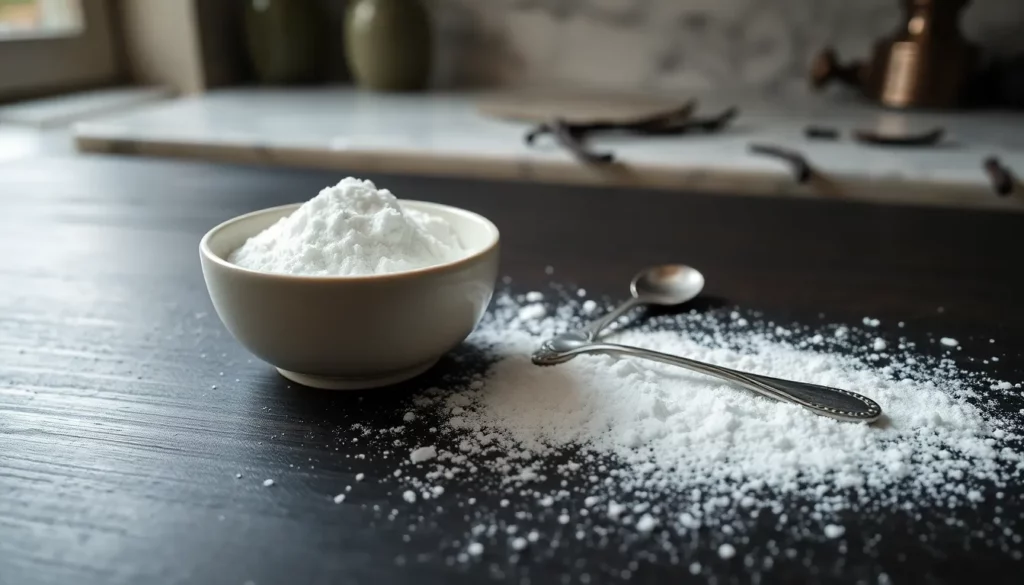
Powdered sugar, known in Italian as zucchero a velo (literally ‘veil sugar’), is a finely ground form of granulated sugar mixed with a small amount of anti-caking agent—typically cornstarch (maize starch) or, less commonly, potato starch or tricalcium phosphate. The standard Italian production method involves milling white granulated sugar (saccarosio) to a particle size of less than 0.15 mm, then blending it with 3–5% starch by weight to prevent clumping and maintain free-flowing properties. This process originated in 19th-century Europe, with Italian confectioners quickly adopting it for dusting pastries and creating smooth icings. Unlike many Italian ingredients, powdered sugar does not carry a DOP (Denominazione di Origine Protetta) or PGI (Indicazione Geografica Protetta) status, as it is a processed product rather than a raw agricultural good. However, Italian producers such as Eridania and Zefiro adhere to strict quality standards under the Italian Ministry of Agricultural, Food and Forestry Policies, ensuring a fine, silky texture that is essential for professional pastry work.
Types & Grades
Powdered sugar is classified by fineness, measured by the number of times the sugar is milled (X designation). In Italy, the most common grades are 4X, 6X, and 10X, with 10X being the finest. The table below summarizes the key types and their characteristics.
| Grade | Particle Size (microns) | Common Use | Italian Equivalent |
|---|---|---|---|
| 4X | 75–100 | General dusting, simple glazes | Zucchero a velo standard |
| 6X | 50–75 | Buttercream, royal icing | Zucchero a velo fine |
| 10X | 15–30 | Meringues, fondant, professional use | Zucchero a velo extrafine |
| Vanilla-flavored | Same as base grade | Dusting on desserts, aromatic glazes | Zucchero a velo vanigliato |
| Organic | Varies (typically 6X) | Health-conscious applications | Zucchero a velo biologico |
Italian law does not mandate a specific grade for zucchero a velo, but most commercial products are milled to a 6X or 10X equivalent. Professional pastry chefs often prefer 10X for its ability to dissolve instantly and create silky textures. Vanilla-flavored powdered sugar, infused with natural vanilla extract or vanilla powder, is a traditional Italian variant used to add subtle aroma to desserts like pandoro and pastiera.

How It’s Used in Cooking
In Italian cuisine, powdered sugar is indispensable for both finishing and baking. Its primary role is as a decorative dusting—a light, even veil that adds sweetness and visual appeal. Signature dishes that rely on zucchero a velo include:
- Tiramisù – A final dusting of powdered sugar over the cocoa layer creates the classic presentation.
- Cannoli – Sicilian cannoli are traditionally finished with a generous sprinkle of powdered sugar, often mixed with cinnamon.
- Zeppole di San Giuseppe – These fried pastries are dusted with powdered sugar immediately after frying.
- Panettone and Pandoro – The iconic Christmas cakes are topped with a thick layer of vanilla-flavored powdered sugar.
- Meringhe – Italian meringues (meringhe) use powdered sugar for a stable, glossy structure.
- Crema pasticcera – Some recipes incorporate powdered sugar to avoid graininess in custards.
“Un pizzico di zucchero a velo fa la differenza” – A pinch of powdered sugar makes the difference. This traditional saying reflects the Italian belief that the final dusting elevates a dessert from good to sublime.
Beyond dusting, powdered sugar is essential for making glazes (e.g., for ciambella or pasticciotti), buttercream, and royal icing. In professional kitchens, it is also used to stabilize whipped cream and to create smooth, lump-free sauces. The fine particle size ensures rapid dissolution, making it ideal for cold preparations where granulated sugar would not dissolve.
How to Choose/Identify Authentic POWDERED SUGAR
For commercial buyers and home cooks seeking authentic Italian zucchero a velo, the following cues are critical:
- Texture: Authentic powdered sugar should feel silky and free of lumps. Rub a small amount between your fingers; it should dissolve almost instantly.
- Ingredients: Look for a short list: sugar and an anti-caking agent (cornstarch or potato starch). Avoid products with added artificial flavors or excessive starch (more than 5%).
- Origin: Italian brands like Eridania, Zefiro, and Coop Italia clearly state “Prodotto in Italia” on the package. For DOP/PGI status, note that powdered sugar itself is not certified, but some Italian sugars are made from DOP beet or cane sources (e.g., Zucchero di Barbabietola da Tavola).
- Grade: For professional use, choose 10X (extrafine). For home use, 6X is sufficient. The package may indicate “fine” or “extra fine”.
- Packaging: Authentic Italian powdered sugar is often sold in sealed, moisture-proof bags or boxes to prevent clumping. Avoid bulk bins where humidity can compromise quality.
- Certifications: Look for the “Zucchero a Velo” label and any quality marks from the Italian Ministry of Agricultural Policies (e.g., “Prodotto di Qualità”).
For bulk purchasing, request a sieve test: authentic 10X powder should pass through a 200-mesh sieve with minimal residue. This ensures the fineness required for professional pastry work.
Substitutes
While powdered sugar is unique, several Italian substitutes can be used in specific contexts:
- Zucchero semolato (caster sugar) – Finely granulated but not powdered. It can be ground in a blender or food processor to approximate powdered sugar, though the texture will be slightly coarser. Use for dusting when a rustic look is acceptable.
- Zucchero di canna integrale (whole cane sugar) – Ground to a powder, this provides a caramel-like flavor and is used in traditional Sicilian desserts like cannoli for a more intense taste. However, it does not produce a pure white finish.
- Miele (honey) – In glazes or sauces, honey can replace powdered sugar for sweetness, but it adds moisture and distinct flavor. Not suitable for dusting.
- Sciroppo d’acero (maple syrup) – Occasionally used in modern Italian pastry for its unique flavor, but it is not traditional and alters the final texture.
- Fecola di patate (potato starch) mixed with granulated sugar – A DIY substitute: blend 1 cup granulated sugar with 1 tablespoon potato starch until fine. This mimics the anti-caking effect but lacks the same dissolution speed.
For authentic Italian recipes, using genuine zucchero a velo is strongly recommended, as substitutes can affect texture, appearance, and taste. The only exception is when a recipe specifically calls for a different sugar (e.g., zucchero di canna for certain regional cakes).
Conclusion
Powdered sugar, or zucchero a velo, is a cornerstone of Italian pastry, valued for its fine texture, quick dissolution, and ability to create elegant finishes. Understanding its production, grades, and authentic selection criteria empowers both home cooks and professionals to achieve superior results in classic Italian desserts. While substitutes exist, they rarely match the performance of genuine Italian powdered sugar, making it an essential ingredient in any serious pastry kitchen.
FAQ
What is the difference between powdered sugar and granulated sugar?
Powdered sugar is granulated sugar that has been ground to a fine powder and mixed with a small amount of anti-caking agent (usually cornstarch) to prevent clumping. It dissolves much faster than granulated sugar and is used for dusting, icings, and smooth preparations where a gritty texture is undesirable.
Can I make powdered sugar at home?
Yes, you can make a substitute by blending granulated sugar with a small amount of cornstarch (1 tablespoon per cup of sugar) in a high-speed blender or food processor until fine. However, the texture may not be as consistent as commercial 10X powder, and it may not dissolve as quickly. For authentic Italian recipes, store-bought zucchero a velo is recommended.
Why does powdered sugar contain cornstarch?
Cornstarch (or potato starch) is added as an anti-caking agent to absorb moisture and prevent the fine sugar particles from clumping together. Without it, powdered sugar would quickly form hard lumps, especially in humid environments. The amount is typically 3–5% by weight.
Is powdered sugar gluten-free?
Most powdered sugars are gluten-free, as they contain only sugar and cornstarch (which is naturally gluten-free). However, always check the label for potential cross-contamination if you have celiac disease. Some brands use potato starch instead of cornstarch, which is also gluten-free.
Leave a Reply