
Short Answer
What Is Ginepro? Italian Spice Explained
Ginepro (pronounced jee-NEH-pro) is the Italian term for juniper berries, the small, dark purple cones of the juniper bush (Juniperus communis). In Italian cuisine, ginepro is prized for its piney, slightly citrusy aroma and bitter, resinous flavor. It is most famously used to season game meats such as wild boar, venison, and hare, as well as in the production of cured meats like salame al ginepro and in the distillation of grappa al ginepro and gin. While juniper grows throughout the Northern Hemisphere, Italian ginepro is particularly associated with the Alpine regions of Trentino-Alto Adige, Lombardy, and Piedmont, where the berries are foraged from wild bushes at high altitudes.
Origin & History
The use of juniper berries in Italy dates back to ancient Roman times, when they were employed both as a culinary spice and for medicinal purposes. Pliny the Elder documented juniper’s ability to preserve meat, a practice that continued through the Middle Ages. In the Alpine valleys, where game was abundant and salt scarce, juniper berries became essential for curing and flavoring meats. By the Renaissance, ginepro was a staple in the kitchens of northern Italian nobility, often paired with roasted game and used in complex sauces. The tradition of salame al ginepro emerged in the 19th century in the Valtellina region of Lombardy, where the berries were added to pork sausages to impart a distinctive aroma and to aid preservation. Today, ginepro remains a symbol of rustic, mountain cuisine, celebrated in festivals like the Sagra del Ginepro in the town of Bormio.
What’s In It
Ginepro is not a dish but a spice, yet its role in Italian cooking is so integral that it defines many preparations. The core ingredient is the dried juniper berry, which is typically crushed or lightly bruised before use to release its essential oils. Key characteristics include:

- Flavor profile: Piney, resinous, with hints of pepper and lemon.
- Form: Whole dried berries, sometimes ground, but whole berries are preferred for infusions and long cooking.
- Common pairings: Game meats (wild boar, venison, hare), pork, cabbage, apples, and rosemary.
- Preservation: Juniper’s antimicrobial properties made it a natural preservative for cured meats.
Unlike similar spices such as allspice or bay leaf, ginepro has a distinct sharpness that cuts through rich, fatty meats. It is not to be confused with ginepro as a plant—the berries are the only part used in cooking, and they must be used sparingly due to their intensity.
Regional Variations
While ginepro is used across Italy, its application varies significantly by region. The following table highlights key differences:
| Region | Typical Use | Dish Example | Notes |
|---|---|---|---|
| Trentino-Alto Adige | Game stews and roasts | Cervo al ginepro (venison with juniper) | Berries are crushed and marinated with red wine, herbs, and garlic. |
| Lombardy (Valtellina) | Cured sausages | Salame al ginepro | Whole berries are embedded in the sausage; aged for months. |
| Piedmont | Liqueurs and digestifs | Grappa al ginepro | Juniper berries are infused in grappa, sometimes with other botanicals. |
| Umbria | Pork roasts and stews | Maiale al ginepro | Berries are used in a rub with fennel and black pepper. |
| Sicily | Rare; used in some rabbit dishes | Coniglio al ginepro | Influenced by Arab spice trade; often combined with raisins and pine nuts. |
How It’s Traditionally Eaten
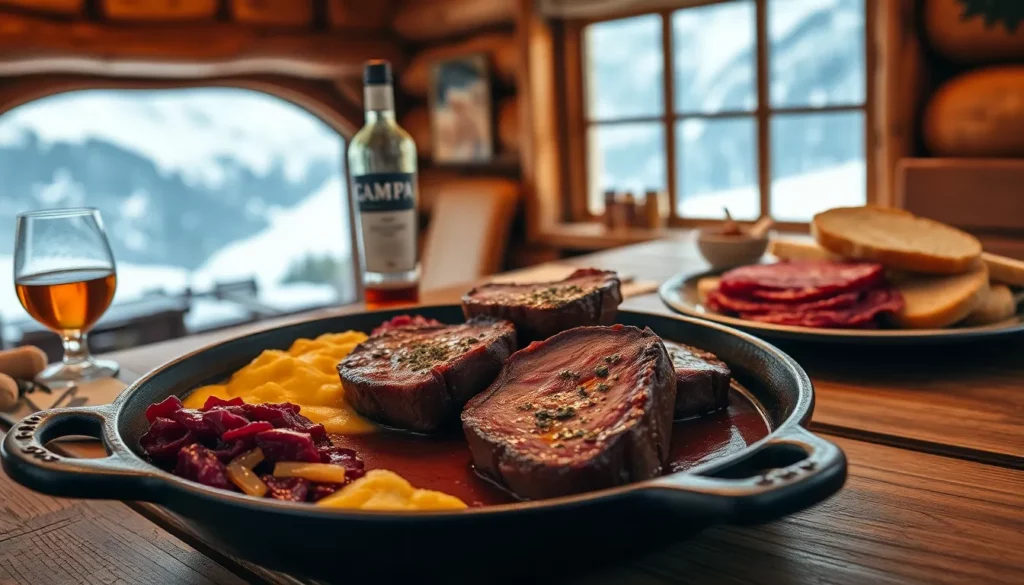
Ginepro is not eaten alone but as a seasoning. In traditional Italian meals, dishes flavored with ginepro typically appear as a secondo piatto (main course), often accompanied by contorni like roasted potatoes, polenta, or braised cabbage. For example, cervo al ginepro is a hearty winter dish served with creamy polenta. Salame al ginepro is eaten as part of an antipasto platter, sliced thin and paired with crusty bread and a robust red wine. Grappa al ginepro is consumed as a digestivo after a meal. These dishes are more common in mountainous regions and are often associated with hunting season (autumn and winter) and festive occasions like Christmas markets.
Common Mistakes / What It’s Not
Many American-Italian adaptations misuse ginepro. Common errors include:
- Overusing the berries: Juniper is potent; a few berries per dish are sufficient. Too many can make food bitter and medicinal.
- Using fresh berries: Dried berries are standard; fresh ones are less aromatic and can be overly astringent.
- Confusing with allspice: Allspice is sweeter and warmer; ginepro is sharper and more piney.
- Adding to tomato-based sauces: Traditional Italian cooking rarely combines juniper with tomatoes; it is reserved for meat and game.
- Assuming it’s only for game: While classic, ginepro also enhances pork, duck, and even some vegetable dishes like sauerkraut.
Ginepro is not a substitute for rosemary or thyme, though it can complement them. It is also not a component of Italian pasta dishes—its use is almost exclusively in meat preparations and cured products.
Where to Try It / What to Order
To experience authentic ginepro dishes, visit the Alpine regions of northern Italy. In Trentino-Alto Adige, look for cervo al ginepro at mountain rifugi (huts) or traditional trattorie. In Lombardy’s Valtellina valley, seek out salame al ginepro at local salumerie. For a liquid version, order grappa al ginepro in Piedmontese enoteche. Travelers should ask for piatto di cacciagione (game dish) and specify con ginepro. Annual festivals like the Sagra del Ginepro in Bormio (September) offer tastings and cooking demonstrations. When ordering, remember that ginepro is a subtle flavor—don’t expect an overpowering pine taste, but rather a complex, earthy background note.
Related Dishes
- Cervo al Ginepro (Venison with Juniper)
- Salame al Ginepro (Juniper Salami)
- Grappa al Ginepro (Juniper Grappa)
- Maiale al Ginepro (Pork with Juniper)
- Coniglio al Ginepro (Rabbit with Juniper)
FAQ
What is ginepro in Italian cooking?
Ginepro is the Italian word for juniper berries, used as a spice to flavor game meats, cured sausages, and liqueurs. It has a piney, resinous flavor and is especially popular in the Alpine regions of northern Italy.
Can I substitute ginepro with another spice?
There is no perfect substitute, but a combination of rosemary, black pepper, and a pinch of allspice can approximate the flavor. However, true ginepro is unique and best sourced from Italian specialty stores.
Is ginepro the same as gin?
No, but gin is a distilled spirit that derives its primary flavor from juniper berries (ginepro). Italian gin often uses locally foraged ginepro, but the spice itself is not the same as the alcoholic beverage.
How should I store dried juniper berries?
Store them in an airtight container in a cool, dark place. They will keep for up to two years, but their potency diminishes over time. For best flavor, crush them just before use.
Are juniper berries safe to eat raw?
In small quantities, yes. However, they are very strong and bitter. Pregnant women should avoid consuming large amounts of juniper, as it can stimulate uterine contractions. Always use sparingly.

Leave a Reply