
Short Answer
What Is Agghiotta di pesce spada? Italian Swordfish Sauce Explained
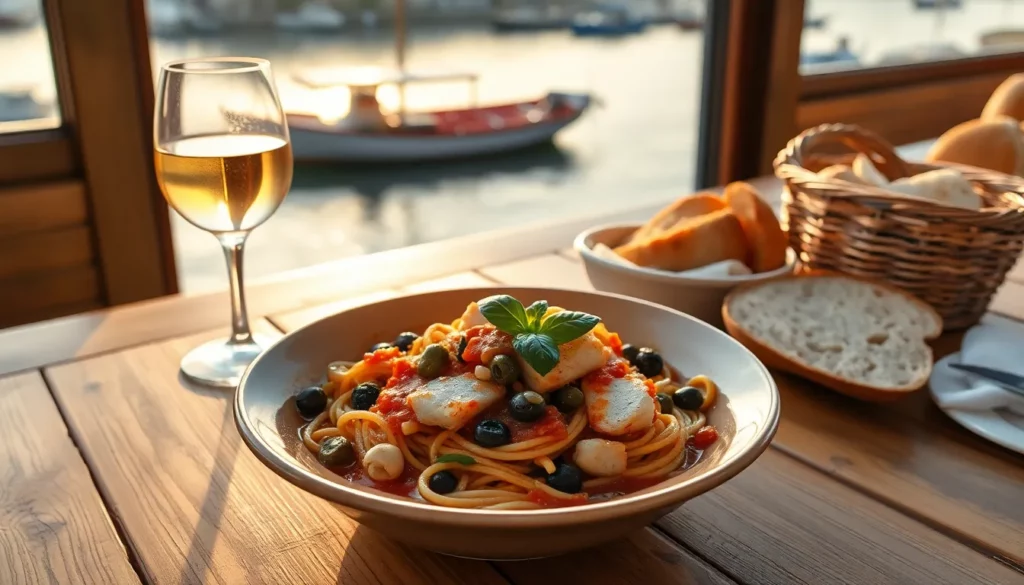
Agghiotta di pesce spada is a classic Sicilian sauce or stew made with swordfish (pesce spada), tomatoes, capers, olives, pine nuts, raisins, and aromatic herbs. Originating from the Aeolian Islands (especially Lipari) and the coastal areas around Messina, this dish embodies the Mediterranean flavors of Sicily. The term “agghiotta” derives from the Arabic al-ghiotta, meaning “sauce” or “broth,” reflecting the island’s rich Arab culinary heritage. It is typically served as a sauce for pasta (often spaghetti or bucatini) or as a secondo piatto (main course) accompanied by bread or salad. The combination of sweet (raisins, pine nuts) and savory (capers, olives, tomatoes) creates a uniquely balanced taste that distinguishes it from other Italian fish sauces.
Origin & History
Agghiotta di pesce spada traces its roots to the Aeolian Islands, a volcanic archipelago north of Sicily, and the city of Messina, which lies on the Strait of Messina. The dish likely emerged during the Arab domination of Sicily (9th–11th centuries), when the introduction of ingredients such as capers, raisins, pine nuts, and citrus fruits transformed local cooking. The word “agghiotta” itself is a Sicilian adaptation of the Arabic al-ghiotta, meaning “sauce” or “broth.” Historical records from the 18th and 19th centuries mention similar preparations of fish in “agghiotta” style, often using less perishable ingredients like preserved olives and capers to complement fresh swordfish. Unlike many myths, there is no single “inventor”; rather, it evolved as a fisherman’s dish, using the day’s catch and pantry staples. The dish remains a symbol of Sicilian coastal cuisine, celebrated in local festivals and family gatherings.
What’s In It
The core ingredients of Agghiotta di pesce spada include:
- Swordfish (pesce spada): Fresh, firm-fleshed swordfish cut into cubes or slices. In some versions, the fish is left whole or in large chunks.
- Tomatoes: Fresh peeled tomatoes or passata (strained tomatoes) form the base of the sauce.
- Capers: Salt-packed or brined capers, preferably from Pantelleria or the Aeolian Islands, add briny depth.
- Olives: Green or black olives, often Taggiasche or Nocellara, pitted and halved.
- Pine nuts (pinoli): Toasted or raw, they provide a subtle nuttiness.
- Raisins (uva passa): Golden raisins or sultanas, rehydrated in warm water, contribute sweetness.
- Aromatics: Garlic, onion, fresh basil, oregano, and sometimes mint or parsley.
- Olive oil: Extra virgin olive oil for sautéing.
- White wine: Dry white wine to deglaze the pan (optional but common).
- Chili flakes (peperoncino): A pinch for gentle heat (optional).
Preparation involves sautéing garlic and onion in olive oil, adding tomatoes and simmering, then incorporating capers, olives, pine nuts, and raisins. The swordfish is added last and cooked just until opaque—overcooking makes it dry. The sauce is often finished with fresh herbs. This dish is distinct from similar-sounding Italian preparations like agghiotta di tonno (tuna version) or pesce spada alla ghiotta (a different Sicilian swordfish stew with potatoes and vegetables). The key difference is the sweet-and-sour balance from raisins and pine nuts, which is less pronounced in other versions.
Regional Variations
While Agghiotta di pesce spada is quintessentially Sicilian, variations exist across the island and beyond. The table below highlights differences in three major areas:
| Region | Key Characteristics | Notable Ingredients |
|---|---|---|
| Aeolian Islands (Lipari, Salina) | Original version; sauce is thicker, almost stew-like; often served as a secondo with bread. Uses local capers and olives. | Fresh swordfish, Pantelleria capers, Taggiasche olives, pine nuts, raisins, tomatoes, white wine, mint. |
| Messina (Strait of Messina) | More tomato-forward; often served as a pasta sauce (spaghetti alla agghiotta). Swordfish is cut into smaller cubes. | Passata, garlic, oregano, green olives, capers, pine nuts, raisins, sometimes anchovy for umami. |
| Palermo (Western Sicily) | Influenced by Trapani’s pesce spada alla ghiotta; includes potatoes and sometimes artichokes. Sweeter with more raisins. | Swordfish, potatoes, tomatoes, capers, olives, raisins, pine nuts, saffron (rare). |
Outside Sicily, some restaurants in Rome and Naples offer their own interpretations, often adding bell peppers or zucchini, which purists consider inauthentic.
How It’s Traditionally Eaten
Agghiotta di pesce spada is versatile in Italian meal structure. It can be served as:
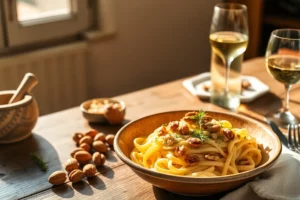
- Primo piatto: As a sauce for pasta, typically spaghetti, bucatini, or linguine. The pasta is al dente and tossed with the sauce, sometimes with a sprinkle of toasted breadcrumbs (muddica) for texture.
- Secondo piatto: As a main course, accompanied by crusty bread, a green salad, or roasted vegetables. The sauce is spooned over the fish.
- Contorno: Rarely, but the sauce alone can be used as a condiment for grilled fish or vegetables.
Pairings: A crisp, mineral-driven white wine from Sicily, such as Grillo or Carricante (Etna Bianco), complements the dish’s briny and sweet notes. Red wines are generally avoided. This dish is often prepared for festive occasions like Easter or Ferragosto (August 15), but also as a hearty weekday meal. In the Aeolian Islands, it is a staple of summer dinners, enjoyed al fresco with family.
Common Mistakes / What It’s Not
Several misconceptions surround Agghiotta di pesce spada, especially outside Italy:
- It is not a soup: Despite its saucy consistency, it is a condiment or stew, not a brothy soup. The liquid should be reduced to coat the fish and pasta.
- It is not “pesce spada alla ghiotta”: The latter is a different Sicilian dish that includes potatoes, artichokes, and sometimes saffron, and is baked or stewed with less tomato.
- Do not overcook the swordfish: Swordfish becomes dry and tough if cooked too long. It should be added at the end and cooked for only 5–7 minutes.
- Do not skip the sweet-savory balance: The raisins and pine nuts are essential; omitting them changes the dish’s identity.
- It is not a modern fusion creation: Agghiotta has deep historical roots in Arab-influenced Sicilian cuisine, not a recent invention.
- Not all capers are equal: Use high-quality salt-packed capers from Pantelleria or the Aeolian Islands for authentic flavor.
Where to Try It / What to Order
For an authentic experience, visit these locations in Sicily:
- Lipari (Aeolian Islands): Trattoria del Vicolo or Ristorante E Pulera serve traditional agghiotta as a secondo.
- Messina: Osteria del Mare or Ristorante Pane e Vino offer spaghetti alla agghiotta di pesce spada.
- Palermo: Antica Focacceria San Francesco sometimes features a version with potatoes.
- Festivals: The “Sagra del Pesce Spada” in Bagnara Calabra (Calabria) and similar events in the Aeolian Islands celebrate swordfish dishes.
When ordering, specify “agghiotta di pesce spada” and ask if it’s served as a pasta sauce or main course. If you want the pasta version, say “spaghetti alla agghiotta.” Pair with a local white wine like Grillo or Etna Bianco.
Related Dishes
- Pesce spada alla ghiotta
- Spaghetti alla agghiotta
- Agghiotta di tonno
- Caponata siciliana
- Pasta con le sarde
FAQ
What is the difference between agghiotta di pesce spada and pesce spada alla ghiotta?
Agghiotta di pesce spada is a tomato-based sauce with capers, olives, pine nuts, and raisins, often served with pasta or as a stew. Pesce spada alla ghiotta is a different Sicilian dish that includes potatoes, artichokes, and sometimes saffron, and is baked or stewed with less tomato. The sweet-savory balance from raisins and pine nuts is unique to agghiotta.
Can I use frozen swordfish for agghiotta di pesce spada?
Yes, but fresh swordfish is preferred for the best texture and flavor. If using frozen, thaw it completely in the refrigerator and pat dry before cooking. Avoid overcooking, as frozen fish can become rubbery.
What pasta shape is best for agghiotta di pesce spada?
Spaghetti, bucatini, or linguine are traditional choices. The long, thin shapes allow the sauce to cling well. In Sicily, spaghetti alla agghiotta is the most common presentation.
Is agghiotta di pesce spada gluten-free?
The sauce itself is naturally gluten-free, as it contains no wheat. However, if served with pasta, it will contain gluten. For a gluten-free version, serve the sauce over gluten-free pasta or with crusty bread (if bread is gluten-free).
How long does agghiotta di pesce spada keep in the refrigerator?
Store the sauce (without pasta) in an airtight container for up to 2 days. Reheat gently on the stovetop, adding a splash of water if needed. The fish may become drier upon reheating, so it's best enjoyed fresh.

Leave a Reply