
Short Answer
What Is Carne? Italian Meat Dish Explained
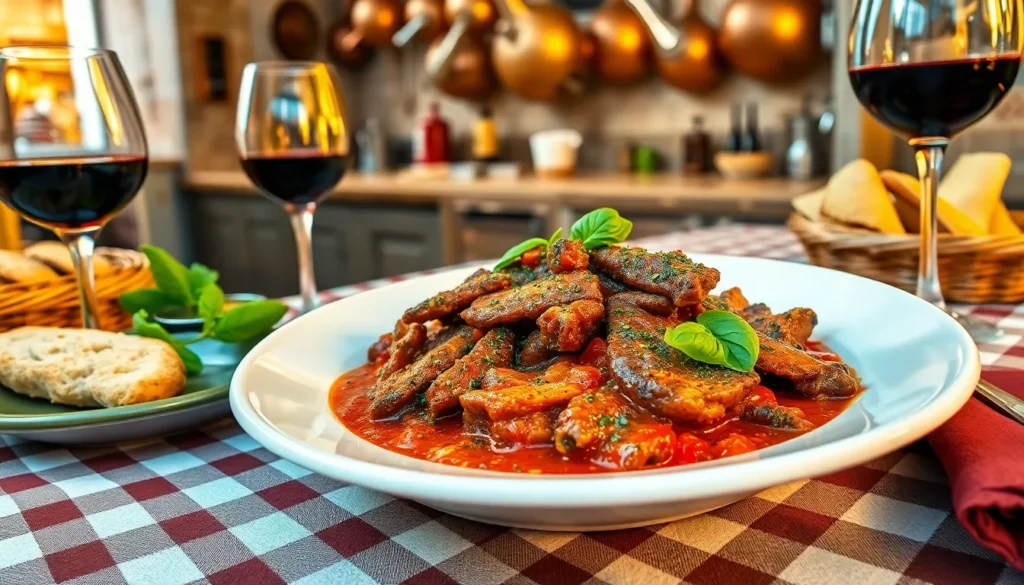
Carne, in the context of Italian cuisine, most commonly refers to Carne alla Pizzaiola—a tender beef cut (often top round or sirloin) slowly cooked in a robust sauce of San Marzano tomatoes, garlic, fresh oregano, and extra-virgin olive oil. Originating in the Campania region, particularly Naples, this dish embodies the cucina povera tradition: simple, high-quality ingredients transformed into a deeply flavorful secondo. The name “pizzaiola” links it to pizza, as the sauce mirrors that of a classic Margherita. Key ingredients include beef, tomatoes, garlic, oregano, and occasionally capers or black olives for briny depth.
Origin & History
Carne alla Pizzaiola emerged in 19th-century Naples, a city where pizza was already a street-food staple. The dish was born from the need to tenderize inexpensive cuts of beef—often from older dairy cows—by slow-cooking them in the same tomato sauce used for pizza. Historical cookbooks, such as Ippolito Cavalcanti’s Cucina Teorico-Pratica (1839), mention similar preparations, though the term “pizzaiola” became widespread only in the early 20th century. Unlike myths that claim it was invented by pizza makers, the dish likely evolved in home kitchens, where leftover pizza sauce was repurposed to flavor meat. A unique anecdote: Neapolitan fishermen would prepare Carne alla Pizzaiola on boats, using preserved tomatoes and dried oregano, making it a portable, long-lasting meal.
What’s In It
The core ingredients of Carne alla Pizzaiola are few but precise:
- Beef: Traditionally top round (girello) or sirloin, sliced thin (about ½ inch) and pounded for even cooking.
- Tomatoes: San Marzano DOP crushed by hand, never canned puree, for a bright, balanced acidity.
- Garlic: Whole cloves lightly crushed and browned in olive oil before adding tomatoes.
- Oregano: Fresh or dried wild oregano from the Mediterranean hillsides—pungent and slightly bitter.
- Extra-virgin olive oil: A generous amount for sautéing and finishing.
- Optional: Capers, Gaeta olives, or a pinch of peperoncino (red chili flakes) for heat.
Preparation nuances: The beef is first seared in hot oil to develop a crust, then simmered in the tomato sauce for 45–60 minutes until fork-tender. Unlike Brasato al Barolo (a Piedmontese braised beef in red wine), Carne alla Pizzaiola uses no wine or long marination; its flavor comes from the concentrated tomato and oregano. It differs from Saltimbocca (veal with prosciutto and sage) by its saucy, pizza-like profile.
Regional Variations
While Carne alla Pizzaiola is quintessentially Neapolitan, other Italian regions have adapted it:
| Region | Variation | Key Differences |
|---|---|---|
| Campania (Naples) | Classic Pizzaiola | Beef, San Marzano tomatoes, garlic, oregano; no cheese or wine. |
| Lazio (Rome) | Pizzaiola alla Romana | Adds a splash of white wine and a pinch of rosemary; often uses thinner cuts like scaloppine. |
| Sicily | Pizzaiola Siciliana | Includes capers, olives, and sometimes anchovies for a puttanesca-like punch; served with grilled eggplant. |
| Puglia | Pizzaiola Pugliese | Uses horse meat or lamb instead of beef; incorporates cherry tomatoes and fresh basil. |
How It’s Traditionally Eaten
Carne alla Pizzaiola is a secondo (main course) in a traditional Italian meal, served after the primo (pasta or soup) and before contorni (side dishes). It is typically accompanied by crusty bread to soak up the sauce, or a simple side of sautéed greens (cicoria or rapini). In Naples, it is often eaten as a piatto unico (single dish) for a hearty lunch. Pairings: a medium-bodied red wine like Aglianico or a Falanghina white. Occasions: everyday family dinners, Sunday lunches, and festive gatherings—especially during the tomato harvest season. It is rarely served on holidays like Christmas, where more elaborate roasts take center stage.
Common Mistakes / What It’s Not
Many American-Italian adaptations misinterpret Carne alla Pizzaiola:
- It is not a pizza topping: Despite the name, the dish is a meat course, not a pizza ingredient (though leftover sauce can be used on pizza).
- Do not add mozzarella: Authentic versions never include cheese; the sauce is meant to be light and herbaceous.
- Avoid overcooking the beef: The meat should be tender but not shredded; thin cuts require careful timing.
- Not a quick stir-fry: The slow simmer is essential to meld flavors—rushing it yields a watery sauce.
- Not a substitute for Carne Salada: That is a cured, raw beef dish from Trentino, completely different in preparation and taste.
Where to Try It / What to Order
For an authentic experience, visit Naples and seek out Trattoria da Nennella or Osteria della Mattonella, where Carne alla Pizzaiola is a house specialty. In Rome, try Armando al Pantheon for their Roman-style version. For travelers, order “Carne alla Pizzaiola” by name, and specify your preferred cut (e.g., fesa di manzo for top round). The dish is also featured at the annual Sagra della Pizzaiola in the town of Acerra (Campania) every September. If cooking at home, source authentic San Marzano tomatoes and wild oregano from Italian grocers.
Related Dishes
FAQ
What is Carne alla Pizzaiola?
Carne alla Pizzaiola is a Neapolitan beef dish cooked in a tomato, garlic, and oregano sauce, named for its similarity to pizza sauce.
What cut of beef is best for Carne alla Pizzaiola?
Top round (girello) or sirloin, sliced thin and pounded, are traditional choices for tenderness.
Can I make Carne alla Pizzaiola with other meats?
Yes, variations use horse meat, lamb, or even chicken, but beef is the classic.
Is Carne alla Pizzaiola the same as pizza?
No, it is a meat dish, not a pizza. The sauce is similar but the preparation and serving are entirely different.
What wine goes with Carne alla Pizzaiola?
A medium-bodied red like Aglianico or a white Falanghina complements the tomato and oregano.

Leave a Reply