
Short Answer
What Is Noci? Italian Walnut Dish Explained
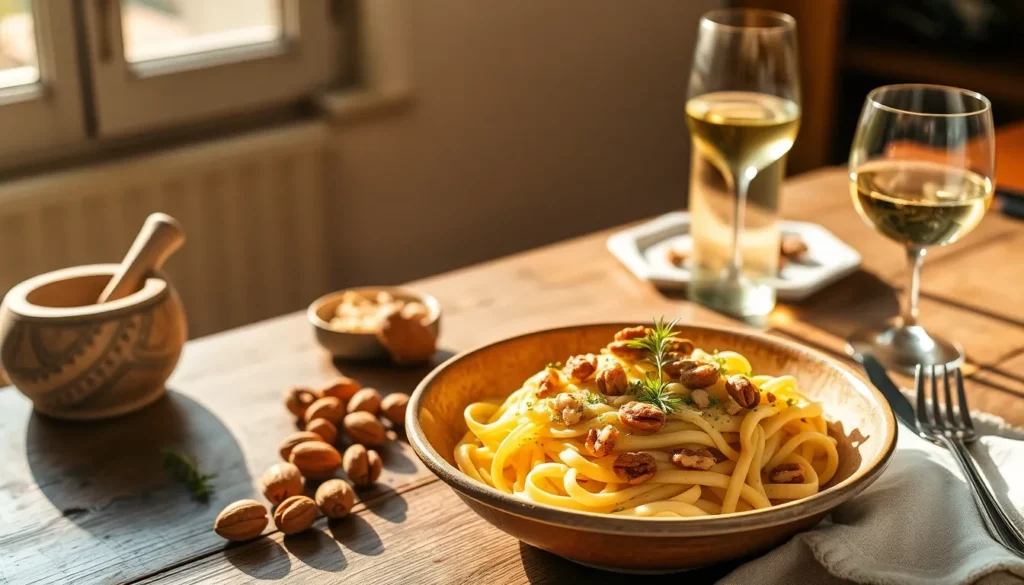
Noci (pronounced NO-chee) is the Italian word for walnuts, but in culinary contexts it refers to a family of dishes and sauces that prominently feature this nut. The most famous preparations are pasta con le noci (pasta with walnuts) from Sicily and salsa di noci (walnut sauce) from Liguria. These dishes are characterized by a creamy, nutty base made from ground walnuts, often combined with breadcrumbs, garlic, olive oil, and sometimes cream or milk. The result is a rich, savory sauce that clings to pasta or serves as a condiment for meats and vegetables. Noci dishes are deeply rooted in Italian cucina povera (peasant cooking), transforming simple, humble ingredients into a luxurious-tasting meal.
Origin & History
The history of noci in Italian cooking is intertwined with the cultivation of walnut trees (Juglans regia) across the Italian peninsula. Walnuts have been a staple in Mediterranean diets since ancient Roman times, valued for their oil and long shelf life. The specific dish pasta con le noci is believed to have emerged in Sicily during the Middle Ages, when Arab influence introduced new pasta shapes and the use of nuts in savory sauces. The earliest documented recipes appear in 19th-century Sicilian cookbooks, such as those by the gastronome Giuseppe Coria, who recorded the dish as a traditional peasant meal from the Madonie mountains. In Liguria, salsa di noci has a parallel history, often associated with the town of Genoa and served with trofie pasta. Unlike many Italian sauces that rely on tomatoes or cream, noci sauces showcase the natural richness of walnuts, a testament to the ingenuity of cooks who had limited access to expensive ingredients like cheese or meat. A popular anecdote claims that pasta con le noci was a favorite of Sicilian fishermen, who could prepare it with ingredients that kept well at sea.
What’s In It
Core ingredients for a classic noci dish are remarkably few, yet the balance is crucial. The base always includes shelled walnuts, which are toasted to deepen their flavor. Other essential components are:
- Breadcrumbs – often stale bread soaked in milk or water, then squeezed dry; they add body and creaminess.
- Garlic – a clove or two, sometimes raw, sometimes gently sautéed.
- Extra-virgin olive oil – for richness and to bind the sauce.
- Salt and black pepper – to season.
- Pasta – typically short shapes like maccheroni, cavatelli, or trofie; in Sicily, busiate (a hand-rolled pasta) is traditional.
Variations may include ricotta (for extra creaminess), pecorino cheese, marjoram, or a pinch of cinnamon (a nod to Arab influence). The sauce is usually made by pounding the walnuts and breadcrumbs in a mortar (or using a food processor) with garlic and oil until a coarse paste forms. It is then thinned with pasta cooking water. This distinguishes noci from similar-sounding Italian dishes like pesto alla genovese, which uses basil and pine nuts, or salsa di noci from Liguria, which often includes cream and is served cold as a condiment for boiled meats or vegetables.
Regional Variations
Noci preparations differ significantly across Italy, reflecting local ingredients and traditions. The table below compares three major regional styles:
| Region | Dish Name | Key Ingredients | Pasta Shape | Notable Characteristics |
|---|---|---|---|---|
| Sicily | Pasta con le noci | Walnuts, breadcrumbs, garlic, olive oil, pecorino (optional) | Busiate, maccheroni, or cavatelli | Often includes a pinch of cinnamon or nutmeg; served as a main course; sometimes topped with extra toasted walnuts. |
| Liguria | Salsa di noci | Walnuts, breadcrumbs, garlic, olive oil, cream or milk, marjoram | Trofie, trenette, or used as a condiment for boiled meats | Thinner, creamier consistency; often served cold or at room temperature; may include a touch of basil. |
| Calabria | Pasta con noci e peperoni cruschi | Walnuts, breadcrumbs, garlic, olive oil, dried red peppers (cruschi) | Fileja or lagane | Adds a spicy, crunchy element from fried dried peppers; reflects Calabrian love for heat. |
Other regions have their own interpretations: in Puglia, walnuts are sometimes combined with turnip tops (cime di rapa) for a bitter contrast; in Umbria, the sauce may be enriched with black truffle shavings. The common thread is the use of walnuts as the star ingredient, with local twists that make each version unique.
How It’s Traditionally Eaten
In Italy, noci dishes are almost always served as a primo piatto (first course), though in some regions, especially Sicily, a generous portion can stand alone as a piatto unico (single dish). The pasta is cooked al dente and tossed with the walnut sauce, which should coat each piece without being too thick or too runny. A sprinkle of extra toasted walnuts or a grating of pecorino cheese is common. The dish is typically enjoyed as an everyday meal, particularly on Fridays or during Lent when meat is avoided, because it is hearty yet meatless. In Liguria, salsa di noci is also served as a contorno (side dish) for boiled meats like bollito misto or as a dip for crostini. Pairings include a light, crisp white wine such as a Sicilian Grillo or a Ligurian Pigato. The nutty flavor also complements roasted vegetables, especially pumpkin or zucchini.
Common Mistakes / What It’s Not
Many American-Italian adaptations of noci dishes fall short due to a few common misconceptions:
- Using too many walnuts – The sauce should be creamy, not pasty. Overloading with nuts can make it dry and heavy. The breadcrumbs are essential for texture and balance.
- Substituting cream for breadcrumbs – Authentic noci relies on breadcrumbs (or stale bread) for body, not heavy cream. Some Ligurian versions do use a splash of milk or cream, but the core is still breadcrumbs.
- Treating it like pesto – Noci is not a raw sauce; the walnuts are often toasted, and the sauce is sometimes gently warmed. It is also thicker and less oily than pesto.
- Adding cheese indiscriminately – While pecorino or parmesan can be used, they should be added sparingly so as not to overpower the walnut flavor. In Sicily, cheese is often omitted entirely.
- What it’s not – Noci is not a dessert (though walnuts are used in Italian sweets like torrone). It is not a tomato-based sauce, nor is it related to the French sauce aux noix (which often uses walnuts as a thickener for game dishes).
Where to Try It / What to Order
For an authentic experience, travelers should seek out noci dishes in their home regions. In Sicily, head to the Madonie mountains or the city of Palermo. Look for trattorie that specialize in cucina povera, such as Osteria dei Vespri in Palermo or Ristorante Al Fogher in Cefalù. Order busiate con le noci and ask if they use local walnuts from the Nebrodi area. In Liguria, the port city of Genoa is the epicenter for salsa di noci. Visit Trattoria da Maria or Osteria di Vico Palla and request trofie al pesto? No, ask for trofie con salsa di noci. Many restaurants also serve it as a side for bollito misto. For a festival experience, the Sagra della Pasta con le Noci in the town of Polizzi Generosa (Sicily) takes place every August. When ordering, specify “con le noci” to avoid confusion with other sauces. If you are making it at home, use high-quality Italian walnuts (preferably from the Sorrento or Calabria regions) and avoid pre-ground walnut meal, which can be bitter.
Related Dishes
FAQ
What is Noci in Italian cuisine?
Noci means 'walnuts' in Italian, but in culinary terms it refers to dishes that feature walnuts as the main ingredient, most famously pasta con le noci (Sicily) and salsa di noci (Liguria).
Is Noci a pasta or a sauce?
Noci can refer to both a sauce (salsa di noci) and a complete pasta dish (pasta con le noci). The sauce is made from ground walnuts, breadcrumbs, garlic, and olive oil, and is tossed with pasta.
What are the main ingredients in a traditional Noci dish?
The core ingredients are shelled walnuts, breadcrumbs (or stale bread), garlic, extra-virgin olive oil, salt, and pasta. Some variations add pecorino cheese, cream, or spices like cinnamon.
How is Noci different from pesto?
Pesto alla genovese uses basil, pine nuts, and Parmesan, while noci relies on walnuts and breadcrumbs. Noci is also often cooked or warmed, whereas pesto is typically raw.
Where can I try authentic Noci in Italy?
For pasta con le noci, visit Sicily (especially the Madonie mountains or Palermo). For salsa di noci, go to Liguria (Genoa). Look for trattorie that specialize in cucina povera.

Leave a Reply