
Short Answer
What Is Trenette? Italian Pasta Explained
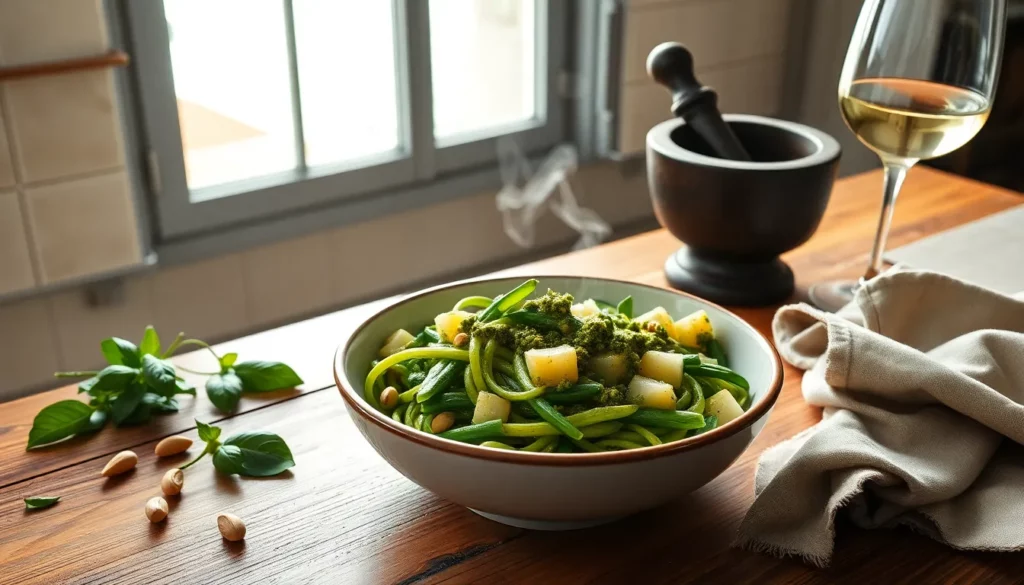
Trenette is a long, thin, ribbon-shaped pasta originating from the Liguria region of northwestern Italy, particularly associated with Genoa. It is similar to linguine but slightly narrower and often has a subtle groove that helps it hold onto sauces. The most iconic preparation is trenette al pesto, where the pasta is tossed with fresh pesto alla Genovese, green beans, and potatoes. Key ingredients include durum wheat semolina and water; fresh egg pasta is less common. Trenette is a staple of Ligurian cuisine and a symbol of the region’s love for simple, herbaceous flavors.
Origin & History
Trenette emerged in Liguria, a coastal region known for its rugged terrain and abundant basil. The pasta’s name likely derives from the Ligurian word trenna (thin strip) or the Italian treno (train), referencing its long, narrow shape. Historical records from the 18th century mention pasta similar to trenette being served with pesto, a sauce that itself dates back to the 16th century. Unlike many pastas that have mythical origins (e.g., Marco Polo bringing noodles from China), trenette’s history is firmly rooted in local culinary tradition. It was a practical choice for fishermen and farmers: the shape held pesto well, and the ingredients were readily available. By the 19th century, trenette al pesto had become a signature dish of Genoa, celebrated in cookbooks and by travelers.
What’s In It
Authentic trenette is made from durum wheat semolina and water, extruded through bronze dies to create a rough surface that clings to sauce. The dough is not enriched with eggs, distinguishing it from fresh egg pastas like tagliatelle. The classic pairing is pesto alla Genovese: fresh basil, pine nuts, garlic, Parmigiano-Reggiano and Pecorino, and extra-virgin olive oil, pounded in a mortar. Potatoes and green beans are boiled with the pasta and tossed together, adding texture and starchiness. Trenette is not the same as linguine (which is slightly wider and often used with seafood) or fettuccine (which is egg-based and wider). It is also distinct from trofie, a short, twisted pasta also from Liguria, though both are served with pesto.
Regional Variations
While trenette is most famous in Liguria, similar pastas appear in neighboring regions with different sauces:
- Liguria (Genoa): Trenette al pesto with potatoes and green beans. Sometimes a touch of cream is added (controversial).
- Piedmont: Trenette with ragù di carne (meat sauce) or butter and sage, reflecting the region’s love for butter and meat.
- Campania (Naples): Trenette-like pasta called linguine is used with seafood, such as linguine alle vongole. Trenette itself is rare here.
- Sicily: Similar thin pasta (e.g., busiate) is served with pesto alla trapanese (tomato, almonds, basil).
These variations highlight how a pasta shape adapts to local ingredients.
How It’s Traditionally Eaten
Trenette is served as a primo piatto (first course) in a traditional Italian meal. It is never a main dish or side. The pasta is cooked al dente and tossed with pesto just before serving; no extra cheese is added at the table (the pesto already contains cheese). It is typically eaten for lunch, especially on Sundays or festive occasions, though it is also a weekday staple in Liguria. Pairings include a light white wine like Vermentino or Pigato. In Genoa, trenette al pesto is a point of pride and often served during the annual Festa della Pesto.
Common Mistakes / What It’s Not
Many American-Italian restaurants confuse trenette with linguine or fettuccine. Trenette is not a substitute for spaghetti; its shape is specifically designed for pesto. Another mistake is using cream or heavy sauce – authentic pesto is oil-based. Also, trenette should never be served with meatballs or chicken; that is a non-Italian invention. The pasta is also not a fresh egg pasta; it is dried semolina pasta. Finally, do not overcook it: al dente is essential.
Where to Try It / What to Order
For the most authentic experience, visit Genoa and order trenette al pesto at a traditional trattoria like Trattoria da Maria or Osteria di Vico Palla. Look for places that make pesto in a mortar. In the US, seek out Italian restaurants specializing in Ligurian cuisine, such as Pasta & Pesto in San Francisco. When ordering, specify “trenette al pesto con patate e fagiolini” to ensure you get the classic version. Avoid any menu that lists “trenette with Alfredo sauce” – that is a red flag.
Related Dishes
FAQ
What is the difference between trenette and linguine?
Trenette is slightly narrower than linguine and often has a subtle groove. Linguine is more common in southern Italy and is often used with seafood sauces, while trenette is the traditional pasta for pesto in Liguria.
Can I use dried trenette for pesto?
Yes, dried trenette is the traditional choice. It holds up well to the pesto and provides a firm texture. Fresh egg pasta is not typical for this dish.
Is trenette gluten-free?
Traditional trenette is made from durum wheat semolina and contains gluten. Gluten-free versions may be available using alternative flours, but they are not authentic.
What is the best way to cook trenette?
Cook in a large pot of salted boiling water until al dente. Reserve some pasta water to thin the pesto if needed. Toss with pesto, boiled potatoes, and green beans.
Why are potatoes and green beans added to trenette al pesto?
The potatoes add starchiness that helps bind the pesto to the pasta, and the green beans provide texture and color. This combination is a Ligurian tradition.
Leave a Reply